
Enjoy the benefits of a premium membership!
Upgrade Account
-
TalkBass has been independent since 1998. Add your voice.
Create a free account to reply to discussions, view embedded media, and browse with fewer display ads.
Join free Log in
Want zero display ads or expanded classifieds tools? Compare plans.
You are using an out of date browser. It may not display this or other websites correctly.
You should upgrade or use an alternative browser.
You should upgrade or use an alternative browser.
For a custom shop bass , I shouldn't have any issues...
- Thread starter Ghastly
- Start date
More options
Who Replied?

The saddles are bakelite not wood.
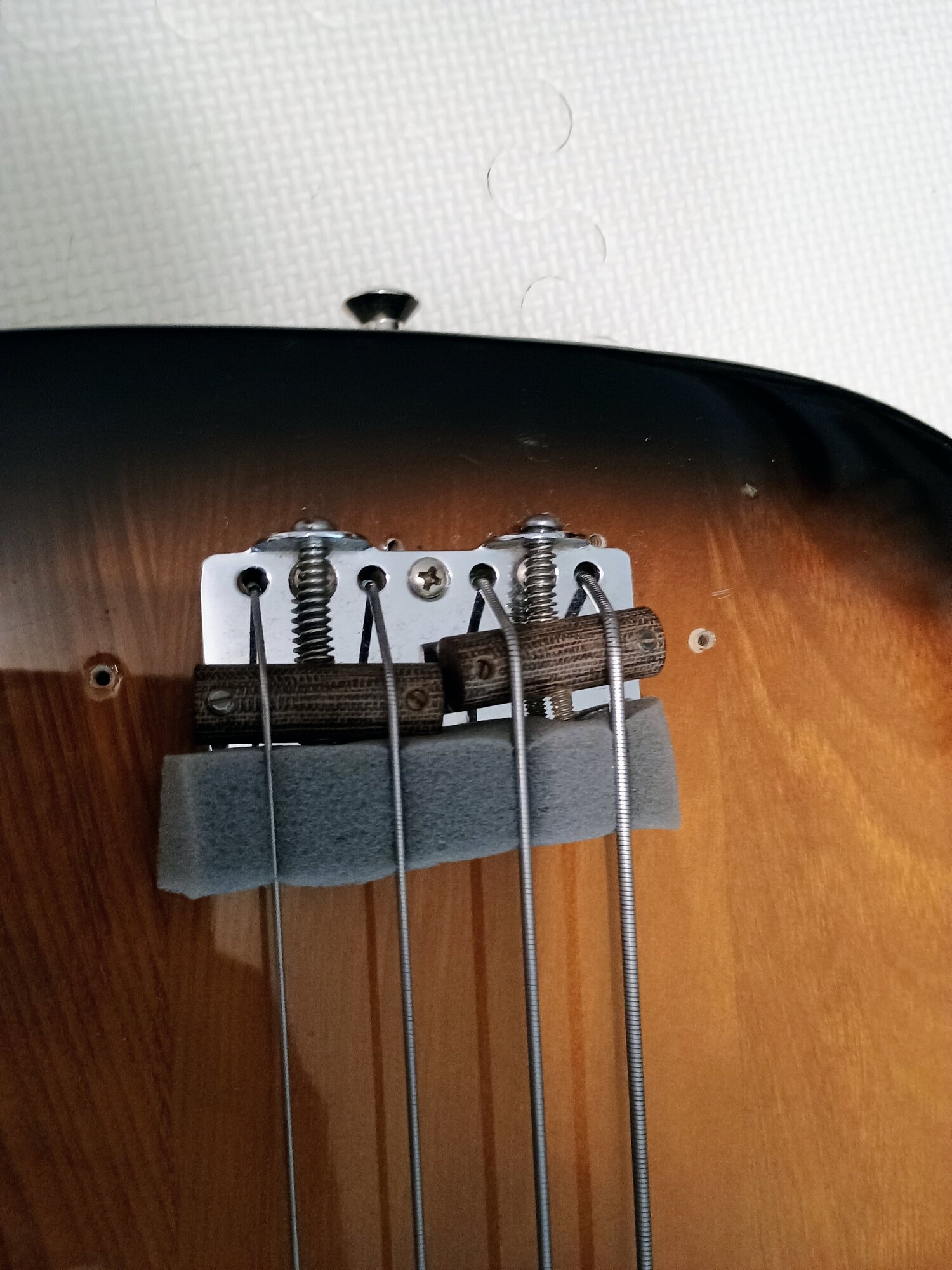
You can get them aftermarket from a maker in Columbus, Ohio.
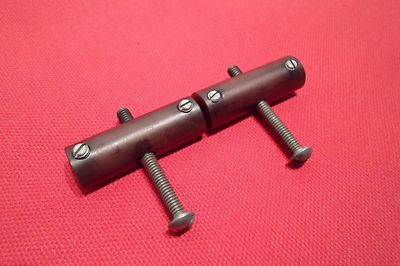
You can get them aftermarket from a maker in Columbus, Ohio.
BASS SADDLES P-STYLE PHENOLIC BAKELITE 1951-1954 REPLICAS AGED (RELIC) | eBay
Each set includes…. Two phenolic saddles. Stainless steel machine screws. Two phenolic saddles with improved wedge shape to match fret board radius! This type of saddle was originally used on a very famous electric bass from 1951 till 1954!
ebay.us


The saddles are bakelite not wood.View attachment 7436675
You can get them aftermarket from a maker in Columbus, Ohio.
BASS SADDLES P-STYLE PHENOLIC BAKELITE 1951-1954 REPLICAS AGED (RELIC) | eBay
Each set includes…. Two phenolic saddles. Stainless steel machine screws. Two phenolic saddles with improved wedge shape to match fret board radius! This type of saddle was originally used on a very famous electric bass from 1951 till 1954!ebay.us
I stand corrected! Learn something new every day. Do you also have a source for the bent intonation screws?
Riis
PliersI stand corrected! Learn something new every day. Do you also have a source for the bent intonation screws?
Riis

Pliers
"If stuck or requires modification, force it. If it breaks, not to worry as it probably needed to be replaced anyway".
Riis

Yep, ya'll need to increase your fiber intake. While over decades the phenolic resin can [but not always] succumb to the pressures of the string tension these fiber saddles sound amazingly bright and work perfectly in their application. Plus, they are relatively cheap, come in a variety of colors & materials, as well as compensated bottoms to allow perfect action height.The saddles are bakelite not wood.View attachment 7436675
You can get them aftermarket from a maker in Columbus, Ohio.
BASS SADDLES P-STYLE PHENOLIC BAKELITE 1951-1954 REPLICAS AGED (RELIC) | eBay
Each set includes…. Two phenolic saddles. Stainless steel machine screws. Two phenolic saddles with improved wedge shape to match fret board radius! This type of saddle was originally used on a very famous electric bass from 1951 till 1954!ebay.us
Also, the correct size right angle plug and making sure there's enough threaded sleeve outside the cup makes it all work perfectly.
Last edited:

That's the Custom Shop "Road Worn" jack… they have a guy whose job is to stick a cable in each jack and pull it out thousands of times to simulate decades of wear. 
In all seriousness, my lowly Squier CV 50s has one of those much-maligned "cup" jacks. I had to tighten it a bit when I bought the bass (in 2010), but once I realized it didn't play nice with some of my 90-degree cables, I haven't even thought about it since.
Is it a dumb design in theory? Maybe. Does it ruin an otherwise great bass in practice? Nah.
In all seriousness, my lowly Squier CV 50s has one of those much-maligned "cup" jacks. I had to tighten it a bit when I bought the bass (in 2010), but once I realized it didn't play nice with some of my 90-degree cables, I haven't even thought about it since.
Is it a dumb design in theory? Maybe. Does it ruin an otherwise great bass in practice? Nah.

The problem isn't the bass. It's the angled plug.When I spend thousands of dollars on an instrument, I expect perfection. Defective parts (for whatever reason) are unacceptable. I would return it immediately and request a replacement. It's absurd that this is even being glossed over. It reminds me a bit of the mentality of Apple users who rationalize every flaw. To be clear: I've been using Apple products for decades, but I'm aware of the company's decline in recent years.

I prefer the dome knobs. I swapped them out with the flat ones. I took the shot as a comparison.Beautiful bass but photo #2 has me confused as it shows a control plate with 4 knobs instead of 2. ???
They're not wood. I think they call it phenolic, or something, but they seem to be similar to dense/thick fiberglass. I would think they'd wear down and even strip their threads, too. Probably why they replaced them with metal saddles a few years later.Won't the string cut in or through those wooden saddles eventually? Did the original old ones also have these saddles?
This is a learning experience for me. I've always loved the look of the original P bass. This may be the closest I come to ever owning an original. It's been frustrating, but also fun to explore nuances I don't have with my other basses. I really appreciate all the comments, too. Thank you all. 
Now THAT is the way it's done!This is a learning experience for me. I've always loved the look of the original P bass. This may be the closest I come to ever owning an original. It's been frustrating, but also fun to explore nuances I don't have with my other basses. I really appreciate all the comments, too. Thank you all.

A custom builder told me about this and it does wonders.I prefer the dome knobs. I swapped them out with the flat ones. I took the shot as a comparison.
If you want those new knobs to look roadworn/reliced, locate some "etching solution". It used when working on circuit boards.
Pour some in a small bowl and place those in it. Make sure there's enough in the bowl to get it all the way up to the bottom edge of the knobs. This will break the chrome down.
Try it for about 10 minutes. Rinse them thoroughly and dry them. If they're not worn enough place them back in there for a little longer and repeat until the desired effect is reached.
After that you can always place them in water for a while to rust if that effect is needed.
Last edited:

Another thing I haven't tried, only "thought experimented" - but machining the hole in the jack plate so that the jack "sits" further down on the "shoulder", directly against the plate, might help even further. Might need a reamed-out washer on the outside, too, depending on how deep the shoulder is....Seriously the other trick to try is to make sure the barrel of the jack sticks out as far as possible given the fixture, that is if there are any spacer washers behind the actual jack mount, remove them to make the barrel stick out farther and either move them to the other side or just toss them just screw down the outer nut as much as possible, every fraction of an inch, every fraction of a turn helps.
(excuse the ugly attempt at a pointer to the "shoulder")
That depends if it's the lack of depth Tightening the claw won't help, the tip never reaches that far. That's why I'm going on about way the jack sits in the plate.Doesn't the claw just need re-tensioning? Maybe it's even in the wrong away around!

A custom builder told me about this and it does wonders.
If you want those new knobs to look roadworn/reliced, locate some "etching solution". It used when working on circuit boards.
Pour some in a small bowl and place those in it. Make sure there's enough in the bowl to get it all the way up to the bottom edge of the knobs. This will break the chrome down.
Try it for about 10 minutes. Rinse them thoroughly and dry them. If they're not worn enough place them back in there for a little longer and repeat until the desired effect is reached.
After that you can always place them in water for a while to rust if that effect is needed.
You can also use white vinegar. You don't put them in the vinegar, but place them in a sealable container with it. I used a tupperwear container, poured the vinegar in about an inch deep, placed a coffee mug upside down in there and the knobs on top of the mug, and put the lid on. I forget how long I left 'em in there, a few hours I think.
I prefer the dome knobs. I swapped them out with the flat ones. I took the shot as a comparison.
Did it come with both?? I got a parts "54 P" style bass this summer from some guy, and he had flat ones on there. I thought they looked out of place and ordered the domes (see above).

- Jun 30, 2010
- 49,632
- 222,241
- Disclosures
- musician/artist/owner - Gildaxe
They are not wood - they are a composite phenolic resin/pressed fiber material. They were used as saddles from '51-'54 and after that were made of nickel steel.Won't the string cut in or through those wooden saddles eventually? Did the original old ones also have these saddles?
The female jack appears to be fairly deeply recessed which can prevent full insertion.
Hate it when that happens…
Me too. It all comes down to the angles. You just keep trying until you find one that works.


