Enjoy the benefits of a premium membership!
Upgrade Account
-
TalkBass has been independent since 1998. Add your voice.
Create a free account to reply to discussions, view embedded media, and browse with fewer display ads.
Join free Log in
Want zero display ads or expanded classifieds tools? Compare plans.
You are using an out of date browser. It may not display this or other websites correctly.
You should upgrade or use an alternative browser.
You should upgrade or use an alternative browser.
Fretgrooves?
- Thread starter allexcosta
- Start date
More options
Who Replied?
Seems like you'd have to finger the string pretty firmly for thoses. Whgy not just play fretless?


Seems like you'd have to finger the string pretty firmly for those. Why not just play fretless?
+1
Looks interesting, but I really would have to have a hands on try at it. I agree about the firmness of the fingering... it would have some affect on teh technique.
I still wonder way someone doesn't make a fingerboard with rubber frets to get pretty much the same effect this guy is suggesting. Sure rubber frets would wear, but they could be replaced pretty easily. And different firmenss of the rubber would (could) give different sounds.
oh well.........
I still wonder way someone doesn't make a fingerboard with rubber frets to get pretty much the same effect this guy is suggesting. Sure rubber frets would wear, but they could be replaced pretty easily. And different firmenss of the rubber would (could) give different sounds.
oh well.........

Bryan R. Tyler
TalkBass: Usurping My Practice Time Since 2002
Staff member
Administrator
Gold Supporting Member
Supporting Member
- May 3, 2002
- 28,949
- 20,937
- Disclosures
- Reviewer: Bass Player Magazine

JAUQO III-X
Inactive
I think Jauqo has one.
I did have one. It was a 6 string. I traded it in and had Marco make me a 6 string fretted J bass.
It's interesting and it sounds nice. All one has to do is play one first hand and make a factual opinion from there.
Marco Bass guitars endorser.

Well, since I suspect that nobody has actually tried this outside of a small handful of people close to the maker, it seems premature to pass judgement based upon a couple of pictures and conjecture.
As somebody who plays an unlined fretless (albeit with a side marker per fret) I can see how this could lock your intonation into place. With your finger directly over the groove it must make the bridgewards edge of the groove into the contact point and therefore eliminate any small imprecisions - as fretless players will know a tiny roll of the finger can make all the difference. Between the grooves you can still slide or vib to get that fretless expression we all know and love.
So I can see how it's the makers answer to fretless intonation issues and a way of getting the best of both worlds in their opinion. I'm open minded enough to consider that it may be really cool to play and be a really useful development. Maybe not, based on what I see my instinct is that it looks a bit clunky and that it may well be a solution looking for a problem, but how do I know until I've tried it?
As somebody who plays an unlined fretless (albeit with a side marker per fret) I can see how this could lock your intonation into place. With your finger directly over the groove it must make the bridgewards edge of the groove into the contact point and therefore eliminate any small imprecisions - as fretless players will know a tiny roll of the finger can make all the difference. Between the grooves you can still slide or vib to get that fretless expression we all know and love.
So I can see how it's the makers answer to fretless intonation issues and a way of getting the best of both worlds in their opinion. I'm open minded enough to consider that it may be really cool to play and be a really useful development. Maybe not, based on what I see my instinct is that it looks a bit clunky and that it may well be a solution looking for a problem, but how do I know until I've tried it?

Moderator Josh B had one- I checked it out briefly; it's not hard to play at all. Not sure about the sound- we were in a GC parking lot, doing a deal.  Build quality wasn't bad, wasn't *Ken Smith*
Build quality wasn't bad, wasn't *Ken Smith*
JAUQO III-X
Inactive

JoshB
A great man is always willing to be little. -RWE
To be fair, Marco has stepped up his game since he made mine...
Here's a couple more videos.
My experience with them was that the fretgroove gave you a tone you just can't get from a normal fretless. It has a metallic clank, and I've actually seen people slapping on them with great success. They give you the attack of a fret, but the slide of a fretless.
If I didn't absolutely suck at fretless, I'd still have mine. Marco is a great dude to work with, and is building some amazing instruments apart from the fretgrooves as well. Just a note on top of that...I'm not an endorser or anything, just had the pleasure of working with Marco, and consider him a good friend.
Here's a couple more videos.
My experience with them was that the fretgroove gave you a tone you just can't get from a normal fretless. It has a metallic clank, and I've actually seen people slapping on them with great success. They give you the attack of a fret, but the slide of a fretless.
If I didn't absolutely suck at fretless, I'd still have mine. Marco is a great dude to work with, and is building some amazing instruments apart from the fretgrooves as well. Just a note on top of that...I'm not an endorser or anything, just had the pleasure of working with Marco, and consider him a good friend.
I wasn't intending to cast aspersions on anyone, just seemed to be a little "gilding of the lily" for a line fretless.
I e-mailed Marco about this before, and he's really earnest with answering questions about the Fretgroove system. Hope he doesn't mind me pasting what he mentioned in his reply here.
Basically, I asked him if the grooves were merely markers. His reply is
I think one of the first few replies hit it on the head. You get the microtonal effects of a fretless when you are BETWEEN the grooves, but when you are in the groove you can just stay on pitch. The possible downside I see to this is that you might have to adapt the parallel fretless vibrato accordingly. However, that's merely theorizing on my part and it might not be an issue as I have not played the bass.
Basically, I asked him if the grooves were merely markers. His reply is
No…the Fretgroove fingerboard is different. Instead of regular frets (or even “marks”it has “grooved frets or inverted frets” at every position a fret would occur. Let me show you some close up pictures so you can have a better idea of it.
When you play inside the grooves you have the right pitch as if you were playing in a fretted bass but you still get that fretless sound – meaning: you tune in a fretless bass all the way through because when you play between the grooves you get the same slide effect of a regular fretless. In a short explanation: you become a virtuoso fretless player because you can find the pitch all the way.
I think one of the first few replies hit it on the head. You get the microtonal effects of a fretless when you are BETWEEN the grooves, but when you are in the groove you can just stay on pitch. The possible downside I see to this is that you might have to adapt the parallel fretless vibrato accordingly. However, that's merely theorizing on my part and it might not be an issue as I have not played the bass.


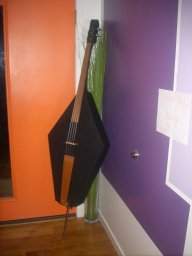
The frettgroove system was developed and patented by Marco bass guitars so players could play a frettless bass with the confidence of a fretted bass. The brass frett inserts are con caved vs con vexed so the player is in pitch while playing along the frettboard. These basses seem like a freak of nature but the upright buzz matched with the ease and playability of a electric bass makes these instruments and amazing hybrid that should be played.
Electra Player said:All I know is that I wanna try it...really bad. Looks awesome.
Definitely consider trying one of these instruments they are a incredible innovation in the bass world!!!