• TalkBass has been independent since 1998. Add your voice.
    Create a free account to reply to discussions, view embedded media, and browse with fewer display ads.
    Join freeLog in
    Want zero display ads or expanded classifieds tools? Compare plans.

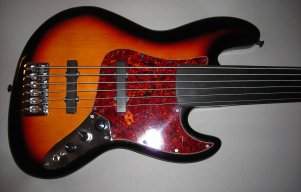
Fretless-Lined or unlined?

I have played both and don't have a preference. I also play DB, which I put side dots on for a visual reference (at "frets" 3, 5, and 7. The unlined fretless has side dots in the same places and at the 10th and 12th fret - from the manufacturer).

Are the dots 100% accurate? No. But they provide a reference point and my ear corrects.

Even if dots were outlawed I'd be looking for scratches, grain patterns, etc. for reference points. I'm very visually oriented.

I do prefer the look of an unlined board...
 
The whole lined vs unlined debate strikes me as rather funny. Eventually, as we progress, we won't be able to look at the board anyway. How can you look at the board when reading during complicated passages? How can you look at the board when you are trying to look at the leader to know where the tune should be going? How can you look at the board when you should be trying to make eye contact with other musicians or the audience?

Eventually we come to realize that a musician's eyes are not for the fretboard. Wether it's lined or not really does not matter. You probably won't get to use it anyhow. Your ears are going to have to do the work, no matter what.

Any fretless musician who is so concentrated on his or her board that he needs to look at it continually is not going to work very long.

This is all very sad, but we may as well get ready for it. It's not so bad, tens of millions of musicians play unfretted instruments every day without the use of their eyes.

John
 
There are lines on my fretless but I don't look at them constantly. I will for position shifts, but I have to do that on fretted, as well. I am confused when I hear people saying lines confuse them. If you don't need them, don't use them. This always really struck me as a pointless debate.
 
Let's explore this myth that fretless players who sneak a peek at the board can't get gigs...

Eyes glued to the board for first 0:45...

YouTube - ‪Jaco Pastorius- Soul Intro- The Chicken (Live 1982)‬‏

Eyes follow hand at all times, no eye contact with audience...

Invalid Link Removed

Blatantly "sneaks a peek" at every pause in the vocals (and listen carefully at 2:05)...

YouTube - ‪The Police - Roxanne live 1979‬‏

A few more...

YouTube - ‪The Band, The Weight‬‏
YouTube - ‪white room-cream(bass solo 08 jack bruce)‬‏
YouTube - ‪Marcus Miller - Fretless bass solo‬‏

Remember, people, by the time you HEAR that you're playing out of tune and use your EAR to correct the pitch... it's too late! Use the lines/side dots if you need to; if Jaco can do it, so can you! :)
 
Gary Willis does it all the time, as did Andres Segovia, Al Di Meola, and an endless line of other professional musicians. The only people I've heard say that you can't look at your instrument when you're a professional are people on message boards, while you can witness professionals staring at their instruments everywhere you look.
 
Dudes, you will find some times where Jaco was looking at the neck, no doubt.

But are you arguing that he relied on this?

If so, I wonder what he did when he was hired to sight read complex passages. I have been hired for this and I personally guarantee you that Pastorius did what I did...use my ears, forget the whole lined vs unlined debate. Otherwise, he was cut out of a lot of work. It's happened to me. I learned.

I guess for those of you who believe the lines, dots, etc are necessary and it is worth arguing about whether it should be lined or not, I wonder why this is necessary for us bassists and not for the huge majority of the millions of musicians of other instruments who don't need these crutches?

Are we really handicapped because we are bassists? Only bassists need this because we are somehow inferior?

Ladies and gents, the whole lined vs unlined debate would be seriously laughed at in the general fretless community of musicians.

I'd hate to argue that we need to argue about this because we are bassists. I would be even more uncomfortable arguing that some of our greatest bass musicians needed lines or dots or whatever.

What was Pastorius missing that all these millions of other orchestral musicians had? How come hundreds of thousands trombone players can play their instrument in tune without dots, lines whatever and Pastorius was unable? He was somehow inferior to all these guys? He chose the bass because he couldn't have cut it on the 'bone?

Yes, you will find some pros looking at their lines or dots or whatever sometimes. However, if that is what they need to do what they do, they are cutting themselves out of a lot of work. Perhaps it's ok. But the average working bassist can't afford that.

That is why I would argue that serious musicians who need music to survive find the whole lined vs unlined debate pretty funny. It's simply not usable at a certain level. Common sense will tell you that. And most fretless instruments in the world don't offer it. It really should tell us something.

Unless we are arguing that because we are bassists, we need this. Which is really rather embarassing. We are often looked upon as lesser than by other musicians, I would hate for us to actively advocate for this in front of all the other fretless musicians who play their non bass instruments without all this paint.

Come on. We are able, let's stop selling ourselves and our role short. We are as good, if not better, we just need to move away from these entertaining but slightly embarassing lined vs unlined debates.

John
 
Dudes, you will find some times where Jaco was looking at the neck, no doubt.

But are you arguing that he relied on this?

Nope, I am arguing only: "There is no disadvantage to having lines/dots. Many players (including those I linked to above) find a visual reference helpful, and I have not personally lost any gigs because my fretless is lined."

* (I will concede that, on a very poorly-constructed neck, the fret markers might wiggle loose over time and create a playability issue. I haven't encountered this myself even at the Squier/SX/etc. price point, so it definitely shouldn't be a problem with Warmoth. They make good stuff.)
 
Nope, I am arguing only: "There is no disadvantage to having lines/dots. Many players (including those I linked to above) find a visual reference helpful, and I have not personally lost any gigs because my fretless is lined."

I think a lot of us are arguing in favor of this statement with ever-so-slightly nuanced differences, and therein lies the debate... it's funny, we basically disagree over the smallest details about playing fretless. I don't think one system is truly better than the other but I have stated what my preferences are and why.

And he has each key scented differently, hence the side-to-side head movement :)

Not unlike a Tyrannosaurus rex (also tickling the ivories with those tiny hands, how awesome would that be?!?). EDIT: Wow my Jurassic Park reference went off the rails quickly. Wait, maybe the T. rex didn't rely on smell? Now I don't even know! Ugh. /fail
 
All of my fretlesses were once fretted, so vestiges of the lines have always been present, sometimes more than others. While I may look at the side of the neck for basic orientation, I can't relay on looking at the neck while playing, but I can, and do, rely on my ears.
 
Dudes, you will find some times where Jaco was looking at the neck, no doubt.

But are you arguing that he relied on this?

If so, I wonder what he did when he was hired to sight read complex passages. I have been hired for this and I personally guarantee you that Pastorius did what I did...use my ears, forget the whole lined vs unlined debate. Otherwise, he was cut out of a lot of work. It's happened to me. I learned.

I guess for those of you who believe the lines, dots, etc are necessary and it is worth arguing about whether it should be lined or not, I wonder why this is necessary for us bassists and not for the huge majority of the millions of musicians of other instruments who don't need these crutches?

Are we really handicapped because we are bassists? Only bassists need this because we are somehow inferior?

Ladies and gents, the whole lined vs unlined debate would be seriously laughed at in the general fretless community of musicians.

I'd hate to argue that we need to argue about this because we are bassists. I would be even more uncomfortable arguing that some of our greatest bass musicians needed lines or dots or whatever.

What was Pastorius missing that all these millions of other orchestral musicians had? How come hundreds of thousands trombone players can play their instrument in tune without dots, lines whatever and Pastorius was unable? He was somehow inferior to all these guys? He chose the bass because he couldn't have cut it on the 'bone?

Yes, you will find some pros looking at their lines or dots or whatever sometimes. However, if that is what they need to do what they do, they are cutting themselves out of a lot of work. Perhaps it's ok. But the average working bassist can't afford that.

That is why I would argue that serious musicians who need music to survive find the whole lined vs unlined debate pretty funny. It's simply not usable at a certain level. Common sense will tell you that. And most fretless instruments in the world don't offer it. It really should tell us something.

Unless we are arguing that because we are bassists, we need this. Which is really rather embarassing. We are often looked upon as lesser than by other musicians, I would hate for us to actively advocate for this in front of all the other fretless musicians who play their non bass instruments without all this paint.

Come on. We are able, let's stop selling ourselves and our role short. We are as good, if not better, we just need to move away from these entertaining but slightly embarassing lined vs unlined debates.

John
:hyper: *standing ovation* :hyper:
 
I guess we can argue this back and forth all week.

Let me say this another way.

For me I have found when I have learned my finger board well enough to close my eyes and play, I am able to better express myself as a player. I am better able to open my soul and let what is inside my heart come out.

I have found (for me) when I need to pay attention to what I'm doing/where I'm at, I'm too busy thinking and just making notes come out.

When I'm looking there is an extra path for the thoughts to be processed. When I'm not looking one connection between my heart and the music has been removed.

It does take a good bit of time on the instrument to be able to achieve this and I can understand how someone not having experienced this might not comprehend.

I'm sure there will be a rebuttal to this concept and there is nothing else I can add to it.

Sayonora.:)
 
Are we really handicapped because we are bassists? Only bassists need this because we are somehow inferior?

Well it's worth remembering that fretless is actually an innovation on the electric. It actually started its popular life in fretted form with the Fender and Rickenbacker instruments.

More to the point, the electric in general has only a fraction of the pedagogical tradition that most other stringed (fretless) instruments have. Those guys have been writing about and perfecting techniques on those things for literally centuries. The electric has only been around in popular music since the 50's.

So even something like Thou Shalt Not Look At Thy Fingerboard at Yon Paying Gig will get about an equal amount of sneers as it will cheers.

We just don't have that kind of thing worked out yet, especially on the fretless. Like I said, it's new even within the lifetime of the electric, so we know even less about it at this point.

That said, it's logical to me to try to wean oneself off visual cues as much as possible. I practice in the dark quite a bit and also try at least simple, regimented things while not looking at the fingerboard. A closed major scale is obviously a cinch without looking, but something involving shifts, well, I'm definitely not there yet.

So I personally am in favor of that, especially if you're gigging. I'd probably put a lot more time into it if I were still a gigging bassist...

LS
 
More to the point, the electric in general has only a fraction of the pedagogical tradition that most other stringed (fretless) instruments have. Those guys have been writing about and perfecting techniques on those things for literally centuries. The electric has only been around in popular music since the 50's.

We just don't have that kind of thing worked out yet, especially on the fretless. Like I said, it's new even within the lifetime of the electric, so we know even less about it at this point.

Exactly so. This is obvious in the fretless marker discussion. The first fretless basses were converted fretted instruments. So obviously they started with the same markers as fretted basses. But then people began to figure out that markers on the fretlines worked better than the fretted "between the frets" reference dots and it became a kind of standard.

But that was not that long ago! Most of those early basses are still around as are the people who got used to playing them that way. And the instrument continues to be improved and developed! So a comparison to say a violin or other such where many years of shaking down ways of doing things have taken place is just a bit unfair.
 
bucephylus said:
Sorry, but playing one or the other does NOT give anyone "better ears." Pitch discrimination is wired in your DNA. Extensive (as in decades of) research into pitch discrimination produce the same result.

Nice to be enthusiastic about your choice, but let's not mislead people.

The fact that there is a genetic component does not preclude "training" as a very efficient way to improve the way your brain processes pitch information. So let's not get the story halfbaked.