• TalkBass has been independent since 1998. Add your voice.
    Create a free account to reply to discussions, view embedded media, and browse with fewer display ads.
    Join freeLog in
    Want zero display ads or expanded classifieds tools? Compare plans.

Fretless newbie

Fingerboard wear is a bit of a hot topic here on TB and I'm pretty convinced that it has a lot more to do with the player than the strings and fingerboard. Some players dig in more than others and those players are goung to have issues with fingerboard wear regardless of what strings they use - even flats. I've seen plenty of double basses with grooves worn into ebony boards from years and years of playing flatwound DB strings.

I've played roundwounds on both ebony and rosewood boards, both coated and uncoated, for almost 30 years. The most I've ever experienced was some minor marking. In those cases I could easily clean it up with some 600 grit sandpaper, but I seldom bother as it's only cosmetic. But this is MY reality. I play with a pretty light touch and tend not to wear fretted basses down either. I'm not in a position to say that others don't experience serious wear from rounds on FL just because I don't experience it myself. Clearly many folks do or it wouldn't ever be mentioned here at all.

The reason I always suggest new FL players use what they already know is that one set of strings is not enough to ruin any fingerboard, and it gives a new FL player a chance to guage for themselves whether or not they think rounds will work out - for them.
 
A lot of it depends on what kind of fingerboard you have. Ebony will hold up a lot better than rosewood, and even more so than maple.
String choice is a factor too. Rounds will chew up any board quicker than flats. I've gone over to Rotosound Pressurewounds as I find they have enough 'tooth' to get the roundwound snarl, but are kinder to the board.

A lot depends on how you play too. I'm quite heavy handed, so accept 'tramlining' as an inevitable pay-off - if that means I have to have the board shot in every 2-3 years or so, then so be it.

As to the whole Lined vs Unlined schtick, I found that under normal playing conditions you can't really see a lined board so it's of little value IMO. What does help is having edge lines & dots:

SB-1000F-003-1.jpg


P.
 
  • Like
Reactions: Narc_x
Honestly? I beat my bass up. Uncoated/un treated ebony, yes, but I almost TRY to damage it, usin steel rounds almost nightly, playin both heavier styles, and WITH a heavier style fingerstyle approach. My hero in this regard is Tony Franklin. I have also used both an epoxied rosewood board and my aforementioned ebonol. All wit rounds, and honestly? The boards all exhibited wear. But none ever have needed sanded or touched up. I played these basses TONS! Daily, personal rehearsal, studio sessions and live performance. I do believe technique and setup for your PERsonal style are two very important factors. An example; vibrato along the string length by rolling yer fingers, not across the board or jerkin yer hand up an down the neck. Lotsa other tips. Also? Rosewood, and maple, aren't fer heavy rounds unless coated. In my opinion. Flats are great on my bass. But? I hate the feel an tension. Also? Like Jaco, Tony Franklin, I prefer a more aggressive sound. Out front. Easy to hear thru loud guitars onstage. They used rounds. So? I do. But tone is subjective. Try it all. Ya gotta start somewhere.
 
Agree (from what of many fretless players opinions I ever heard)..
But it surely possible to happen anyway, after some long time (IDK how long)
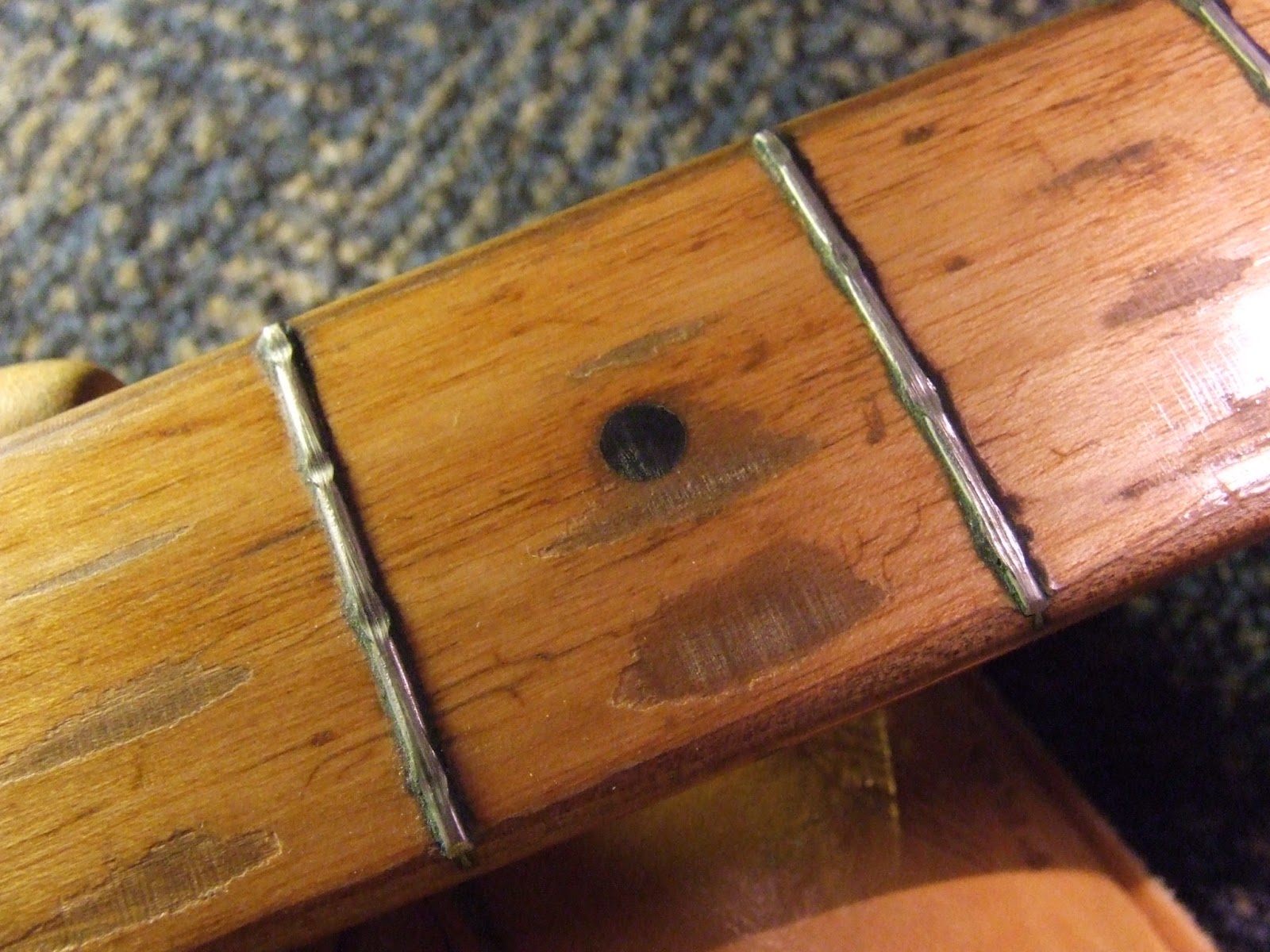
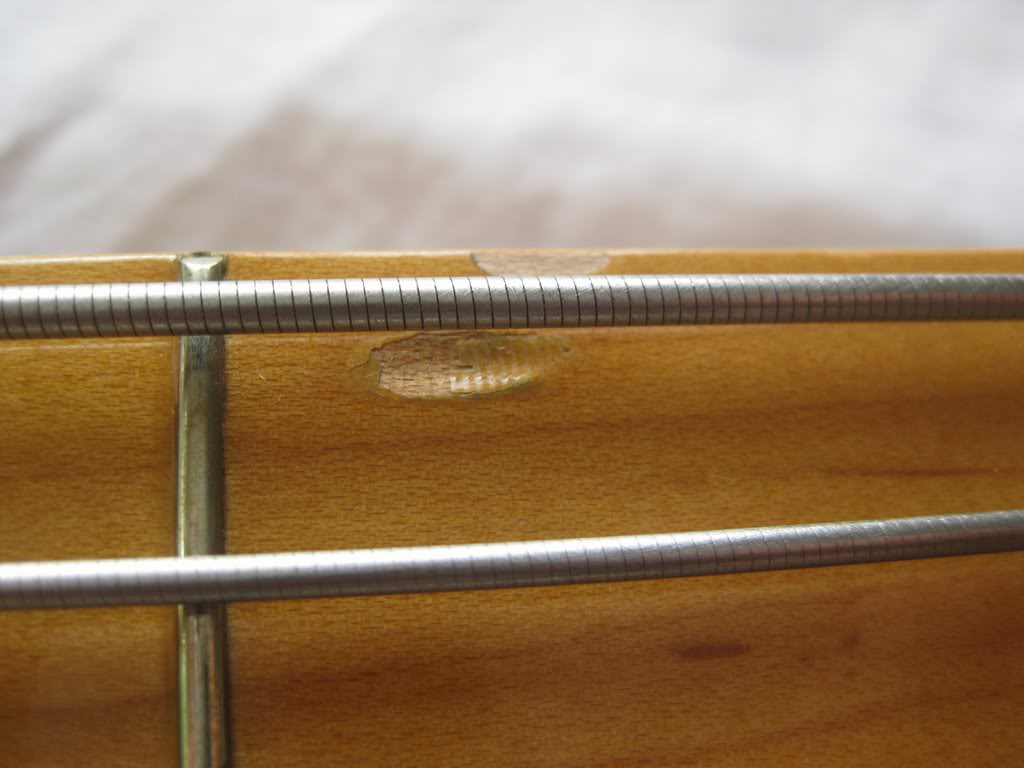
DSCF1311.jpg


IMG_0691.jpg

Even one which has 'guards'...the 'guards' can't protect them some time at last :D
This is damn near what my old 78 Precision looked like after a year of touring (it was practically mint beforehand), using nothing but Rotosound stainless steels. If you must use rounds, at least go with the lesser of two evils. Nickel.
 
I plan on using the fretless I get as a secondary bass for a few songs, so I don't think I'll have the opportunity to carve up the fingerboard like some of you gents. My touring days are pretty far behind me at this point. Nowadays I'm lucky to play out once every couple of months.
 
I'd recommend the ESP LTD 205 SMFL. I bought it for around $400 CDN. and I found it true what I heard from everyone about what a great quality instrument it is. It didn't need any set up out if the box, gives lots if "mwah", has a 3 band eq, is lined, and plays smoothly. Looks awesome with the spalted maple top/bottom as well.
 
Honestly? I beat my bass up. Uncoated/un treated ebony, yes, but I almost TRY to damage it, usin steel rounds almost nightly, playin both heavier styles, and WITH a heavier style fingerstyle approach. My hero in this regard is Tony Franklin. I have also used both an epoxied rosewood board and my aforementioned ebonol. All wit rounds, and honestly? The boards all exhibited wear. But none ever have needed sanded or touched up. I played these basses TONS! Daily, personal rehearsal, studio sessions and live performance. I do believe technique and setup for your PERsonal style are two very important factors. An example; vibrato along the string length by rolling yer fingers, not across the board or jerkin yer hand up an down the neck. Lotsa other tips. Also? Rosewood, and maple, aren't fer heavy rounds unless coated. In my opinion. Flats are great on my bass. But? I hate the feel an tension. Also? Like Jaco, Tony Franklin, I prefer a more aggressive sound. Out front. Easy to hear thru loud guitars onstage. They used rounds. So? I do. But tone is subjective. Try it all. Ya gotta start somewhere.

So I guess Nameless has a high threshold for fingerboard damage. Just call it fretless relicing! When I got my Alembic, it supposedly came with pressure wounds, but if there was any pressure it was done with someone's thumb! They sure looked like rounds to me! And they IMMEDIATELY began chewing the nice new ebony fingerboard. I FREAKED! I sanded the marks off and switched to ground wounds. Virtually all my fretless basses use ground wounds now. It's about as bright as you can go and still not chew the fingerboard. I have one with flats just for drill and one with GHS pressure wounds for grins as well. Pressure wounds are brighter than ground wounds, but do chew a tiny bit. But not as much as rounds do. Grounds and flats don't chew at all. And rosewood and maple chew much easier than ebony.

Bottom line is that if you love the tone of stainless steel round wounds, then do it! It will chew the neck, but hey, it's just the cost of "doing business" with the tone you love. Personally I'm not a fan of pressure wounds because to my ear they have this kind of funny tone. For me grounds are where it is at. And I hate that zip-zip sound of rounds on either fretted or fretless anyway. My advice starting out would be to get a set of GHS or D'Addario ground wounds for the bass. And then once you get used to fretless go from there.

Yeah, Squier is a great place to start.

And I almost forgot. You can get nylon tape wound LaBellas cheap as dirt from Carvin. EXCELLENT feeling strings! Zero chews. I love the sound on my semi-hollow fretless Carvin AC50, but I'm not so sure I'd put them on a more standard solid body bass.

 
So I guess Nameless has a high threshold for fingerboard damage. Just call it fretless relicing! When I got my Alembic, it supposedly came with pressure wounds, but if there was any pressure it was done with someone's thumb! They sure looked like rounds to me! And they IMMEDIATELY began chewing the nice new ebony fingerboard. I FREAKED! I sanded the marks off and switched to ground wounds. Virtually all my fretless basses use ground wounds now. It's about as bright as you can go and still not chew the fingerboard. I have one with flats just for drill and one with GHS pressure wounds for grins as well. Pressure wounds are brighter than ground wounds, but do chew a tiny bit. But not as much as rounds do. Grounds and flats don't chew at all. And rosewood and maple chew much easier than ebony.

Bottom line is that if you love the tone of stainless steel round wounds, then do it! It will chew the neck, but hey, it's just the cost of "doing business" with the tone you love. Personally I'm not a fan of pressure wounds because to my ear they have this kind of funny tone. For me grounds are where it is at. And I hate that zip-zip sound of rounds on either fretted or fretless anyway. My advice starting out would be to get a set of GHS or D'Addario ground wounds for the bass. And then once you get used to fretless go from there.

Yeah, Squier is a great place to start.

And I almost forgot. You can get nylon tape wound LaBellas cheap as dirt from Carvin. EXCELLENT feeling strings! Zero chews. I love the sound on my semi-hollow fretless Carvin AC50, but I'm not so sure I'd put them on a more standard solid body bass.


You don't understand. My basses? Play fine. Fingerboard damage? No... Ghost lines that add to tone an mwah, yes. My technique keeps the board fine. My basses play great, tho my action is high enuff that when I "fret" a note, the string in front of my finger isn't laying on the fretboard, marking it. Those little ghost marks an lines are NORMAL, and canna be avoided. That many players such as Tony Franklin, Jaco, etc had those lines while they were playin (epoxy scratches a bit, too), and they did NOT sand their boards back to brand new perfect every night, gave me confidence to see what happened after those little lines appeared on my board. Well, nuttin else happens. In fact, my boards get a little shiny, as if buffed, an the little scratches got no worse and seemed to add to the great sound I started gettin. If you want a perfect lookin fretboard, fine. But unfortunately to get the tone some want, teeny scratches an a little wear don't scare, and aren't a detriment to, real players, so why should I worry? I don't. My basses have no damage. Just a small amount of wear. They sound great, and after thirty years of playin? I want great sound, not a perfect lookin bass. I acquired good technique. My boards aren't damaged. They just breakin in...
 
Last edited:
I just recently got a fretless as well. a really nice Fbass BNF6. I took it to band practice and noticed some wear immediately. I've since scoured TB looking for info about string possibilities. I love the sound of the Roundwound strings that are currently on it and I think I'm just going to let it be. The general consensus is that wear of the fretboard will happen to a fretless or a fretted instrument. It's the cost of doing business.

Congradulations on 10 years of marriage and your new fretless OP. What kind of bass did you end up getting?
 
Last edited:
So, I keep seeing Yamaha fretless basses for cheap. Mostly 4s but I have seen a couple of 5ers as well. I've never played one myself but if I didn't already have a pretty good fretless, I would probably snatch a Yamaha for $150 or less just to try.

[Invalid or Expired Link Removed]

I've heard others play them and they sound fine. Not inspiring but definitely OK.
 
If, the fretless fretboard 'chewed' up by the strings to the point of 'must be replaced', say it's a Squier VM Fretless Jazz Rosewood- with the 'sharpest' roundwound strings- played hard & often, I wonder:

1. How fast(est) of the time will it took till it has to be replaced? (one year? two year?...)
2. How much is the cost of replace it?

I'm sure many of you here know the answers.
 
If, the fretless fretboard 'chewed' up by the strings to the point of 'must be replaced', say it's a Squier VM Fretless Jazz Rosewood- with the 'sharpest' roundwound strings- played hard & often, I wonder:

1. How fast(est) of the time will it took till it has to be replaced? (one year? two year?...)
2. How much is the cost of replace it?

I'm sure many of you here know the answers.

No, you are getting WAY too worried here. Neither I nor anyone else has seen a fretless finger board that was worn so much it needed "replaced". What they need is "planed". And if chews are minor just a good sanding does it. It's not an expensive thing to get done.

Since I don't use rounds I can't say how long it takes, but folks here at TB say it varies depending on your technique, styles, how much you play the given bass etc. Typically it's measured in years for Ebony and somewhat shorter for rosewood and maple.

What happens is a slight groove gets worn in the fingerboard. If your action is high that makes next to no difference. If your action is very low (lots of mwah) then what happens is that the string tends to buzz on the higher parts of the fingerboard for certain notes.

As you can see it's not a huge worry. Some (like Nameless) have no problems at all, and others that do report chews indicate that it's not a major worry or expense. Just search around TB and you'll see what I mean.

Personally I've come the love the tone/feel of ground wound strings on a fretless. That is why virtually all my fretless basses have them. That they don't chew the fingerboard is just a nice bonus.
 
If, the fretless fretboard 'chewed' up by the strings to the point of 'must be replaced', say it's a Squier VM Fretless Jazz Rosewood- with the 'sharpest' roundwound strings- played hard & often, I wonder:

1. How fast(est) of the time will it took till it has to be replaced? (one year? two year?...)
2. How much is the cost of replace it?

I'm sure many of you here know the answers.
It varies from player to player, board to board and depends upon strings as well. I keep reading posts by players who talk about their boards being "chewed" by rounds and, frankly, I'm not sure what they mean.
What I have seen on fretless boards after only a small amount of playing time with rounds is a series of marks on the board where the windings of the strings have slightly burnished the surface of the wood. On rare occasions, these burnished lines will be slightly indented (if a player digs in really hard or the board is especially soft), but in most cases - and I can only speak for the cases I've seen personally - these lines are just marks on the surface. They don't affect the tone or playability of the basses in any way and they take years to get any worse.

Most of my FL basses were bought used and I've owned a lot of them. I almost never pass a used fretless in a store without playing it. As a result, I've played a ton of used FL basses. There's no way to know how a used bass was treated, so I have to assume some of the basses I played were played hard and/or abused. In almost 30 years of playing every used fretless I could get my hands on, I have only seen a handful that actually had wear: real wear that resulted in actual grooves in the fingerboard or that actually affected playability. Almost all of them had those little, burnished lines, but I don't consider that wear - not in any meaningful way. Based upon this - and it's only my experience - most fretless fingerboards can go for many years with roundwound strings without needing any dressing at all and, with regular dressing (lightly sanding once every year or two) I expect most boards - ebony or rosewood, coated or uncoated - would outlive any of us.

Now, having said all of that, I have not seen every FL bass in the world and it would be difficult for me to believe that all of the other TB members who talk about serious fingerboard wear could all be wrong. Obviously, wear has to be an issue for some players or it would never come up in these online discussions at all. What I do wonder about, however, is how many FL players who talk about wear are talking about wear that affects playability and/or tone vs. how many who might see those lines on the board, get worried and fear that their boards are wearing out right before their very eyes. I know that there simply have to be some players who dig in so hard (or have soft fingerboards, or have very acidic sweat, or whatever) that they have real issues with fingerboards actually wearing to a measurable degree. I just wonder how many.
 
  • Like
Reactions: bluesdogblues
I've had various fretless basses since the mid 80s, and never noticed any extra wear from roundwound strings. But, I keep my action low and have always played with a light left hand.

I prefer the sound of tapewound strings, so I use them, but I used to use Roto Sound Swing Bass 66 strings on everything. Never marred a fretboard.

As for the marker lines - I think they destroy the beauty of the finger board. You will rarely (if ever) use them. If you need a crutch when you start to convert, mark the side of the neck. But fretless should be played with your ears, like any orchestral stringed instrument, like a violin or cello (not to mention double bass).
 
  • Like
Reactions: bluesdogblues
No, you are getting WAY too worried here. Neither I nor anyone else has seen a fretless finger board that was worn so much it needed "replaced". What they need is "planed". And if chews are minor just a good sanding does it. It's not an expensive thing to get done.

Since I don't use rounds I can't say how long it takes, but folks here at TB say it varies depending on your technique, styles, how much you play the given bass etc. Typically it's measured in years for Ebony and somewhat shorter for rosewood and maple.

What happens is a slight groove gets worn in the fingerboard. If your action is high that makes next to no difference. If your action is very low (lots of mwah) then what happens is that the string tends to buzz on the higher parts of the fingerboard for certain notes.

As you can see it's not a huge worry. Some (like Nameless) have no problems at all, and others that do report chews indicate that it's not a major worry or expense. Just search around TB and you'll see what I mean.

Personally I've come the love the tone/feel of ground wound strings on a fretless. That is why virtually all my fretless basses have them. That they don't chew the fingerboard is just a nice bonus.

It varies from player to player, board to board and depends upon strings as well. I keep reading posts by players who talk about their boards being "chewed" by rounds and, frankly, I'm not sure what they mean.
What I have seen on fretless boards after only a small amount of playing time with rounds is a series of marks on the board where the windings of the strings have slightly burnished the surface of the wood. On rare occasions, these burnished lines will be slightly indented (if a player digs in really hard or the board is especially soft), but in most cases - and I can only speak for the cases I've seen personally - these lines are just marks on the surface. They don't affect the tone or playability of the basses in any way and they take years to get any worse.

Most of my FL basses were bought used and I've owned a lot of them. I almost never pass a used fretless in a store without playing it. As a result, I've played a ton of used FL basses. There's no way to know how a used bass was treated, so I have to assume some of the basses I played were played hard and/or abused. In almost 30 years of playing every used fretless I could get my hands on, I have only seen a handful that actually had wear: real wear that resulted in actual grooves in the fingerboard or that actually affected playability. Almost all of them had those little, burnished lines, but I don't consider that wear - not in any meaningful way. Based upon this - and it's only my experience - most fretless fingerboards can go for many years with roundwound strings without needing any dressing at all and, with regular dressing (lightly sanding once every year or two) I expect most boards - ebony or rosewood, coated or uncoated - would outlive any of us.

Now, having said all of that, I have not seen every FL bass in the world and it would be difficult for me to believe that all of the other TB members who talk about serious fingerboard wear could all be wrong. Obviously, wear has to be an issue for some players or it would never come up in these online discussions at all. What I do wonder about, however, is how many FL players who talk about wear are talking about wear that affects playability and/or tone vs. how many who might see those lines on the board, get worried and fear that their boards are wearing out right before their very eyes. I know that there simply have to be some players who dig in so hard (or have soft fingerboards, or have very acidic sweat, or whatever) that they have real issues with fingerboards actually wearing to a measurable degree. I just wonder how many.
Thanks bassbenj and Lo-E:
bassbenj, no I have no worry at all, since I don't have/play any Fretless bass LOL. I have only interest of the fretless, but never have one yet.
I just asked questions above because my curiousity after read some of coments above. Your two answers and more I read in TB and everywhere confirm my thought that, contrary to some of the comments above, no it's should not a big deal at all (to even use roundwound strings for fretless bass). It's just that simple.
:)
 
Although their selection is a little limited right now, check out Rondo Music and the SX line. Under $150 shipped, so there's no big investment if it doesn't work out, AND they are great modding platforms if you do like it. You can upgrade the pickups, neck, tuners, bridge, or whatever and stay in that $400 ballpark.