• TalkBass has been independent since 1998. Add your voice.
    Create a free account to reply to discussions, view embedded media, and browse with fewer display ads.
    Join freeLog in
    Want zero display ads or expanded classifieds tools? Compare plans.

Fretless - Using Roundwounds

Just to add a couple things to my first post: my experience with the uncoated Warmoth board was probably a significantly more demanding gig from the stand point of board wear than most here are likely to experience. It was 4 - 5 hours each week of serious (and loud) blowing; and we had at times as many as 5 guitarists on stage taking choruses. Of course nearly all the tunes were in the standard blues keys.

I initially had the same attitude about the whole thing that I am reading in this thread. But, changed my mind about that when the wear started to affect intonation, which is NOT good bass. I no longer have gigs which put that kind of wear and tear on the instrument; but, an experience like that never entirely goes out of one's concepts either.

And, while I wouldn't go looking for that kind of gig again, I also wouldn't trade the experience of having done it for anything.

Anyhow, these days, I'm using @Gard's old Zon; which has a phenolic board, so moot.

Use whatever floats your boat and play well.
 
Nothing to worry about. Slapping and tapping both sound bad (to me) on fretless anyway. :)

Bends are sometimes necessary if you're looking for that sound. For instance, the intro to "Birdland" uses bends. Sure, after playing it like 1000 times you might see some wear, but who cares?

Just play man!

If you approach the "Birdland" bends by sliding up and down the neck rather than pulling or pushing the strings across it (as is the normal fretted technique for bending notes) you greatly diminish the wear and tear on the strings as well as the fingerboard. The adjustment is a mental one. Look at the fingerboard in terms of nut to bridge, rather than parallel to the frets. Hope this helps.
 
  • Like
Reactions: bucephylus
If you approach the "Birdland" bends by sliding up and down the neck rather than pulling or pushing the strings across it (as is the normal fretted technique for bending notes) you greatly diminish the wear and tear on the strings as well as the fingerboard. The adjustment is a mental one. Look at the fingerboard in terms of nut to bridge, rather than parallel to the frets. Hope this helps.

Sure, I would play it that way if I were at all concerned about wear. Maybe others will try it, though.

BTW Nice playing Jason, that bass is giving me GAS!

Thanks for the kind words! You should totally get one... it's a great bass!
 
  • Like
Reactions: jamro217
Anyhow, these days, I'm using @Gard's old Zon; which has a phenolic board, so moot.

So that's where she ended up....great bass, glad it has a good home. :)

FWIW, if I remember correctly, that isn't a phenolic, but a Dymond Wood (what we call Diamondwood here @ Roscoe) fingerboard. It's pretty easy to tell - if you see ANY kind of "wood grain" appearance, it is not phenolic.
 
  • Like
Reactions: bucephylus
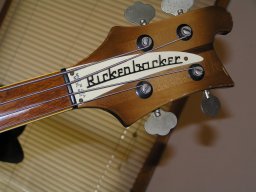
Just my experience, I destroyed a Precision uncoated rosewood fretless neck with Rotos years ago when I first started playing fretless, it sounded great but got buzzes almost immediately, nothing worse than a buzz on a fretless neck. I am a rocker not a jazzer so I wrench the sound out of most basses and have consequently had to coat my fretless basses. The latest is a Rick 4003FL with whatever they originally coat the necks with. That one also sounded great with round wounds but started getting buzzes within a few weeks just playing at home, so it is in the process of being superglued right now. I played a Fender Precision maple fretless that I coated with epoxy years ago 4-5 nights a week and never had a problem with it. If you have a heavy touch or you don't want to have to take it easy on your fretless you are better off having your neck coated with something hard like epoxy or superglue. It does change the sound a little usually although so far super glue seems to change it less but the bass is not finished yet. Metal is harder than wood and damage will result eventually it just depends on how you play it. I couldn't care less about visible scratches but when I feel and hear buzzes they drive me nuts and are very audible through your amp.
 
  • Like
Reactions: bucephylus
I've used rounds on everything I've played at one time or another and I never encountered noticeable fingerboard wear on anything because of that. I think a lot of it has to do with how you play rather than whether or not you're using rounds. I've got rounds on one fretless, flats on another, and pressurewounds on a third. But I always try to match the strings to the specific bass. So if rounds provide the best sound on something, that's what I'll load it with. Same goes for flats, tapes or any other string type.
 
  • Like
Reactions: saabfender

Latest posts