
I've found several threads that mention that roundwounds, generally speaking, will leave fretless rosewood fingerboards with scratches, indentations, etc. This is common knowledge. However, I can't seem to find an answer to this: Will any of the scratches, indentations, etc. affect anything other than looks? I've accepted that my fretless fingerboard will get unsightly after awhile, but do I need to be concerned about the damage making the bass eventually play improperly?

Enjoy the benefits of a premium membership!
Upgrade Account
-
TalkBass has been independent since 1998. Add your voice.
Create a free account to reply to discussions, view embedded media, and browse with fewer display ads.
Join free Log in
Want zero display ads or expanded classifieds tools? Compare plans.
You are using an out of date browser. It may not display this or other websites correctly.
You should upgrade or use an alternative browser.
You should upgrade or use an alternative browser.
Fretless - Using Roundwounds
- Thread starter Warpeg
- Start date
-
- Tags
- fretless roundwounds
More options
Who Replied?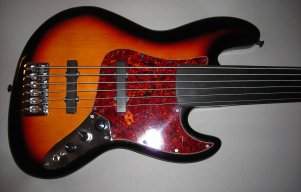
I've found several threads that mention that roundwounds, generally speaking, will leave fretless rosewood fingerboards with scratches, indentations, etc. This is common knowledge. However, I can't seem to find an answer to this: Will any of the scratches, indentations, etc. affect anything other than looks? I've accepted that my fretless fingerboard will get unsightly after awhile, but do I need to be concerned about the damage making the bass eventually play improperly?
String chews will affect looks. My Alembic came with rounds (They told me they were pressure-wounds, but they weren't) and immediately started leaving string marks on the ebony, Rosewood will chew even faster. Naturally I freaked and switched to ground wound strings (GHS Brite Flats) But some dudes love the sound of rounds, even on rosewood (or maple which is even worse for chews) and just do it. Eventually grooves will be worn under the strings and that will affect playing. But it's no big deal to get your fretless board planed down to smooth again. Of course the amount of fretless wear depends on the wood type and type of string (stainless are worst for chews), but word on TB is it takes quite a while before a neck trimming job is needed. From my experience, cosmetic marks appear VERY fast, but since I never used rounds on fretless I can't say how long it takes before you need the neck sanded. And it depends on how much you play a given bass and your technique of how you play it, but most TBers who use rounds on fretless say that it takes a LONG time for grooves to wear that much. We are talking years here. YMMV.
Note, you don't have to go to flats to end neck chews. Ground wounds are about as bright as you can go and still have smooth strings. Pressure wound strings are brighter still and chew a little bit, but not nearly as much as rounds.


You can also coat the fingerboard with CA or Epoxy. Go to Luthier's Corner Forum and do a search, lots of help there.
H
H

That actually pretty well sums it up, for me anyway. I have used rounds, no real big deal. As Bassbenj said, cosmetic scratches yes, quickly, permanent damage, a long time, depending of course, a number of factors like how hard you play, the hight of your action, the amount of hours you put in over a given period of time etc. I've used rounds on mine for extended periods of time with no ill effects but I also use low action and have an Ebony board. I have used ground wounds for years now and feel they are as bright as I need. YMMV etc.

No.I've found several threads that mention that roundwounds, generally speaking, will leave fretless rosewood fingerboards with scratches, indentations, etc. This is common knowledge. However, I can't seem to find an answer to this: Will any of the scratches, indentations, etc. affect anything other than looks? I've accepted that my fretless fingerboard will get unsightly after awhile, but do I need to be concerned about the damage making the bass eventually play improperly?
The rate and degree of wear of roundwounds has been greatly exaggerated.
If you don't slap,tap,do guitar-like string bends and run the heel of your palm of your right hand down the strings over the fingerboard(Jaco did this on occasion)
then you should only seen winding marks after a while.
Which can be easily removed with a radius sanding block.
You will not see deep grooves in the fingerboard.
They don't "chew up"the fingerboard.
You won't see rosewood dust in your lap.
The reason so many stores are stocking fretlesses with flatwounds is that they don't want to sell a bass that has been played by so many that it shows that tiny bit of wear.
If you are really concerned about what little wear that will happen,you may consider epoxy or ACC coating the fingerboard.
Fretless players that use roundwounds.
Jaco
Mark Egan
Gary Willis
Steve Bailey
Michael Manring
Alain Caron
Jimmy Johnson
Last edited:

I literally just posted about this in the thread that was created a couple days ago.
Here is my fretboard after 15 years of steel roundwound strings. Yes, there are marks under every string, all up and down the fretboard (most pronounced on the "frets"). No, it doesn't affect sound, playability, intonation, or otherwise. If you like rounds, use rounds. If you like flats, use flats. If you're worried about screwing up your fretboard, get a fretted bass.
Here is my fretboard after 15 years of steel roundwound strings. Yes, there are marks under every string, all up and down the fretboard (most pronounced on the "frets"). No, it doesn't affect sound, playability, intonation, or otherwise. If you like rounds, use rounds. If you like flats, use flats. If you're worried about screwing up your fretboard, get a fretted bass.

Last edited:

My experience is contrary to some of the other posts here. Around 1988 - 1991, I played fretless at a weekly Blues jam as house bass player. My main axe was a 1982 Fender Jazz on which I had installed a gorgeous Warmoth Birdseye neck with a thick no lines uncoated ebony board. I used round wounds. After about 24 months, the fingerboard had ruts at the standard blues key root positions. I also play upright, use proper fingering techniques, and don't do anything wild.
I planed down the board and coated it with polyurethane. Still have that neck.
So, my experience is that the wear depends on how much you play it. Go figure.
BTW, the polyurethane was, IMO, a huge success. It sounds warmer than epoxy or polyester. It wears extremely well. And, you can finish it with steel wool such that you almost can't tell it is even there. Pat Wilkins does this coating if you don't feel like doing it yourself.
I planed down the board and coated it with polyurethane. Still have that neck.
So, my experience is that the wear depends on how much you play it. Go figure.
BTW, the polyurethane was, IMO, a huge success. It sounds warmer than epoxy or polyester. It wears extremely well. And, you can finish it with steel wool such that you almost can't tell it is even there. Pat Wilkins does this coating if you don't feel like doing it yourself.

Turnaround
Commercial User
Clearly you had a different experience from jasonmatthews. I hear equal experiences on both sides. So I suppose the average is in the middle. 24 months as opposed to 180 months... that puts an average at 102 months (8.5 years) to yield something between surface marks and ruts. Take your pick.

That actually pretty well sums it up, for me anyway. I have used rounds, no real big deal. As Bassbenj said, cosmetic scratches yes, quickly, permanent damage, a long time, depending of course, a number of factors like how hard you play, the hight of your action, the amount of hours you put in over a given period of time etc. I've used rounds on mine for extended periods of time with no ill effects but I also use low action and have an Ebony board. I have used ground wounds for years now and feel they are as bright as I need. YMMV etc.
Same here... I have long term fretlesses with uncoated boards and because I use low action and don't bend the strings across the board the amount of wear after several years of gigging is negligible at worst. I only use roundwounds, normally nickel but I'm using stainless steel DR Hi Beams on my latest fretless, an Aries six. I slap on some of mine.
Bad enough wear can affect playability.
Last edited:
Worth mentioning that my fingerboard is Pao Ferro, which *should* be ever so slightly softer than ebony, and therefore should wear more. Mine is one of those Jaco Tribute basses (mine is 2001); it seems like there's some kind of coating on the fretboard, but not much of anything.
I do NOT play mine 100% of the time, but it's seen thousands of hours. One thing is certain: I'm not worried about it yet. It still plays like a dream and I fall in love again every time I play it.
I do NOT play mine 100% of the time, but it's seen thousands of hours. One thing is certain: I'm not worried about it yet. It still plays like a dream and I fall in love again every time I play it.

After seeing all the Road Worn basses on the market it's refreshing to read about someone whose concerned about scratches instead of, "How much more will it cost me to beat this bass up." ... Unless you're playing 10-hours a day seven days a week, like Jaco, you shouldn't see a huge difference in using round wounds of a Rosewood neck. They make some very nice flats these days, much better than the old ones. Experiment is experience.

I always used round wounds on fretless and yes they wear the fingerboard quite fast. It does not effect the intonation however I never liked to see those marks. So I decided to use flats in my new Thumb 5 fretless and I must say that you can still have a bright sound even with flats just using the eq wisely. Flats are even better for sliding actually.
Add Tony Franklin to this list.No.
The rate and degree of wear of roundwounds has been greatly exaggerated.
If you don't slap,tap,do guitar-like string bends and run the heel of your palm of your right hand down the strings over the fingerboard(Jaco did this on occasion)
then you should only seen winding marks after a while.
Which can be easily removed with a radius sanding block.
You will not see deep grooves in the fingerboard.
They don't "chew up"the fingerboard.
You won't see rosewood dust in your lap.
The reason so many stores are stocking fretlesses with flatwounds is that they don't want to sell a bass that has been played by so many that it shows that tiny bit of wear.
If you are really concerned about what little wear that will happen,you may consider epoxy or ACC coating the fingerboard.
Fretless players that use roundwounds.
Jaco
Mark Egan
Gary Willis
Steve Bailey
Michael Manring
Alain Caron
Jimmy Johnson
I've found several threads that mention that roundwounds, generally speaking, will leave fretless rosewood fingerboards with scratches, indentations, etc. This is common knowledge. However, I can't seem to find an answer to this: Will any of the scratches, indentations, etc. affect anything other than looks? I've accepted that my fretless fingerboard will get unsightly after awhile, but do I need to be concerned about the damage making the bass eventually play improperly?
Thanks, everyone. If I'm reading everyone's feedback correctly, then it sounds like there isn't too much to worry about in terms of the scratches affecting playability. However, it seems that I should be paying attention to the following:
- Damage will accelerate based on the frequency of use
- Slapping, tapping, and bending should be considered off limits
- Keep the action low and don't use an aggressive technique
- Damage will accelerate based on the frequency of use
- Slapping, tapping, and bending should be considered off limits
- Keep the action low and don't use an aggressive technique
Nothing to worry about. Slapping and tapping both sound bad (to me) on fretless anyway.
Bends are sometimes necessary if you're looking for that sound. For instance, the intro to "Birdland" uses bends. Sure, after playing it like 1000 times you might see some wear, but who cares?
Just play man!
Last edited:
I go through stages with fretless. Say six months of nothing but. I slap my fretless like it owes me money. With rounds. I get superficial marks but nothing truly damaging.Thanks, everyone. If I'm reading everyone's feedback correctly, then it sounds like there isn't too much to worry about in terms of the scratches affecting playability. However, it seems that I should be paying attention to the following:
- Damage will accelerate based on the frequency of use
- Slapping, tapping, and bending should be considered off limits
- Keep the action low and don't use an aggressive technique
I did get a rut on a pau ferro board on the C. I had the board planed for about $100. No big deal. My thinking is that if I have a fretless I'm going to play it the way I play it, with rounds and slapping. Otherwise why own it?

fretlesses for 3 decades (20 years exclusively): never had a fb treated (not saying it won't need to be). but i have several and play them all, so it might very well be different if i only played one instrument.but word on TB is it takes quite a while before a neck trimming job is needed
which i think is good idea if you're going to 'fret' about it!You can also coat the fingerboard with CA or Epoxy
yep: love rounds.If you like rounds, use rounds.
agreed: and it's best kind of 'mojo', IMO.the amount of wear after several years of gigging is negligible at worst
agreed: it's a part of fretless life, if you're really playing the instrument.One thing is certain: I'm not worried about it yet
don't worry at all, those scratches prove something.....If I'm reading everyone's feedback correctly, then it sounds like there isn't too much to worry about in terms of the scratches affecting playability
!Just play man!

I go through stages with fretless. Say six months of nothing but. I slap my fretless like it owes me money. With rounds. I get superficial marks but nothing truly damaging.
I did get a rut on a pau ferro board on the C. I had the board planed for about $100. No big deal. My thinking is that if I have a fretless I'm going to play it the way I play it, with rounds and slapping. Otherwise why own it?
Exactly. Even if I did get wear because it was unavoidable, I bought the bass to play it. Not save it for the next owner.

Around 1988 - 1991, I played fretless at a weekly Blues jam as house bass player.
that's one way to keep all the guitarists from asking if they can borrow your bass for a couple songs!
+1. Actually, as I think back on it, the blank board was pretty novel back then. The whole thing put off not only the guitar players, but also the casual bassist who walked in and didn't bother to bring their axe. Which as I think about it wasn't totally cool; but, it was a bit of the vibe at the time.that's one way to keep all the guitarists from asking if they can borrow your bass for a couple songs!
The other thing that is even more hilarious is when doing a gig with a lined fretless; and at the end of the night the lead guitarist asks to play the bass, only to realize there are no frets, and he can't play anything. Hands the bass right back, "oh, I didn't realize you were playing fretless."
Last edited:


