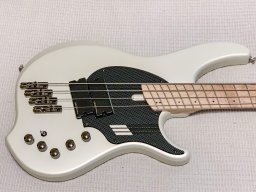
Over the past month or so I've been trying out a bunch of P basses to try to find one that will give me a solid, vintage tone. I've been listening to a lot of records that Pino played on lately and a bunch of Michael League too. Both of those guys have informed the kind of sound I'm after.
I played a G&L LB-100 in a local GC and thought it sounded fantastic. Nice growl, punchy, solid low end and lightweight too. So I took it home and stuck some flatwounds on it, it nailed the sound I was going for. I've been playing it for a week or so now and I'm happy with it save for a couple of issues with note consistency. I was surprised because Ed Friedland, amongst others, raves about how consistent it is. He calls it 'note integrity' I think: Invalid Link Removed .
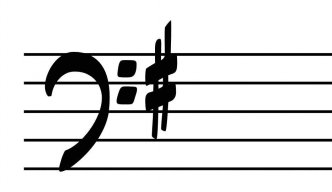
The most noticeable problem is a pretty aggressive dead spot on the 6th fret of the G string. You can hear the same deadness on D flat on the 11th fret on the D String, which from what I've read about dead spots being an interaction between the frequency of the note and the neck makes sense - the note frequency is the same.
Aside from the dead spots, I get some very slight fret buzz on the 5th frets on the A string and the D string. Those notes sound a bit weak too, but I'm guessing that's the same problem as the buzzing. The neck has a comparable amount of relief to my jazz bass so I'm thinking this is might be an issue with the frets.
What I'm wondering is, do you all think it's worth taking the bass to a tech (I have a local shop that has a Plek) to see if they can fix the slight buzzing on the 5th fret of the A/D strings and hopefully beefing up those notes? And, do you all think the dead spot on the high D flat is egregious enough to merit taking back the bass or is this just par for the course with bolt on basses? If I return it, I might try to order another one from G&L, same specs, and hope that it's more consistent. If anyone knows if I can make that order through GC (so I can get the return period) I'd love to know!
Invalid Link Removeds a sound clip of the dead spot and note next to it.
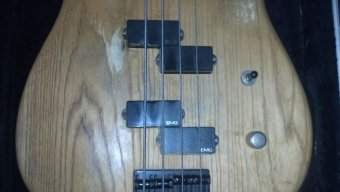
And of course, no pics no bass:
Cheers!
I played a G&L LB-100 in a local GC and thought it sounded fantastic. Nice growl, punchy, solid low end and lightweight too. So I took it home and stuck some flatwounds on it, it nailed the sound I was going for. I've been playing it for a week or so now and I'm happy with it save for a couple of issues with note consistency. I was surprised because Ed Friedland, amongst others, raves about how consistent it is. He calls it 'note integrity' I think: Invalid Link Removed .
The most noticeable problem is a pretty aggressive dead spot on the 6th fret of the G string. You can hear the same deadness on D flat on the 11th fret on the D String, which from what I've read about dead spots being an interaction between the frequency of the note and the neck makes sense - the note frequency is the same.
Aside from the dead spots, I get some very slight fret buzz on the 5th frets on the A string and the D string. Those notes sound a bit weak too, but I'm guessing that's the same problem as the buzzing. The neck has a comparable amount of relief to my jazz bass so I'm thinking this is might be an issue with the frets.
What I'm wondering is, do you all think it's worth taking the bass to a tech (I have a local shop that has a Plek) to see if they can fix the slight buzzing on the 5th fret of the A/D strings and hopefully beefing up those notes? And, do you all think the dead spot on the high D flat is egregious enough to merit taking back the bass or is this just par for the course with bolt on basses? If I return it, I might try to order another one from G&L, same specs, and hope that it's more consistent. If anyone knows if I can make that order through GC (so I can get the return period) I'd love to know!
Invalid Link Removeds a sound clip of the dead spot and note next to it.
And of course, no pics no bass:

Cheers!
Last edited:








 Thanks!