I’ve been eyeing the kinetix as well but I think I’m going to give the Mesa 800D a try. Totally different but I’m enjoying this freedom form the RB’s and having flavors for the first time in a very long time. I do feel the MG-800 is a lover though.
I also played the 800D for a while. Here is what I wrote in another thread comparing the Kinetix and 800D:
So I've been playing both of these amps and both are terrific inventions. Lots of similarities and oodles of goodness for both. There are also some subtle differences and I am curious if anyone else has noticed something that's a big priority for me.
I am newly focused on classic country music and am in a new honky tonk trio so it's been an emersion in learning bass nuances for that style. One thing is keeping notes short and distinct with space between tones. Quick decay is a characteristic of double bass, which was prominent in this music. But I'll be playing a Fender jazz bass with La Bella 760FL flat wounds and there are two ways to approach this goal. The easy way is to use a foam mute on the strings. I created one with microfiber sponge based on the Nordy Mute design that sits on top of the strings instead of underneath, which reduces the "dead thud" and retains a touch of the harmonics that are especially delicious with a tube amp.
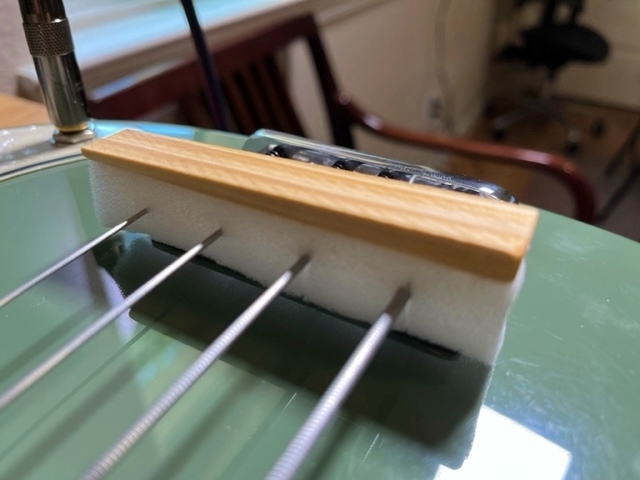
The other technique is a fairly complex coordination of lightly touching-to-fret and quickly letting the string rise slightly above the fretboard with the left hand and using a floating thumb to silence strings on the plucking side. It requires a ton of practice for consistency. Since I want to retain the tubey harmonics, I'm using this technique.
Now regarding the Mesa Boogie 800-D and Genzler Kinetics 800. With the latter finger-muting technique, I noticed immediately with the Kinetics 800 that it was easier and almost automatic to create the quick decay effect I'm after with short dead silence between notes. With the Mesa 800D, I hear a bit less decay and sometimes a trace of run-on harmonics when playing two feel or walking bass. With this discovery, I've been switching back and forth between amps and trying various settings, and the phenomenon I described remains consistent between the amps.
Any reactions or ideas what's happening to cause this result?
@agedhorse immediately replied:
"It may be in part due to the lower damping factor of the Bass 800D. You may find the D-800+ works better for you in this application."












 ), when I know that the MG350 combo would work just fine. While my Magellan 800 is every thing that I expected it to be, I have to admit that the MG350 combo has been a major surprise!


