• TalkBass has been independent since 1998. Add your voice.
    Create a free account to reply to discussions, view embedded media, and browse with fewer display ads.
    Join freeLog in
    Want zero display ads or expanded classifieds tools? Compare plans.

Geo's bass body weight-reduction program...

JIO

Scott Lives
Gold Supporting Member
Commercial User
Jun 30, 2010
49,589
221,972
The Mission SF/CA
www.facebook.com
Disclosures
musician/artist/owner - Gildaxe
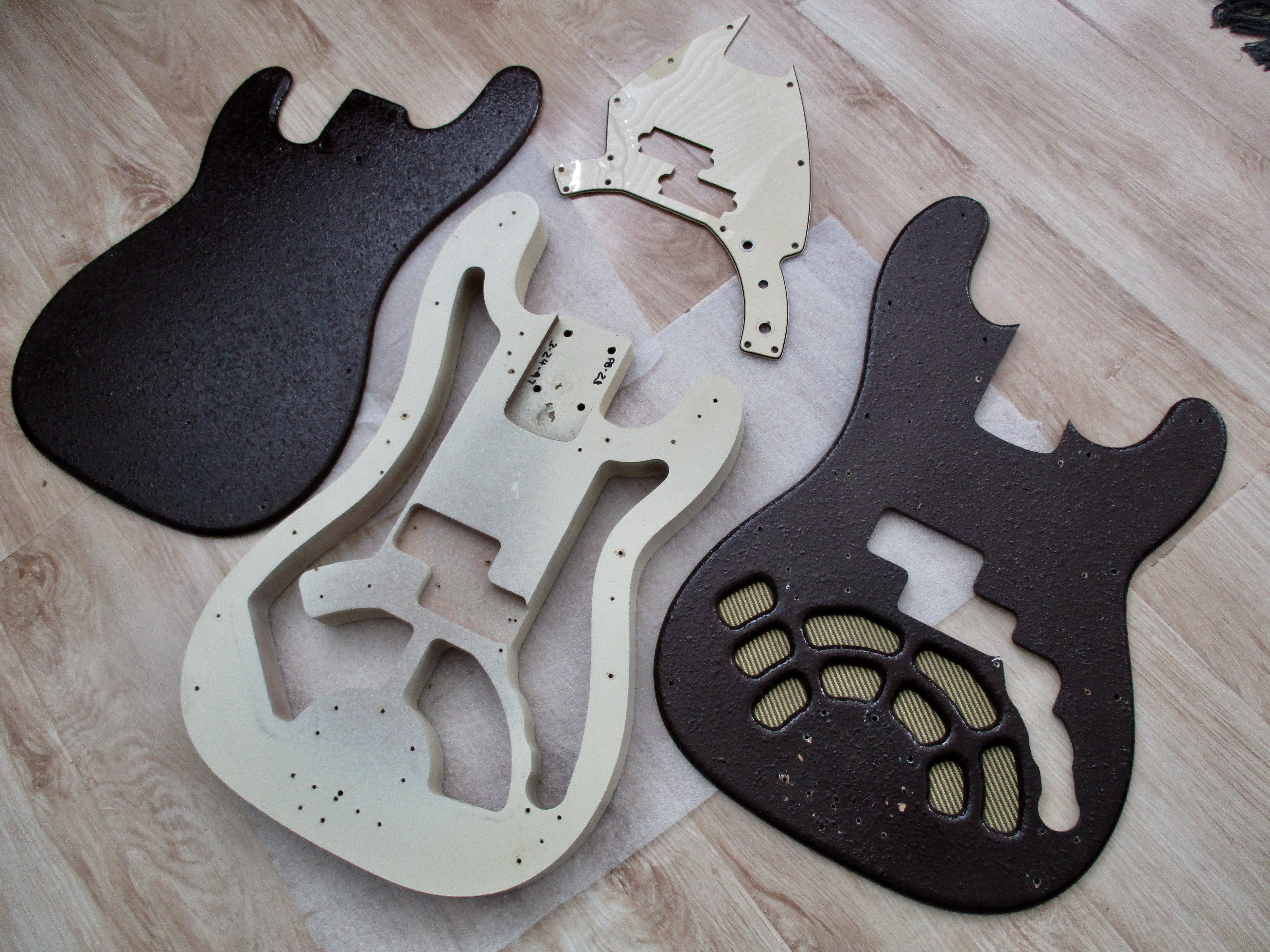
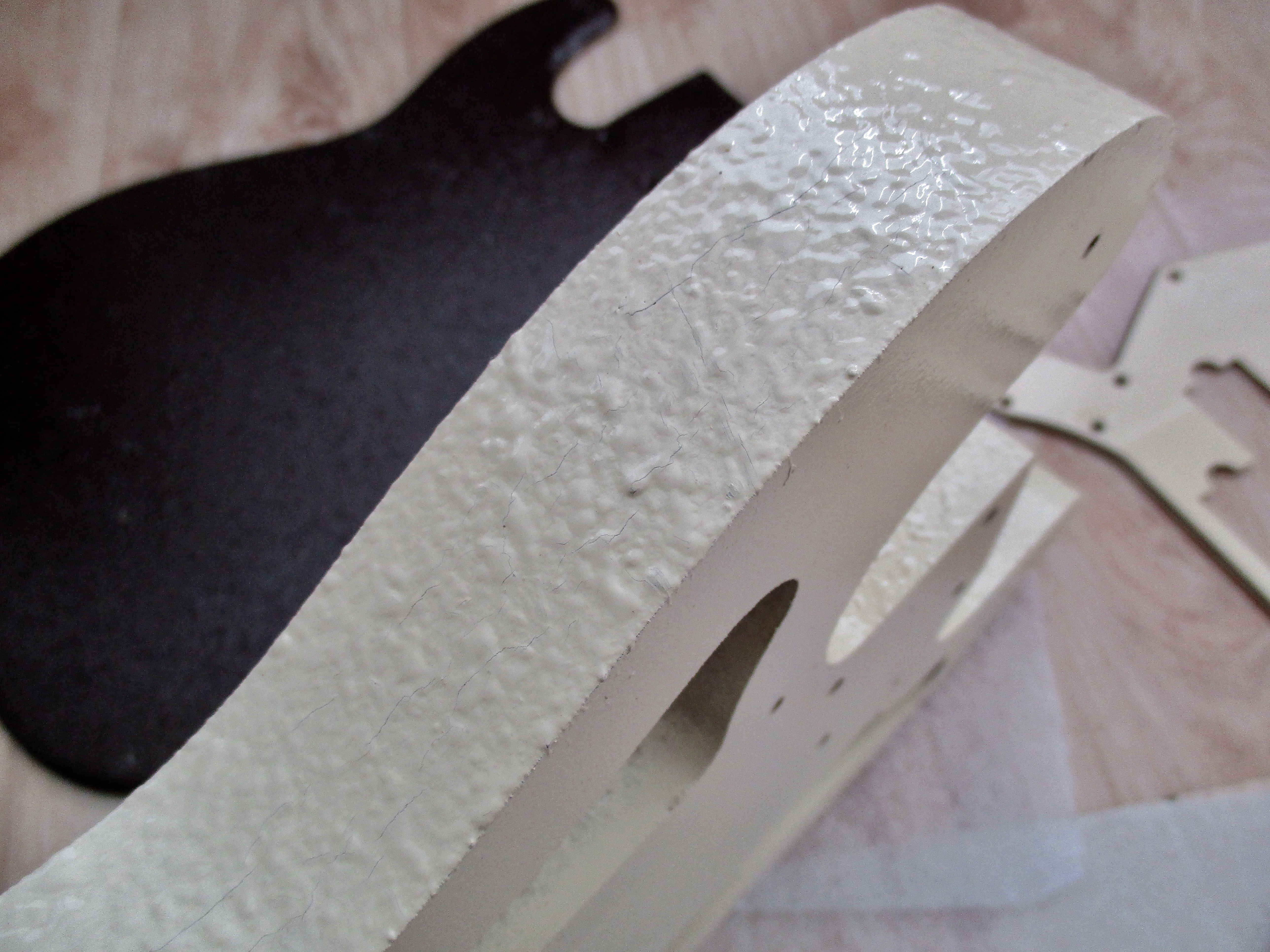
So my new commission is a fun one. Fellow tb member @DDXdesign sent me his '97 Lindert Locomotive P bass body with the intent to clone it, but lighter (in weight). I remember seeing pics of this bass back then and thinking.., that's interesting. Kinda quirky, but definitely an interesting take on retro style. Turns out it's made of MDF (medium density fiberboard) which as we all know is inherently heavy. So I sussed out a blank of basswood for the core piece. (essentially a sandwich consisting of a core and a thinner front & back) and will determine what the thinner front & back will be made of once I cut out the core. (mostly so I can see the comparison weight) The original has a very.., low tech finish and it's not yet been determined what the clone finish will be. I can reproduce the original textured finish and colours so that is an option.

Won't be able to post more until the basswood arrives, but plan to make sure the replacement will come in under the 3lbs/13oz weight of the MDF core. With the 2 thin front & back layers (1lb/1oz front & 1lb/5oz back) the combined original body is over 6lbs. My goal is to come in as much under that as possible. For anyone who has followed my recent builds, you'll know that a light bass is always my aim. I can already see how I can maximize (further) chambering to achieve that.
fullsizeoutput_109f.jpeg


fullsizeoutput_10a0.jpeg


fullsizeoutput_10a1.jpeg


fullsizeoutput_10a2.jpeg
 
Thanks @JIO for offering to take this on.

For the rest of TB if you haven't seen me post about this bass (and I know I tend to shout it from the rooftops, mea culpa):
I adore this bass except for the weight causing pain in my shoulder/collarbone even on a 4" neoprene comfort strapp - I used to use leather, but even the strap was heavy!

I figure this is a great way to be able to revert to original if I ever need to, while keeping the mojo of the wild design alive for the one I'm actually playing. It's got a unique neck profile, too, so it's not like I can just replace my favorite player with any-ol' lightweight P.

As for the finish, I'm undecided and whatever Geo finds for the new facings might inform that decision. Inexplicably, I *love* the textured bedliner finish - it has a feel to it, almost rubbery, not really rough or hard. but hey, new opportunity, right? The fretboard is rosewood and the headstock is maple with the tiniest bit of tint to it. I'm going to mock up a few colors and see what I like the look of.

Oh and I'm going to replace the current quarter pounder SPB-3 with a Geezer I think.

Alrighty sir, I'll not clog up your build thread any further! Thanks again!
 
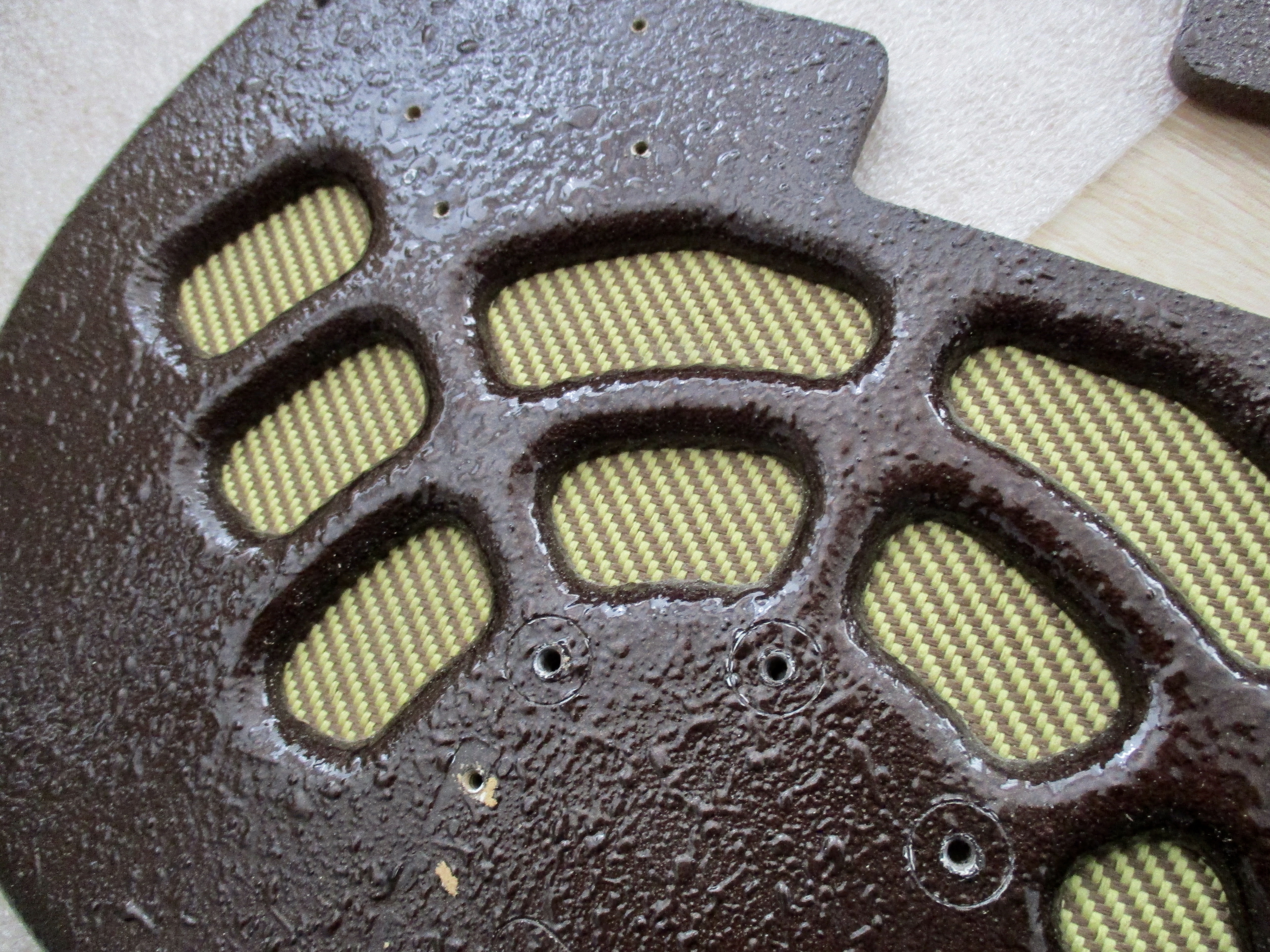
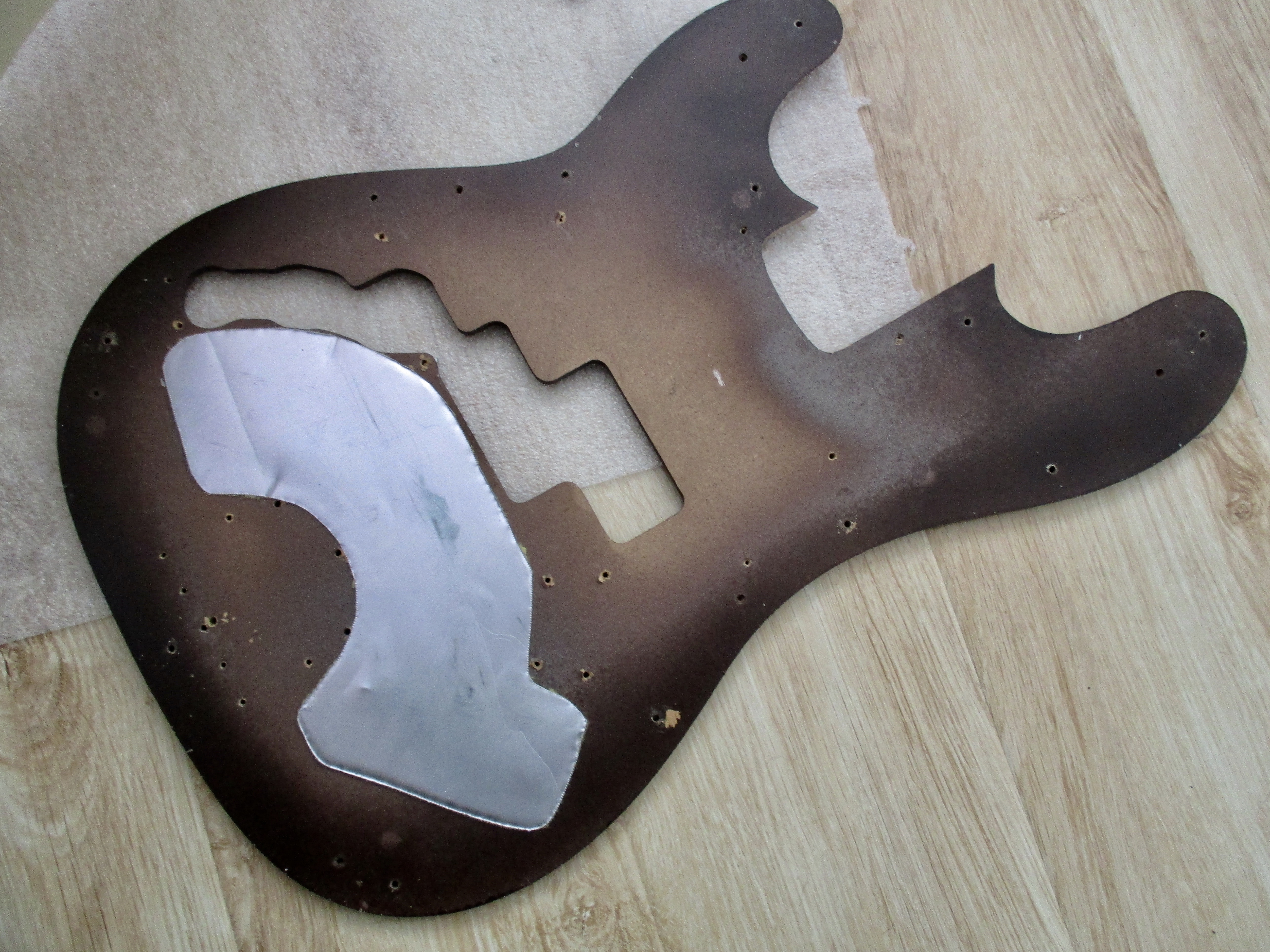
The slab arrived. It weighs 5lbs/3oz and looks good. Basswood is a very predictable material and works/finishes well, similar to alder. I traced the core onto it and drew extended openings to remove more wood. There is still plenty of wood left for structural integrity, and once the main openings are cut out we'll weight it and determine if more is needed. "More" being forstner bit holes. Drilling out holes will not compromise the structural integrity and will further lower weight, which I feel will be needed to get it below 3lbs/13oz. In general, deconstructing/redefining this design I find it amusing that the maker developed this top/back/core method using such heavy wood and relatively small openings. Consider a Steinberger bass - the center section is where you need structural integrity. The left and right shoulders are more about playing balance, ergonomics, and where controls are positioned. I've looked into top & back material, but we've decided to start with cloning a light version of the original core before going further. Just to be clear, the 1/4" front and back pieces go right to the edge of the core. The originals 'bumpy' texture was effective in blending the 3 pieces into a visually cohesive whole. You knew there were 3 pieces, but the crude texture distracted overly critical scrutiny. For what it was - very effective.

fullsizeoutput_10af.jpeg

Notice how the pg is staggered from the core at the two lower flanges. Not sure if this was a mistake as to align them would be just as correct, actually.., it would be more correct. The 1/4" face grabs pg screws that ended up in the cavities on the original core, but having the majority also grab the core is better. I fixed this on my version.
fullsizeoutput_10ae.jpeg

My expanded cavities still leave 1-3/4" material from the edge - and plenty of space to run a series of forstner bit holes there. This sketch outlines the pg and pu rout as well.
fullsizeoutput_10ad.jpeg
 
So far so good - basswood clone (left) weighs 1lb/15oz and with the (original MDF) top, back and pg, it weighs 4lbs/9oz. (original MDF core alone weighs 3lbs/13oz) So we lost nearly 2lbs. It just depends on what @DDXdesign decides if more (less actually ;)) is wanted.

fullsizeoutput_10b2.jpeg
 
LAWDY that's a lot of weight reduction just from a change in the core. So if we put it back together as-is it would go from 9#10 to 7#12! Daaaannnnng that's nice - That said I am still VERY tempted to have you make me a new set of facings, too. Is it still as strong? So many people told me that taking more material out would weaken it. I trust you know what you're doing, of course - I just have no idea how strong basswood is.
 
  • Like
Reactions: JIO
LAWDY that's a lot of weight reduction just from a change in the core. So if we put it back together as-is it would go from 9#10 to 7#12! Daaaannnnng that's nice - That said I am still VERY tempted to have you make me a new set of facings, too. Is it still as strong? So many people told me that taking more material out would weaken it. I trust you know what you're doing, of course - I just have no idea how strong basswood is.

Well, you won't be able to use it to stand on reaching something high up on a shelf... ;) I wasn't sure what it weighed originally, so just under 8lbs for a bass is good in my book - I don't know if I'd go much lighter really. In fact, unless you want a different finish all around, I would cut out 1/4" MDF like the original and just finish it differently. (ending up pretty much the same 7lb/12oz give or take. The advantage is a tighter sandwich fit - because I couldn't work on the core with the top/back attached it is very close all the way around but not perfectly flush at every curve.
 
LOL you should have seen the macassar ebony tops we were looking at.... just so damned expensive though, and my tastes are more toward vintage finishes these days.
Walnut and maple are vintage materials...:sorry:

I don't think the woods would have to be fancy or figured, the design by its nature has a whole lot going on. Maybe some plain, clean woods in contrasting tones would not be as pricey but have the same effect.

What is the textured finish like from a practical perspective? Does it feel wierd on your arm?
 
  • Like
Reactions: mbelue
Well, you won't be able to use it to stand on reaching something high up on a shelf... ;) I wasn't sure what it weighed originally, so just under 8lbs for a bass is good in my book - I don't know if I'd go much lighter really. In fact, unless you want a different finish all around, I would cut out 1/4" MDF like the original and just finish it differently. (ending up pretty much the same 7lb/12oz give or take. The advantage is a tighter sandwich fit - because I couldn't work on the core with the top/back attached it is very close all the way around but not perfectly flush at every curve.

OK, so new facings should be done just for the fit and finish of it all, that's reasonable. I'm happy with just under 8lbs total, but 7 I'd have some flexibility if I need to adjust for balance, etc. so maybe we should take another look around at potential materials.
 
OK, so new facings should be done just for the fit and finish of it all, that's reasonable. I'm happy with just under 8lbs total, but 7 I'd have some flexibility if I need to adjust for balance, etc. so maybe we should take another look around at potential materials.

Ok, it's just a matter of finding guitar slab-style wood that is 1/4" thick. As long as it isn't wenge or ebony it should be lighter than the MDF. I'm checking a local high-end lumberyard tomorrow to see what they offer.
 
  • Like
Reactions: BritFunk
Walnut and maple are vintage materials...:sorry:

I don't think the woods would have to be fancy or figured, the design by its nature has a whole lot going on. Maybe some plain, clean woods in contrasting tones would not be as pricey but have the same effect.

Oh I know what you mean, I've just fallen for stuff like old nitro in colors that are just a tiny bit faded, yellowed, or worn through. I do agree that the busy design has precluded some colors, woods and textures right off the bat.

What is the textured finish like from a practical perspective? Does it feel wierd on your arm?
The textured finish actually feels pretty cool, kinda grippy but not rough or sandy - like I said, kind of like a rubberized bedliner surface. It's got more coarse "chunks" and is less uniform than, say, the EBMM USA SUB basses had (the only other textured-finish series I can think of).
 
  • Like
Reactions: Reedt2000
If you are making new facings, you could glue the top on right? The grill cloth could be applied from behind and the back attached mechanically.

Thanks for bringing this up - finding a similar material for the 'grill' section for a clone is an issue. There would be a bit of research to come up with a material that would work. On the original it's glued onto the backside of the face and it's fairly rigid with a foil backing. It's also thin which it needs to be without needing to rout a reveal for it.
 
Thanks for bringing this up - finding a similar material for the 'grill' section for a clone is an issue. There would be a bit of research to come up with a material that would work. On the original it's glued onto the backside of the face and it's fairly rigid with a foil backing. It's also thin which it needs to be without needing to rout a reveal for it.
Oh wow, I didn't assume it would not be removable from the original plate. I do love the tweed. =0)

Hmmmmmm another thing to look into.
 
If it's just for looks, couldn't you wrap a piece of 1/4" thick wood with tweed tolex and attach it through the back? Not sure how to attach it, screwing into the thin face sounds scary, maybe glue is the ticket...
 

Latest posts