

Enjoy the benefits of a premium membership!
Upgrade Account
-
TalkBass has been independent since 1998. Add your voice.
Create a free account to reply to discussions, view embedded media, and browse with fewer display ads.
Join free Log in
Want zero display ads or expanded classifieds tools? Compare plans.
You are using an out of date browser. It may not display this or other websites correctly.
You should upgrade or use an alternative browser.
You should upgrade or use an alternative browser.
Gibson 2019
- Thread starter rockscott
- Start date
More options
Who Replied?
Maybe it will look like that but long scale and perhaps a slightly larger body. Hey maybe they've been looking at Brooks basses for inspiration!
Short scales are great but it would be nice to see Gibson try to cater to the more modern hard rocking bassist out there instead of the nostalgic boomer or the trendy hipster. Granted the brand lends itself to both the latter groups mentioned but they should try marketing to the types of guys who might be looking at ESP/LTD, Dingwall, Warwick, Spector or Schecter as well.
If they start doing that then they'll be criticized by all the Gibson fans who like older designs or newer designs that look older. The latest iteration of the EB Bass has received a rather luke-warm reception here. I like the looks of the new EB.

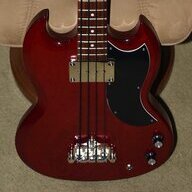
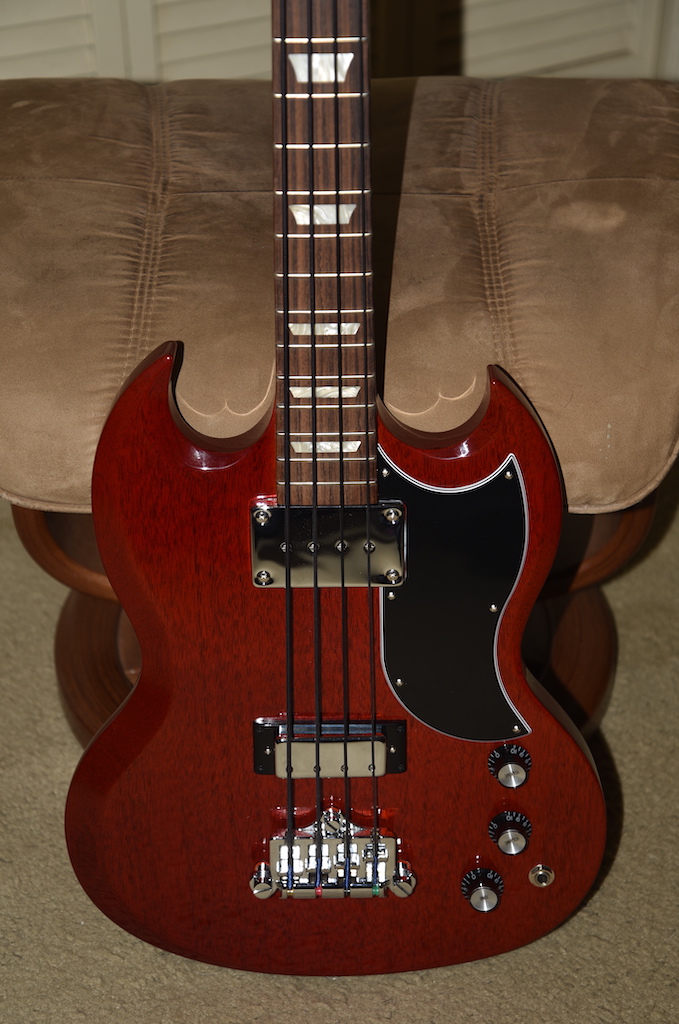
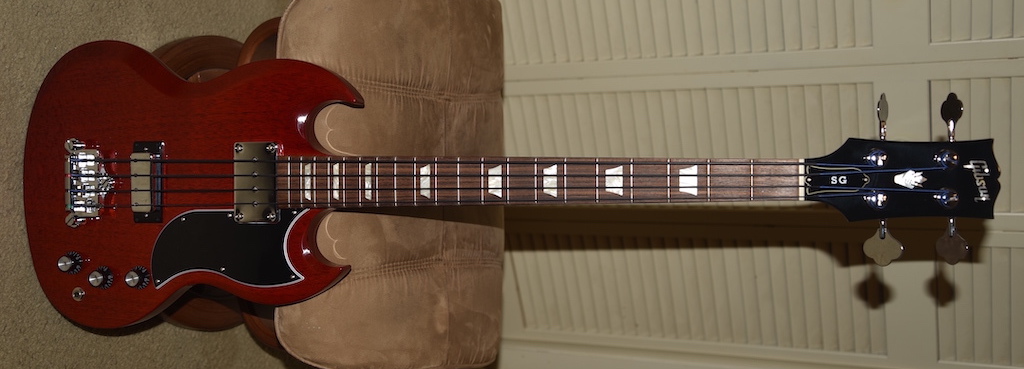
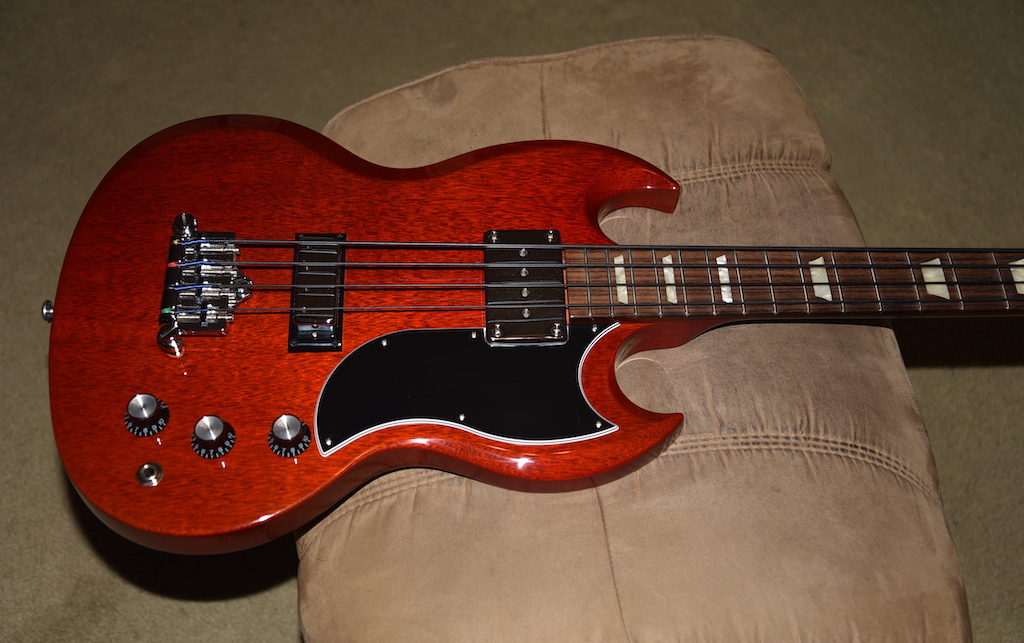
I just acquired this 2019 SG Std. It's fantastic. I've played Gibson EB/SG Std. basses since 1969, and this one I think is the best I've had. QC is great, and the tonal quality is very good too. The D'Addario ETB92S Nylons sound great on it to. The intonation from the factory is RIGHT ON also.
Last edited:
Basvarken
Commercial User
- Dec 3, 2010
- 1,744
- 10,609
- Disclosures
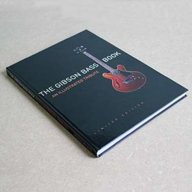
- Hobby Luthier / Gibson Bass Book

Short scales are great but it would be nice to see Gibson try to cater to the more modern hard rocking bassist out there instead of the nostalgic boomer
Which one is apt to buy more instruments: Modern hard rocking bassist or nostalgic boomer?

Do you really think so?Exactly!
They took a chance with this, it flopped.
View attachment 3267239
They took a chance with this, another flop.
View attachment 3267240
So why not take a chance with this? The time might be right.
View attachment 3267241

- Jan 28, 2009
- 2,929
- 4,152
- Disclosures
- Owner: Moonshine Custom Guitars

Do you really think so?
I agree with you......however, I wouldnt say the 2010s EBs are a smashing success either....I would put the 2010 EBs in the "lukewarm" category......in an era where guitars are in decline with subsequent generations, its difficult for companies to consider a lukewarm reception a success....unlike the 70s, where Gibson can put out the L6S guitar or RD Artist bass and just shrug their shoulders and try something else if it didnt pan out

Maybe it will look like that but long scale and perhaps a slightly larger body. Hey maybe they've been looking at Brooks basses for inspiration!
Short scales are great but it would be nice to see Gibson try to cater to the more modern hard rocking bassist out there instead of the nostalgic boomer or the trendy hipster. Granted the brand lends itself to both the latter groups mentioned but they should try marketing to the types of guys who might be looking at ESP/LTD, Dingwall, Warwick, Spector or Schecter as well.
They already did. Most recently with the 2017 EB. (A very nice bass btw.)
They were mocked for their effort. Like always.
But here’s a poser for you. If not catering to the “modern hard rocking” player (because everybody ‘knows’ nobody ever really rocked hard up until this latest generation started playing
 ) is bad for business- please explain why the PB and JB continue to sell in record numbers? And why Fender’s Dimension failed to gain market share and was discontinued so quickly?
Innovation? From what I’ve seen, people’s bass buying habits are largely saying that’s not a big priority for them.

Last edited:

I think the sg and the thunderbird sell enough to keep them around, will the eb last, that's anyone's guess. I would love to see a les paul jr, reissue!
I get the feeling most of what Gibson is going to be doing in 2019 is refocusing and cleaning up the mess Henry Juszkiewicz made. They have to get the “Hank stank” out of the air and reassure people through their actions rather than words that certain past issues are going to be addressed. First and foremost they need to rebuild their dealer, employee, supplier, and customer relationships more than anything else. Because Gibson is being given the benefit of the doubt right now. And it’s important that they don’t squander this opportunity to put their recent past behind them.
That’s going to take some serious effort. But it’s very doable.
That’s going to take some serious effort. But it’s very doable.
Last edited:
They already did. Most recently with the 2017 EB. (A very nice bass btw.)
Innovation? From what I’ve seen, people’s bass buying habits are largely saying that’s not a big priority for them.
The issue that I see with guitar companies and new ideas is not having enough 'baking time'.....Like the Ernie Ball Caprice/Cutlass, the Fender Dimension, or the 2010s Gibson EBs, a lot of companies are looking for Instant Gratification upon release.....historically, some models took decades to become a success -- the Thunderbird bass came out in the early 60s but wasnt established in popularity as a rock icon until the mid 70s into the 80s....the Explorer came out in '58 but its weirdness didnt catch on until the late 70s until the mid 80s. Like I stated above, back in the days where guitars and music were the center of the universe for those generations, there was a lot of padding to fall on if something new didnt work out.......and, yes, there will be marketing "flops" (remember the Fender Performer?)........... So, I think its the lack of baking time in an industry that is declining with subsequent generations that is making guitar companies paranoid and resistant to change YMMV
Edit: I do not consider the Ernie Ball Caprice/Cutlass, the Fender Dimension, or the 2010s Gibson EBs to be flops......all were lukewarm successes, some better than others...if this was the 70s or 80s, some of these may have been granted more baking time by their parents
Last edited:
I do not consider the Ernie Ball Caprice/Cutlass, the Fender Dimension, or the 2010s Gibson EBs to be flops......all were lukewarm successes, some better than others...if this was the 70s or 80s, some of these may have been granted more baking time by their parents
Can’t speak for music gear manufacturer’s ROI timelines since I don’t have access to their interest amortization schedules or their financial statements. So I can’t do a formal analysis (my past life as a corporate finance person is rearing his head here) to see how much time they can responsibly allow for something to catch on. But most investors (and creditors!) want to see a new product generating significant cash without undue delay. And I think what we’re seeing with new guitar models is that Gibson and Fender are seriously over leveraged and don’t have the luxury to allow things things cook. It’s hard to take the long view on things when you’re struggling to service your currently due debt obligations.
So I think what we’re seeing with short lived product models is how any product that doesn’t rapidly gain momentum and start generating significant profits gets discontinued shortly after its development and tooling costs are fully amortized. (Can you guess my background is in manufacturing?
 ) It’s a financially conservative short term “stop loss” strategy. And a prime example of doing business strictly by the numbers.
Lack of innovation is usually cited as a major cause for business failures. But it’s only a peripheral factor most times. The thing that actually kills businsses most often is a lack of cash. Usually brought on by trying to service too much debt. You can limp along for decades with lackluster products and mediocre management. But run out of the cash needed to meet your current obligations for a month or two and you’ll find yourself out of business. Stupidity in business is sometimes tolerated. But insolvency never is. Plain and simple.
And that was what the knockout punch for Gibson was. They ran out of cash.
Last edited:

I certainly hope a tribute to the first generation EB-0. Like this:
View attachment 3284854
Apparently no one there could either....I can’t do a formal analysis...
And that was what the knockout punch for Gibson was. They ran out of cash.
That's was a pretty slow-motion punch. They'd restructured their gigantic debt several times. You eventually run out of runway.
Can’t speak for music gear manufacturer’s ROI timelines since I don’t have access to their interest amortization schedules or their financial statements. So I can’t do a formal analysis (my past life as a corporate finance person is rearing his head here) to see how much time they can responsibly allow for something to catch on. But most investors (and creditirs) want to see a new product generating significant cash without undue delay. And I think what we’re seeing with new guitar models is that Gibson and Fender are seriously over leveraged and don’t have the luxury to allow things things cook. It’s hard to take the long view on things when you’re struggling to service your currently due debt obligations.
So I think what we’re seeing with short lived product models is how any product that doesn’t rapidly gain momentum and start generating significant profits gets discontinued shortly after its development and tooling costs are fully amortized. (Can you guess my background is in manufacturing?
Lack of innovation is usually cited as a major cause for business failures. But it’s only a peripheral factor most times. The thing that actually kills businsses most often is a lack of cash. Usually brought on by trying to service too much debt. You can limp along for decades with lackluster products and mediocre management. But run out of the cash needed to meet your current obligations for a month or two and you’ll find yourself out of business. Stupidity in business is sometimes tolerated. But insolvency never is. Plain and simple.
And that was what the knockout punch for Gibson was. They ran out of cash.
great post and, actually, Im seeing your post coinciding with mine more than being a rebuttal......
One thing I will disagree with concerning established guitar companies is the criteria of less innovation marking a decline in success --- Innovation needs are market driven, arent they? This applies to the tech industry where the -est suffix applies (newest, latest, greatest, fastest, etc)......but with established guitar companies, a lot of their customers are based on tradition (See: Fender Precision Bass of which its blueprint standard model has been relatively unchanged since 1958)....With guitar companies trying newer innovations, they have to balance tradition with what is new....Can you imagine a cellphone manufacturer trying to do the same thing?
 ...... Look at the "new" original version of the EB-0 double cutaway above (based on the Special body).......It has newer innovations on it but is based on one of their less popular but still a classic design......This is a great start for Gibson to balance innovation with tradition
Look at the "new" double cutaway EB-0 above (based on the Special body).......It has newer innovations on it but is based on one of their less popular but still a classic design......This is a great start for Gibson to balance innovation with tradition
I agree. And it's priced right for an American-built-instrument, presuming that there are no QC issues. Very interested I am in that one.
I agree. And it's priced right for an American-built-instrument, presuming that there are no QC issues. Very interested I am in that one.
The one thing that I like seeing about some of Gibson's latest bass offerings is the ever-so-slightly complex simplicity of the electronics: Passive, yes, but with push-pull pots and shaping options to get more than one tonal character out of a single-voice....Saw this on the 2010s EBs and now on the Les Paul Junior Tribute DC Bass...good stuff
That's was a pretty slow-motion punch. They'd restructured their gigantic debt several times. You eventually run out of runway.
Well here’s the thing. When your business owes $100K and it can’t pay it back, it’s your problem. When it owes several million it’s the creditor’s problem too.
A bank or other creditor can write off $100K as a normal cost of doing business. Ya win some, ya lose some, ya know? All part of the game. But writing off millions? Or taking pennies on the dollar due to bankruptcy? Over at the creditor’s place there’s several upper management people’s reputations that are going to take a serious hit. And usually that means one or two ritual firings or resignations will be required to show its own stakeholders that it takes these mistakes seriously.
So a good rule of thumb when borrowing is to borrow enough so your creditors can’t just lower the boom on you without feeling significant pain themselves. Worse thing that usually happens when a company owes big and can’t pay is their creditor gets a seat on company’s board of directors.
I did that with my own business a few times with customers that were having severe cash flow issues. One even asked me why we kept servicing their account and didn’t just shut them off.
The reason was very simple. There was a 50-50 chance they’d end up going out of business. However, had we shut them off, it would have absolutely put them out of business.
So the decision to let things roll on a 50% chance they would pay off in full over time was better odds than not taking the chance and immediately taking a full loss on the account.
However, my company was carrying no debt, so I had the luxury of running things my way rather than with one eye looking over my shoulder to see what my creditors were thinking about my decision.
Debt isn’t just about money. And it isn’t just about risk taking. You can and often will need to prudently use credit or borrow money while running a business.
But what debt always entails is you losing some degree of control over your decision making. So it’s not something to enter into lightly.
Last edited:


