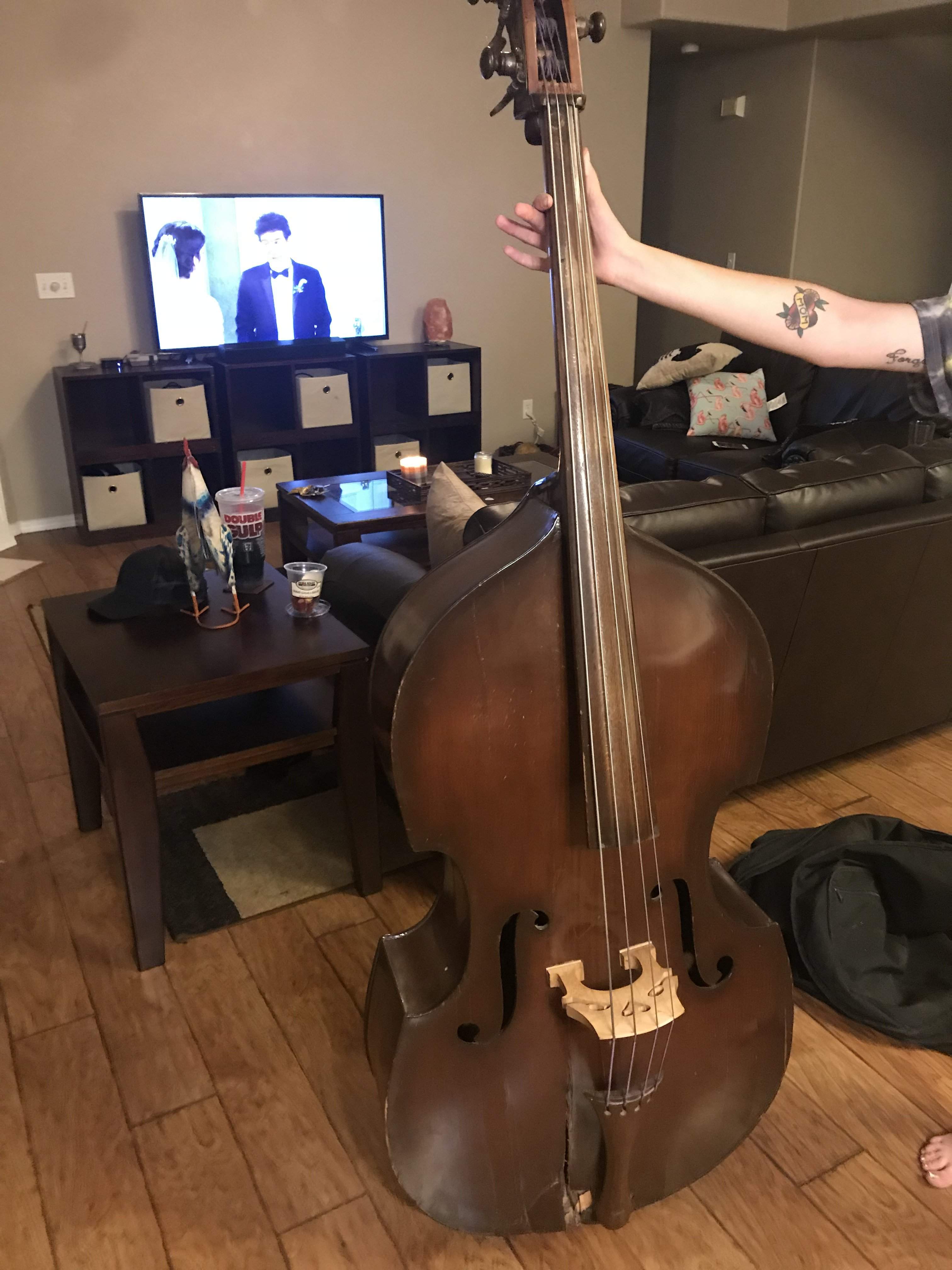
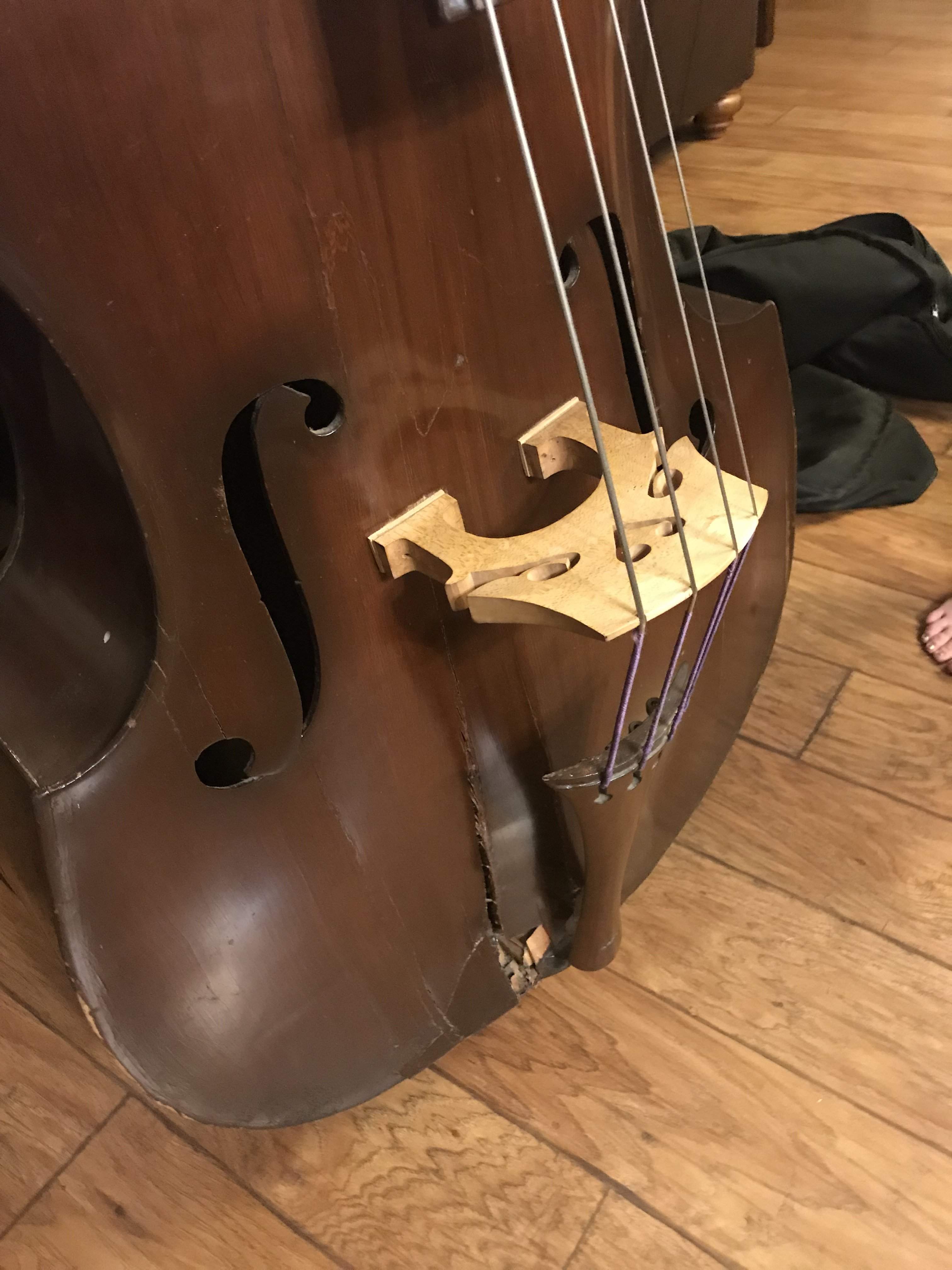
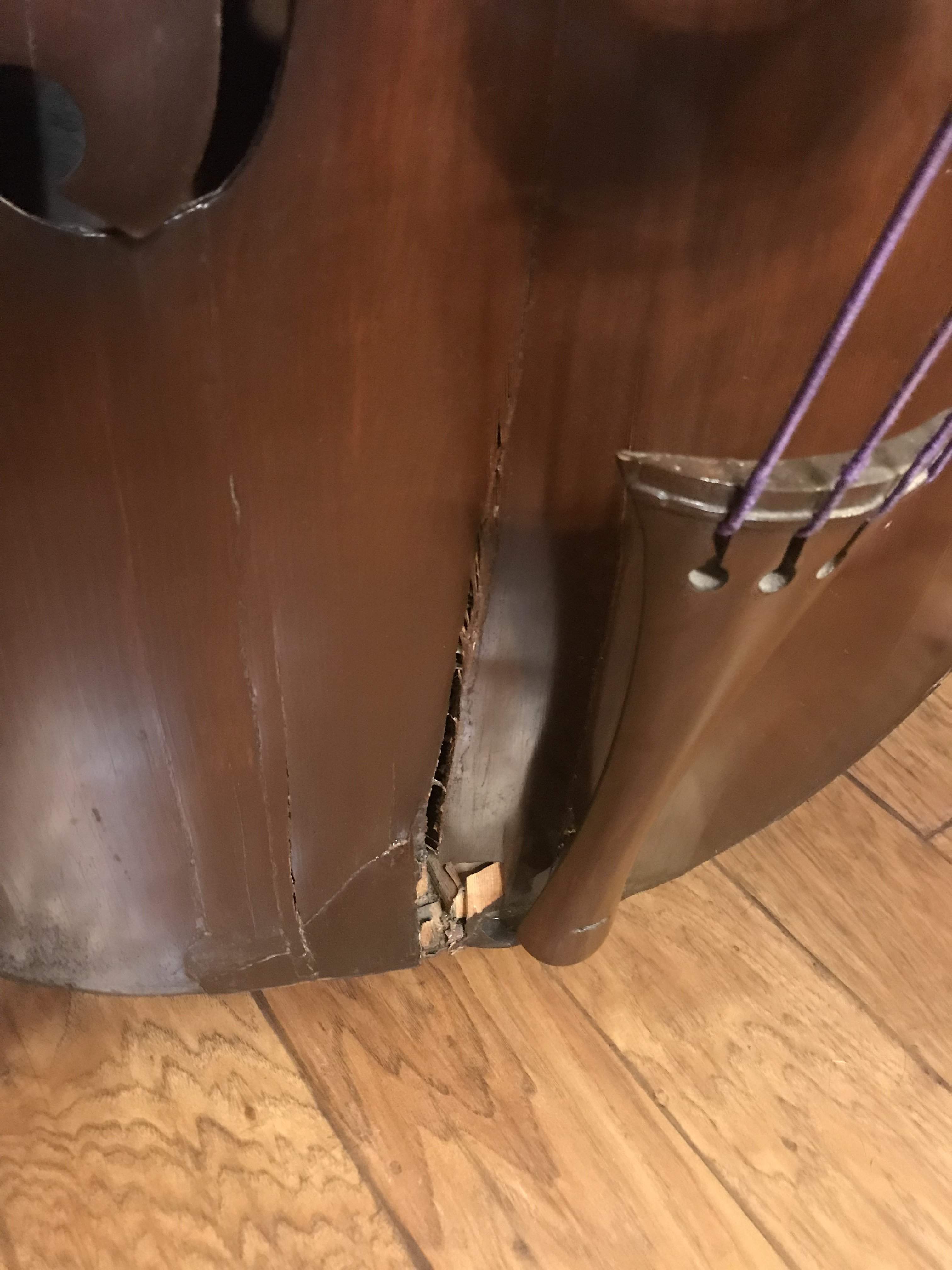
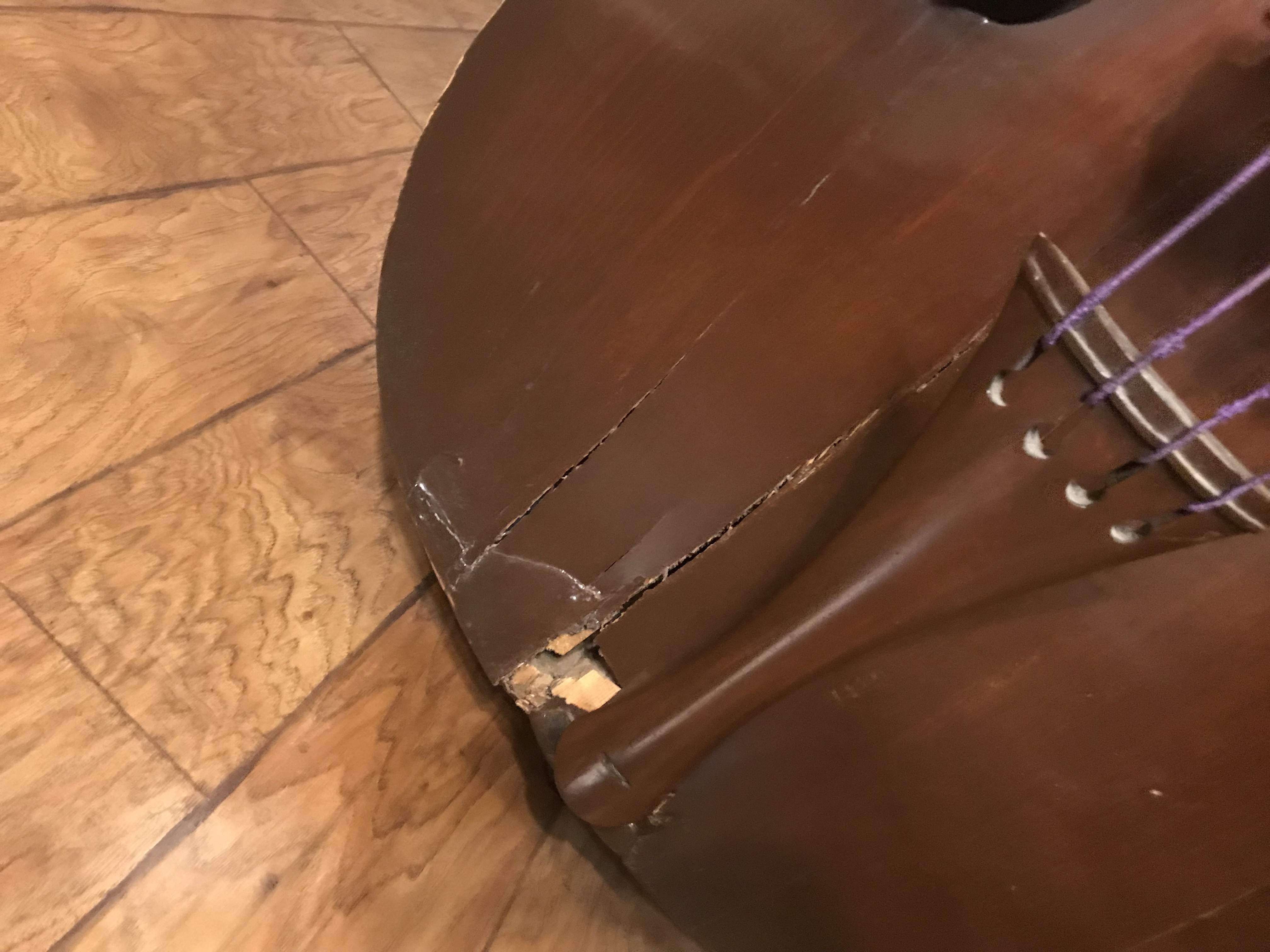
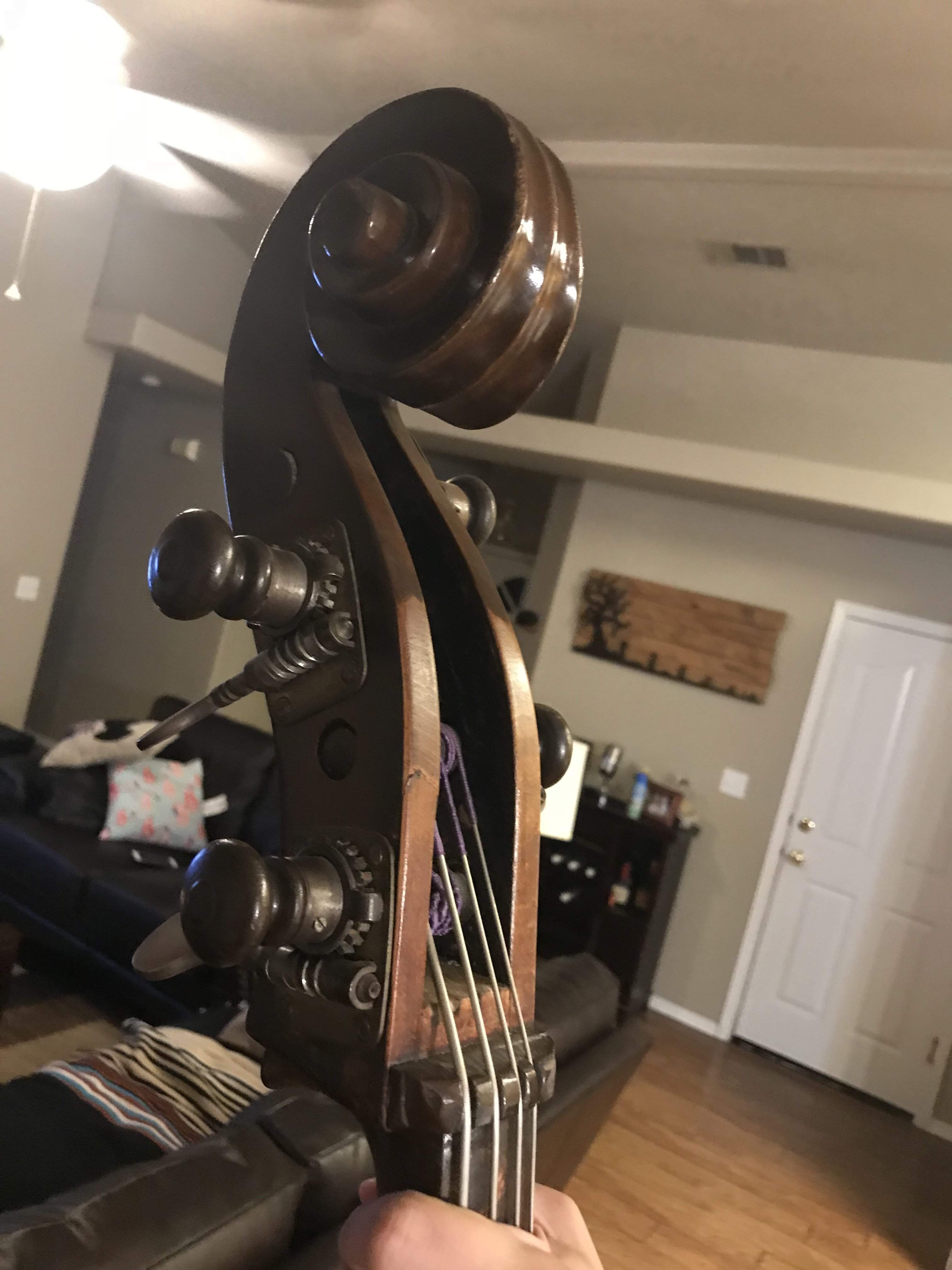
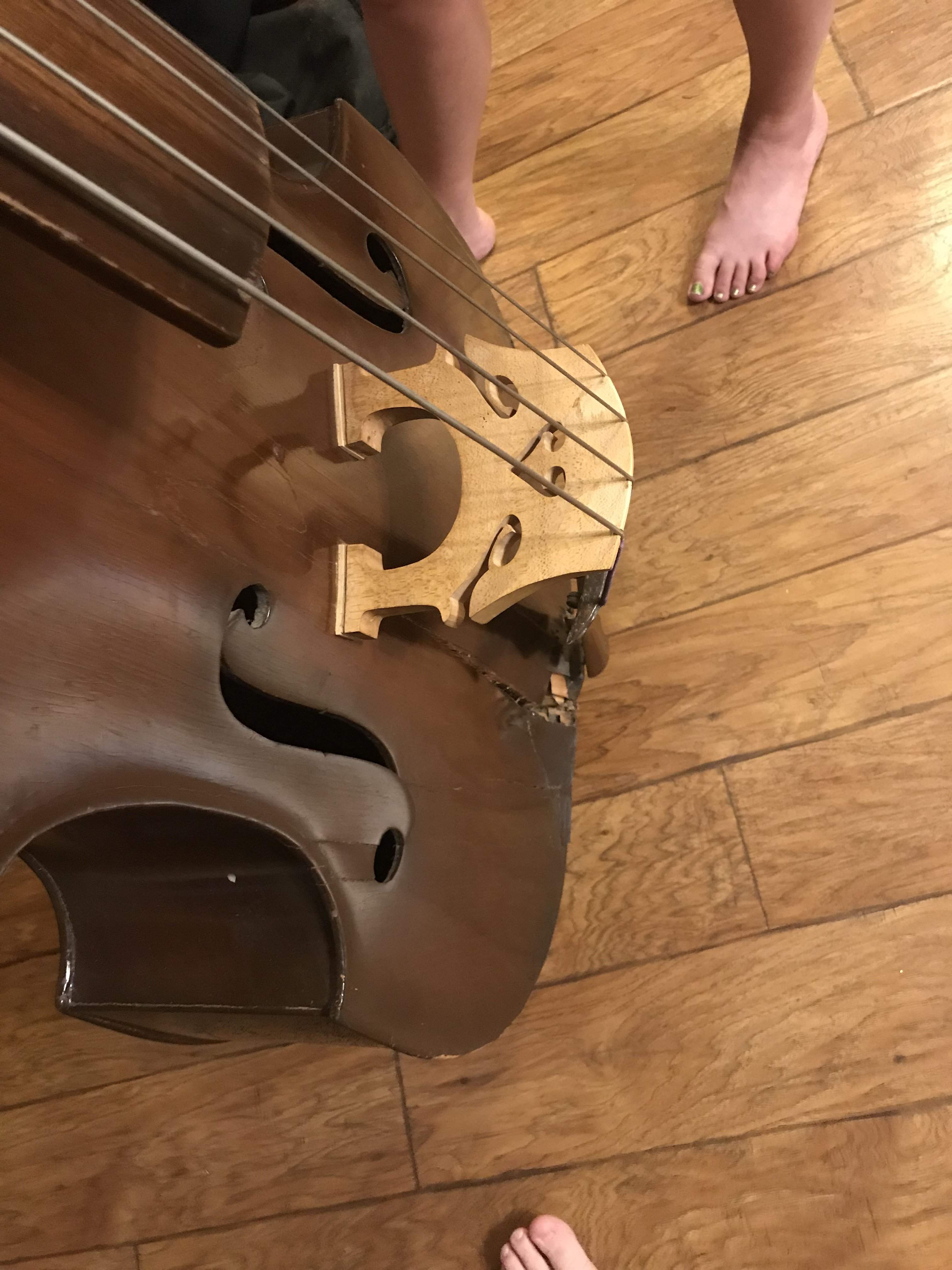
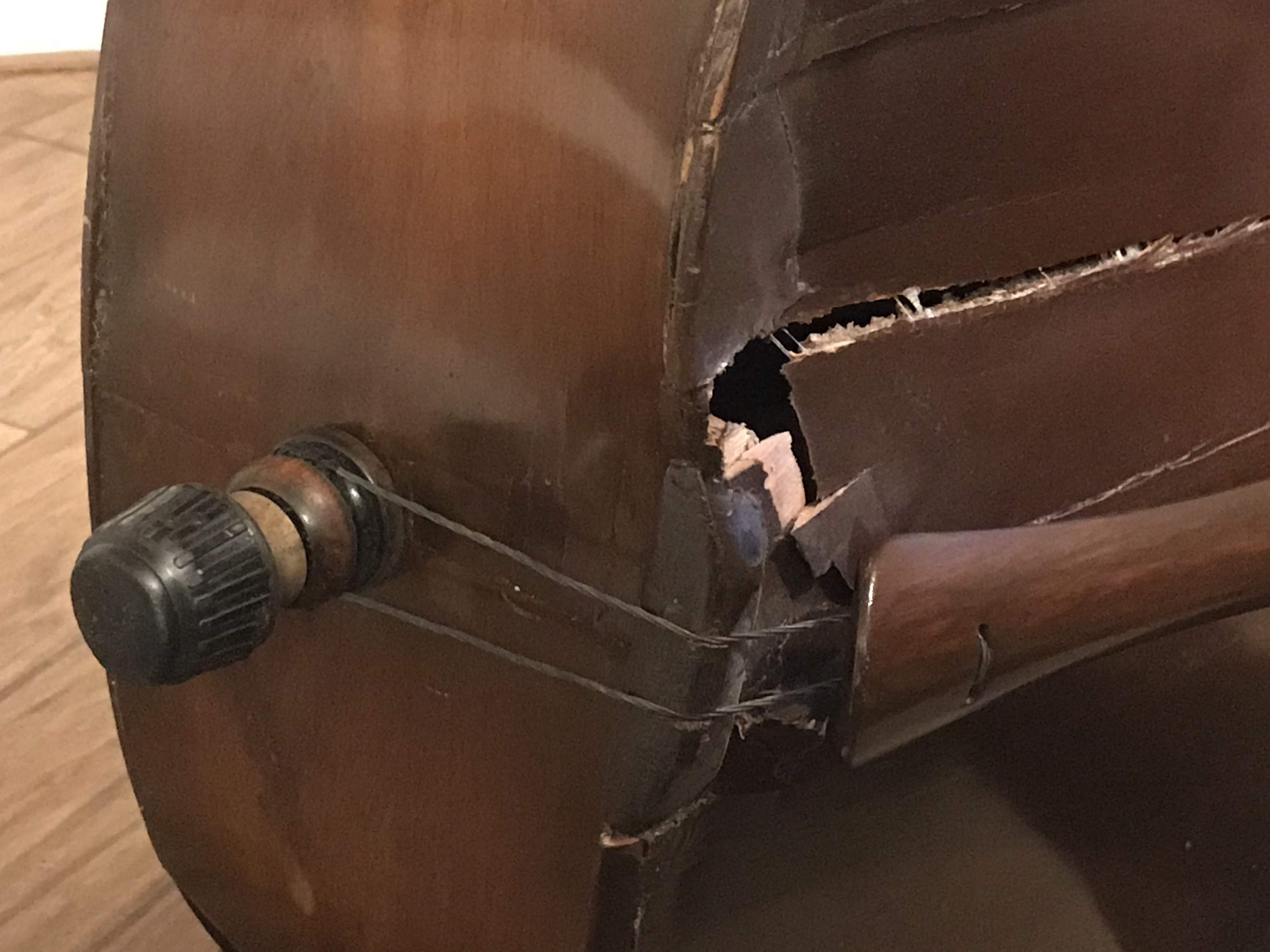
I’m ready to dump some money in this bass. Part of the top is caved in and is cracked. See attached. Who is top dog at upright restoration.


TalkBass has been independent since 1998. Add your voice.
Create a free account to reply to discussions, view embedded media, and browse with fewer display ads.
Join free Log in
Want zero display ads or expanded classifieds tools? Compare plans.





Seems... less than helpful... Interesting approach, and I'll defer to you, the expert, but... yah.1-Get a big bottle of tequilla and two friends
2-Pass bottle around until it is half gone
3-Pour the rest all over that trashed old pile of junk and set it on fire
4-You and the other two friends go shopping for a bass that won't be a 6 foot tall repaired eggshell money pit...
View attachment 3133463




Again: do you know how it sounded?
I find it interesting that so many people judge the value of a bass soley by looking at photos. I have a bass that multiple people told me not to restore because the value would not merit the investment. But upon playing the many expensive basses in multiple shops, I realized that the sound of the “piece of junk” was better than that of any of the other instruments I played.
Not to fully discount structural and functional concerns, but the primary concern is the sound to me - I don’t care at all about the look of the instrument.
But I’m also an experienced player who knows what I like, knows the potential of various string choice, and can coax a voice out of an instrument. When I first started I was not in the position to wisely identify the diamond in the rough. Most luthiers I’ve met can indeed accurately assess structural issues, but I’ve found their value judgements regarding tone to not usually match mine.


Depends on the instrument. I have spent nearly $40k on repairs and restoration on my main bass. For the above bass, I personally would not spend over $1000As a related question; what level of damage and disrepair constitutes a "basket case"?