I have a beginner-type question and it seemed this thread would be a good home for it as I'm not sure it deserves its own. If I take the plunge and buy a 5-string bass, presuming I go with BEADG tuning, when I want to play something like the Beatles (4-string) what is the normal thing to do? Do I simply ignore the B-string and play it like a 4-string. It somehow seems wrong in that respect to buy a 5-string and ignore the fifth in that case... or do people tend to incorporate the fifth string anyway into 4-string written music for example by trying to play a lower octave or something?

Enjoy the benefits of a premium membership!
Upgrade Account
-
TalkBass has been independent since 1998. Add your voice.
Create a free account to reply to discussions, view embedded media, and browse with fewer display ads.
Join free Log in
Want zero display ads or expanded classifieds tools? Compare plans.
You are using an out of date browser. It may not display this or other websites correctly.
You should upgrade or use an alternative browser.
You should upgrade or use an alternative browser.
Going from 4 to 5 (merged threads)
- Thread starter unbasslichkeit
- Start date
More options
Who Replied?

I have a beginner-type question and it seemed this thread would be a good home for it as I'm not sure it deserves its own. If I take the plunge and buy a 5-string bass, presuming I go with BEADG tuning, when I want to play something like the Beatles (4-string) what is the normal thing to do? Do I simply ignore the B-string and play it like a 4-string. It somehow seems wrong in that respect to buy a 5-string and ignore the fifth in that case... or do people tend to incorporate the fifth string anyway into 4-string written music for example by trying to play a lower octave or something?
Well, when you first switch, you will have to get your brain used to that closest string not being an "E". That might take a couple weeks. Put your 4 in the closet and only practice with the new 5 for a while. Try to learn where the notes you already play are located on the low "B" string. Play the E at the 5th fret, play the G at the 8th fret... etc... That will help acquaint your brain and fingers with the new string.
At first just play the stuff you already play and don't make any special attempt to "Play those low notes". When I first switched, I way overused those low notes.

Try fingering your Beatles stuff farther up the neck so you are using the B string in the same register as Paul did, but farther up and on a lower string. You will automatically start using those lower notes where they fit best.
Of course there are times where you just know that hammering that low "B" really fits the song. Use it, don't be afraid of it.

I have a beginner-type question and it seemed this thread would be a good home for it as I'm not sure it deserves its own. If I take the plunge and buy a 5-string bass, presuming I go with BEADG tuning, when I want to play something like the Beatles (4-string) what is the normal thing to do? Do I simply ignore the B-string and play it like a 4-string. It somehow seems wrong in that respect to buy a 5-string and ignore the fifth in that case... or do people tend to incorporate the fifth string anyway into 4-string written music for example by trying to play a lower octave or something?
I think of the 5th fret as open strings. Then it plays the same. It's just a matter of getting used to fret markers being different. The double dots (12th fret) are now the 7th fret.
Maybe that will help.

Do I simply ignore the B-string and play it like a 4-string
I started playing bass around 1990 but only just got back into it so I'm effectively a beginner again too. My first bass back then was a 4 string but I very quickly traded it in for a 5 string and never looked back. As far as I'm aware there are no "laws" about how you should play a 4 string bassline on a 5 string bass.
You could just ignore the B string as you suggest, or you could play higher up the neck and drop down to the bottom B string as needed instead of having to move your hand a long way. It's pretty much up to you. That's what I like about a 5 string. It gives you more options and lets you move up/down the neck less.
Personally I avoid playing open strings (except for when using a ringing string for effect), as you get a more consistent tone and can bend and control the damping better if you're already fretting the string. So for a low E for example, I'd rather play the low B at the 5th fret than an open E string.
Also a 5 string enables you to keep playing centered around the 5th fret region more than shifting strings to avoid the nut and having nowhere to go from the low E except up. This is probably more of an issue than normal for me because I jam with multiple friends who tend to sing covers but in different keys that work for their individual vocal range (usually lower), and I tend to memorize bass lines as patterns, so having a B string means less chance of continually running into the nut when transposing a memorized pattern down a fret or two on the fly.
The odd time that I've played a borrowed bass (inevitably a 4 string), I find I'm always mentally reaching for a string/note that isn't there, then having to consciously think about going up a couple of strings, instead of automatically down one to get the note I want. To me at least, being forced to go high both feels and can also sound unnatural especially on a descending cadence or end of a phrase.
It truly boggles my mind why more bass players don't go for 5's, even as a first instrument. I've personally never understood the need for a 6 (or more) string bass though, as I'd rather stay low and dominate our otherwise mostly empty space than get up into the "frontline zone" which seems already too full of multiple lead instruments/voices competing for the same frequency range.
Last edited:
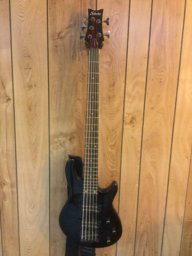
I wish to thank those who replied to my post of several weeks ago about how to transition from a four to a five. Transcribing songs did the trick as well as good old wood shedding to really know the fretboard. Now I can play more comfortably, finding the notes and patterns in the middle of the neck instead of out there at the far end. Thanks again, now do I want to try a six?
Take any riff or pattern you know cold, add 5 to the fret position of the first note and drop down one string. You are now comfortable playing the same pattern, same notes but in the middle of the neck including the B string. EnjoyI have a beginner-type question and it seemed this thread would be a good home for it as I'm not sure it deserves its own. If I take the plunge and buy a 5-string bass, presuming I go with BEADG tuning, when I want to play something like the Beatles (4-string) what is the normal thing to do? Do I simply ignore the B-string and play it like a 4-string. It somehow seems wrong in that respect to buy a 5-string and ignore the fifth in that case... or do people tend to incorporate the fifth string anyway into 4-string written music for example by trying to play a lower octave or something?
Last edited:
I have a beginner-type question and it seemed this thread would be a good home for it as I'm not sure it deserves its own. If I take the plunge and buy a 5-string bass, presuming I go with BEADG tuning, when I want to play something like the Beatles (4-string) what is the normal thing to do? Do I simply ignore the B-string and play it like a 4-string. It somehow seems wrong in that respect to buy a 5-string and ignore the fifth in that case... or do people tend to incorporate the fifth string anyway into 4-string written music for example by trying to play a lower octave or something?
I usually play my 5 like a 4 when covering stuff in EADG. Nothing stopping you from using the B for low notes, but I like to keep the same patterns for 5 and 4. Drop D is different, you can usually play those songs on a 5 without retuning, it's just a little trickier.
I think it should be thought of kind of like a big drumkit. Just because there's more there, doesn't mean you have to use it all the time. Use whatever you need for what you're playing, even if its just a couple notes on one string.
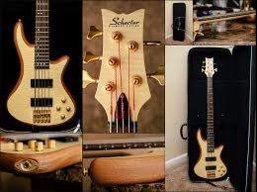
I have a beginner-type question and it seemed this thread would be a good home for it as I'm not sure it deserves its own. If I take the plunge and buy a 5-string bass, presuming I go with BEADG tuning, when I want to play something like the Beatles (4-string) what is the normal thing to do? Do I simply ignore the B-string and play it like a 4-string. It somehow seems wrong in that respect to buy a 5-string and ignore the fifth in that case... or do people tend to incorporate the fifth string anyway into 4-string written music for example by trying to play a lower octave or something?
It'd just about take a Master's Class to get into Paul McCartney's playing...he did so much, and changed so much...geez, what he could do with a D minor chord boggles the mind (Come Together).
But he owned and played at least 3 5-string basses I can think of...2 Rick's and a Wal...and I think the Egmond Solid 7 was a 6?
Man who chases Paul McCartney's playing has a lot on his plate!
In the end, don't feel bad or odd by using a 5..because so did he!
Last edited:
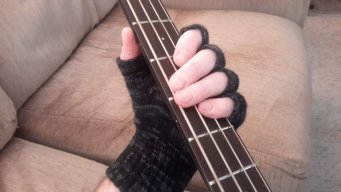
I don't have a 5'r, but thanks to this thread, among other reasons, I'm starting to GAS for one a bit... I think the options for how to use the B string depend on the player... How they play, their physiology, penchant for going low and coming up to the root, etc... I am finding myself more and more wanting that lower range to come up to the root. Add a nice sense of drama to some passages...I usually play my 5 like a 4 when covering stuff in EADG. Nothing stopping you from using the B for low notes, but I like to keep the same patterns for 5 and 4. Drop D is different, you can usually play those songs on a 5 without retuning, it's just a little trickier.
I think it should be thought of kind of like a big drumkit. Just because there's more there, doesn't mean you have to use it all the time. Use whatever you need for what you're playing, even if its just a couple notes on one string.
Hi. I was told by my Country Band I had to go five string.I had dabbled in a 5 string BB Yamaha , so the formatI'm having a LOT more trouble with the transition from a 4 to 5 string (BEADG) bass than I ever thought I would, and it's beginning to get very discouraging. My old workhorse 1984 G&L SB2's neck is in a twist, and will have to be sent to G&L for repair. So I thought I would buy a 5 string and learn to play it. I got a beautiful Sting Ray 5, used. I knew narrow string spacing would be an issue (I have fat, short little "sausage" fingers), and the Sting Ray 5 seemed to have the widest string spacing at the nut of all the 5 strings that I tried. I'm 51 years old, and have been playing 4 string bass professionally since 1971. I know a good deal of theory, but have always been such an "ear" player, not really "thinking" about every actual note I play. Perhaps that is what is causing my extreme difficulty. Besides the string spacing at the nut being bothersome, I just can't seem to wrap my weak mind around the fact the the lowest string is now a B, and NOT an E. I have a house band gig on the weekends and took the new "monster" to the gig. What a near disaster! I only played on it for 3 or 4 songs and it was rough to say the least. I ended up playing my warped G&L SB2 for the rest of the night. Even practicing the 5 string has negativly affected my 4 string playing as I keep getting the B and E mixed up in my head. I REALLY would like to learn to play this "monster", and be able to switch back and forth seamlessly between the 2 basses. At the end of this selfish rant, I guess what I am seeking are tips, tricks, theory, instruction, Voodoo magic, devine intervention, or anything else on how an old 4 string dog like me can learn to play the 5 string without going insane (if I'm not already). Thanks!..................Mark
Was kind of familiar. I got a big Squire, then a Brubaker, Then a MIM Fender jazz 5. Finally landing on a G&L Tribute 5. Great solid bass. No issues . It's a bit more work to play than my Precision. But that B gives you rewards my wife doesn't. Five string is just better. I play the P bass in one band . But everything else is done on a real bass . a FIVE STRING
I started on a five, and got very used to never playing the B string and always mounting my finger on a string or using the floating thumb technique. Now I'm moving to a four and am re-learning how to play the E-string and anchor my thumb on a pickup or something. yeesh!!
Interesting thread.
My five strings are in storage I suppose i am in bass building mode
So I don’t need the 5th string just yet
But I will say a well made five string feels great I have an elite five jazz and it sounds and plays great and you quickly get used to the B string
My five strings are in storage I suppose i am in bass building mode
So I don’t need the 5th string just yet
But I will say a well made five string feels great I have an elite five jazz and it sounds and plays great and you quickly get used to the B string

- Oct 30, 2013
- 625
- 1,991
- Disclosures
- Futura Endorser,Roland/Boss Endorser,Aguilar Amps Endorser,Korg Endorser,Revelation Cable Endorser,I
Getting Use to B string is a bit challenge but using both (4&5)at a gig is constant challenge..
They say all our legends did it on 4 and that’s true but having low B enable us to use little mo’ intelligence which could be pain in da #%~ for some.
having to play bass synth lines and “Bass How Low can U go” quote is indeed fit for 5 string or 4string w/octaver !
They say all our legends did it on 4 and that’s true but having low B enable us to use little mo’ intelligence which could be pain in da #%~ for some.
having to play bass synth lines and “Bass How Low can U go” quote is indeed fit for 5 string or 4string w/octaver !

Now that I've gotten used to it, 5 is all I play. Don't have to jump around the fingerboard, or retune for songs below e1.
Now I'm working on more of a fixed position with the fret hand by spanning six frets. Index for 6 pinky on 9. Stretch for 5th and 10th. Then, all I'd need do is reposition with index on 12th fret.
Now I'm working on more of a fixed position with the fret hand by spanning six frets. Index for 6 pinky on 9. Stretch for 5th and 10th. Then, all I'd need do is reposition with index on 12th fret.
I can’t go back to a 4 string unless it’s tuned and set up BEAD.
Playing music designed for the 5 string helps with the transition. I’ll never go back.
Playing music designed for the 5 string helps with the transition. I’ll never go back.

I read on another thread someone saying, once you go 5 string, you don't come back. And that got me thinking about the differences the extra string make (eg a two octave scale suddenly becomes a lot less of a bother) and I searched out this thread.
I've only this year, in my 40s, bought a bass of my own, though when I was a teenage guitarist I also sometimes performed on bass in a rudimentary way. I have, though, been a classical musician all my life, doing a variety of things at a variety of levels of accomplishment.
I chose a 4-string expressly because I don't want more options: I like the fact that I'm required to move up and down the neck, and I like having to plan and to think where in the line is the appropriate place to have that slight break - a bit like a singer needing to interrupt their line to take a breath.
I've never been listening to a singer and thought, what this needs is them not to be taking breaths, or thought it shame that the bow of a cellist has to keep changing direction back and forth. When I'm listening consciously to the bassline in a song, I like the way that the realities of the instrument create little moments of articulation as the hand moves around.
And I like the physical difficulties of the instrument - think how incredibly boring it is playing a single melodic line on a keyboard - and the sonic consequences of those difficulties. Anyone want to play bass by using a guitar and an octave transpose pedal?
(and if I wanted to play a seamless legato line all the time, I would buy a 6-string bass, and tune it B-Eb-G-B-Eb-G, so that my fingers would never have to stretch at all.... )
)
Anyway, hopefully what I've written might de-"boggle" any minds despairing at those of us who choose to restrict ourselves to 4 strings
I've only this year, in my 40s, bought a bass of my own, though when I was a teenage guitarist I also sometimes performed on bass in a rudimentary way. I have, though, been a classical musician all my life, doing a variety of things at a variety of levels of accomplishment.
That's what I like about a 5 string. It gives you more options and lets you move up/down the neck less. It truly boggles my mind why more bass players don't go for 5's, even as a first instrument.
Five string is just better. I play the P bass in one band . But everything else is done on a real bass . a FIVE STRING
They say all our legends did it on 4 and that’s true but having low B enable us to use little mo’ intelligence which could be pain in da #%~ for some.
I chose a 4-string expressly because I don't want more options: I like the fact that I'm required to move up and down the neck, and I like having to plan and to think where in the line is the appropriate place to have that slight break - a bit like a singer needing to interrupt their line to take a breath.
I've never been listening to a singer and thought, what this needs is them not to be taking breaths, or thought it shame that the bow of a cellist has to keep changing direction back and forth. When I'm listening consciously to the bassline in a song, I like the way that the realities of the instrument create little moments of articulation as the hand moves around.
And I like the physical difficulties of the instrument - think how incredibly boring it is playing a single melodic line on a keyboard - and the sonic consequences of those difficulties. Anyone want to play bass by using a guitar and an octave transpose pedal?
(and if I wanted to play a seamless legato line all the time, I would buy a 6-string bass, and tune it B-Eb-G-B-Eb-G, so that my fingers would never have to stretch at all....
)Anyway, hopefully what I've written might de-"boggle" any minds despairing at those of us who choose to restrict ourselves to 4 strings

I have a beginner-type question and it seemed this thread would be a good home for it as I'm not sure it deserves its own. If I take the plunge and buy a 5-string bass, presuming I go with BEADG tuning, when I want to play something like the Beatles (4-string) what is the normal thing to do? Do I simply ignore the B-string and play it like a 4-string. It somehow seems wrong in that respect to buy a 5-string and ignore the fifth in that case... or do people tend to incorporate the fifth string anyway into 4-string written music for example by trying to play a lower octave or something?
These are not 4 or 5 string they are basses. The number of strings is immaterial, it is just an arrangement of notes, so play the bass that gets the job done in a way that feels comfortable to you.
I'll admit, I'm lazy. I don't want to carry multiple basses so I can swap them around for particular songs. I don't see any point or benefit in doing that. If you have a 5 string bass hanging around your neck and the B string isn't required for a song. . . don't play it. Play the notes you want to play and don't worry about the number of strings. I play songs where I don't play the G string, but I don't carry a bass without a G string to use on those songs.
One last point, I'm really not interested in which bass was used on the original song. Who cares. The Beatles also recorded songs on a Fender 6 string bass. Who in their right mind is going to buy one of those just for a Beatles song!!!!
You're playing the songs now. It's your call, so you use the bass that you want.
> when I want to play something like the Beatles (4-string)
I would argue that there's nothing about any bass line that inherently says it has to be played on a 4 string. I've played plenty of Beatles songs and made use of the low B string. To be fair, when I play covers I capture the essence/major features of the original bass line so it still sounds familiar, but I've never understood the apparently fairly common mindset that you should be a slave to exactly copying it note-for-note.
(My feeling is that I'm bringing me to a gig not the original artist, and if someone wants to hear exactly the original then they should just put on the record. Not least because It is inherently a loosing battle trying to exactly recreate something, especially live. Its an even more impossible problem when the original was played by someone else decades ago so on a now antique instrument then recorded/post-processed using now-antique studio equipment).
I would argue that there's nothing about any bass line that inherently says it has to be played on a 4 string. I've played plenty of Beatles songs and made use of the low B string. To be fair, when I play covers I capture the essence/major features of the original bass line so it still sounds familiar, but I've never understood the apparently fairly common mindset that you should be a slave to exactly copying it note-for-note.
(My feeling is that I'm bringing me to a gig not the original artist, and if someone wants to hear exactly the original then they should just put on the record. Not least because It is inherently a loosing battle trying to exactly recreate something, especially live. Its an even more impossible problem when the original was played by someone else decades ago so on a now antique instrument then recorded/post-processed using now-antique studio equipment).
Last edited:

I got my first bass about 1.5 years ago. I played guitar mostly and knew theory.
I thought I’d get a 5 string because my fav players either have 5 or 6 string basses. It didn’t go well. I sold the bass.
Well in my jamming I found that I love using the fifth right above the root so I thought “a b string sure would be nice to have there.” I got a 5 string again and it was a totally natural transition. I love it.
I thought I’d get a 5 string because my fav players either have 5 or 6 string basses. It didn’t go well. I sold the bass.
Well in my jamming I found that I love using the fifth right above the root so I thought “a b string sure would be nice to have there.” I got a 5 string again and it was a totally natural transition. I love it.


