

Enjoy the benefits of a premium membership!
Upgrade Account
-
TalkBass has been independent since 1998. Add your voice.
Create a free account to reply to discussions, view embedded media, and browse with fewer display ads.
Join free Log in
Want zero display ads or expanded classifieds tools? Compare plans.
You are using an out of date browser. It may not display this or other websites correctly.
You should upgrade or use an alternative browser.
You should upgrade or use an alternative browser.
GR Bass review
- Thread starter otto B
- Start date
More options
Who Replied?

Maybe mid drivers are something from the past?
It's not only GR Bass, I notice the market in general moves away from multiple driver sizes in a single cab (low frequency driver + mid/high driver). Because modern drivers have much better full frequency range performances, it doesn't seem to necessary any longer to add mid drivers + complex crossover.
I can't think of a single example of modern/recent cab using mid drivers. Or prove me wrong?
Genzler? Eich? Greenboy? Markbass AC model
Barefaced, Audiokinesis, LFSys and others have crossed over horns with low crossoverpoints and improved dispersion.


Large woofers have beaming effects that make them more directional than using a dedicated midrange, making them more difficult to hear off-axis in the higher frequencies. There's still a place for two and three-way designs, IMO. Coaxial drivers exist as well.Maybe mid drivers are something from the past?
It's not only GR Bass, I notice the market in general moves away from multiple driver sizes in a single cab (low frequency driver + mid/high driver). Because modern drivers have much better full frequency range performances, it doesn't seem to necessary any longer to add mid drivers + complex crossover.
I can't think of a single example of modern/recent cab using mid drivers. Or prove me wrong?
My fEARful True 3-way 15/6/1 is another example... full range, studio-type response, with excellent dispersion.
Large woofers have beaming effects that make them more directional than using a dedicated midrange, making them more difficult to hear off-axis in the higher frequencies. There's still a place for two and three-way designs, IMO. Coaxial drivers exist as well.
My fEARful True 3-way 15/6/1 is another example... full range, studio-type response, with excellent dispersion.
OK, my bad.
Anyway, I don't see GR Bass going that route anytime soon.
D
Except that the AT Cube combos and AT Cube speaker cabs have 1" horn drivers in addition to their main Jensen/Sica custom drivers. Although none is mentioned on their website or what passes for a manual (not even close to being useful), I fully expect that there is a crossover that limits the frequencies sent to the tweeter.OK, my bad.
Anyway, I don't see GR Bass going that route anytime soon.
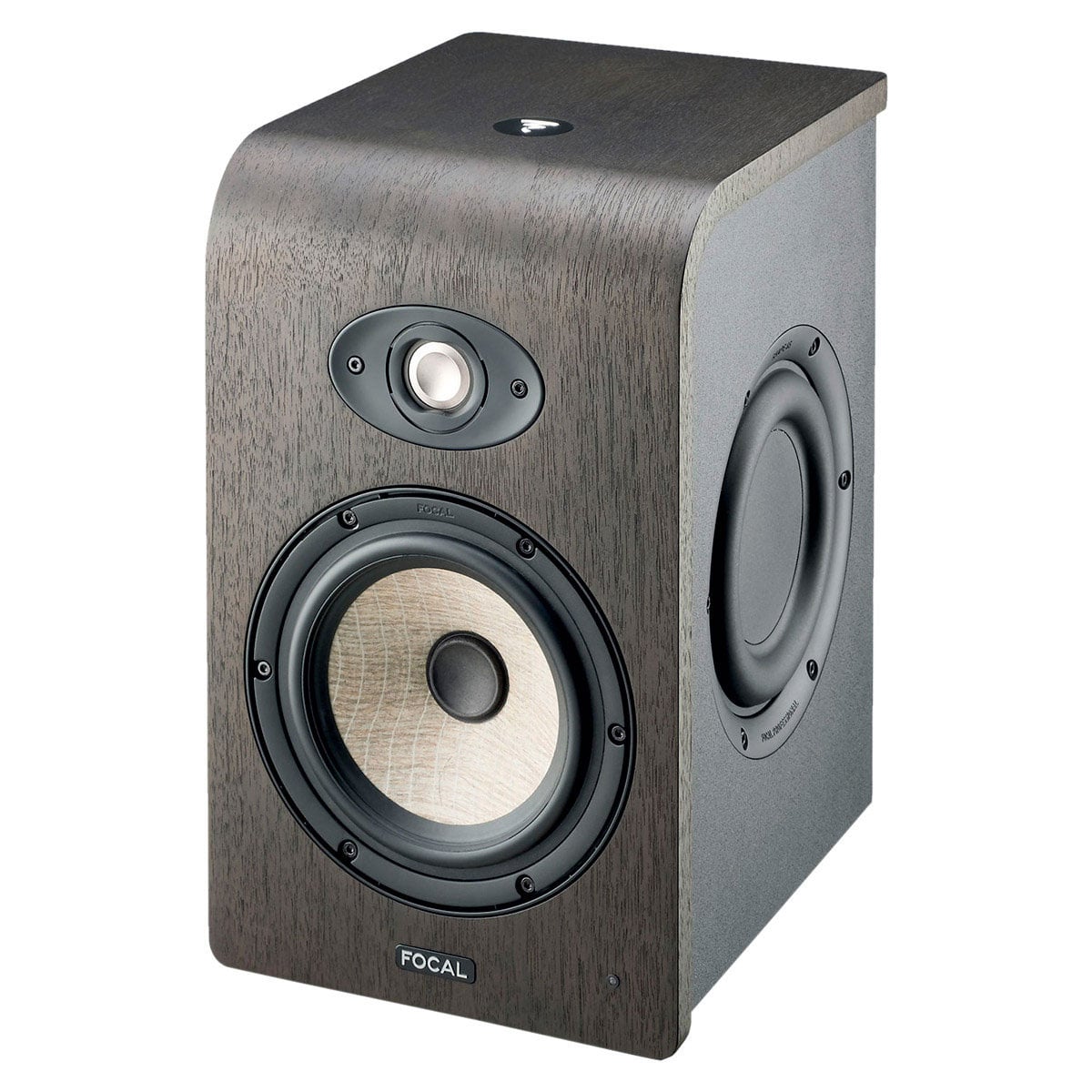
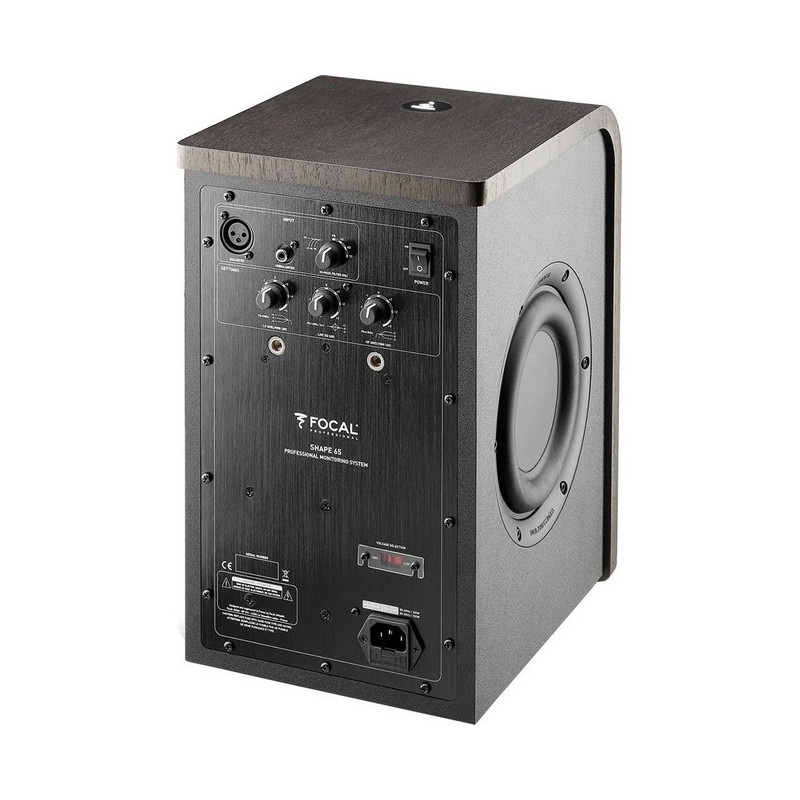
Studio monitors are another story. My Focal Shape 65 monitors are two-way, with EQ controls on each. And they were NECESSARY! I have a small studio with hard walls and had to turn down the bass.

Maybe mid drivers are something from the past?
It's not only GR Bass, I notice the market in general moves away from multiple driver sizes in a single cab (low frequency driver + mid/high driver). Because modern drivers have much better full frequency range performances, it doesn't seem to necessary any longer to add mid drivers + complex crossover.
I can't think of a single example of modern/recent cab using mid drivers. Or prove me wrong?
I certainly don’t mean to say that mid drivers are NECESSARY is a cab. I recently had a small pile of cabinets in my house: Mesa Subway 112, Bergantino 112 (an NV-type I think), MAS 110 (with a 3” mid and dome tweeter), an Avatar 126 (12 plus 6), the Bodai 112, and eventually the GR 112. To me, there seems to be a certain “completeness” in the upper mids from any of the mid-equipped cabs (incl. avatar) that singles didn’t have. Which presentation one prefers is a matter of, well, preference.
I agree that it’s not wise to get too hung up on driver dimensions in the current landscape. Many folks adopting single 15’s, Michael Arnopol has recently moved to only offering cabs with 5” or 6” drivers, and abandoned the fancy crossovers and “extra” mid drivers.
For the most part I think you’re right that major brands are not using dedicated mids. But they never were? I don’t think it’s “something from the past,” I think it’s “something only weird boutique designers who cared less about cost” were and/or are doing, other than the aforementioned Genzler bass array cabs.
I don’t want to turn this into a MAS thread, but mostly my comments were intended to make a comparison to a speaker that another member may have had experience with.

- Feb 12, 2006
- 60,989
- 5
- 220,789
- Disclosures
- Development Engineer-Mesa Boogie, Development Engineer-Genzler (pedals), Product Support-Genz Benz
This is an example of “in theory” versus “in practice”.
1. the whole thing about drivers beaming is very misleading because there are things inherent to driver design that augment the higher frequency polar pattern. This is something the folks who preach beaming fail to understand.
2. The mid array in the Genzler cabinets alter the mid pattern by narrowing it somewhat in the vertical plane in conjunction with the low passing of the LF driver.
3. The choice of LF driver and its polar pattern (which varies with frequency) affects the choice of HF driver so that the summed results are consistent with the design goals. Everything works together as a system.
1. the whole thing about drivers beaming is very misleading because there are things inherent to driver design that augment the higher frequency polar pattern. This is something the folks who preach beaming fail to understand.
2. The mid array in the Genzler cabinets alter the mid pattern by narrowing it somewhat in the vertical plane in conjunction with the low passing of the LF driver.
3. The choice of LF driver and its polar pattern (which varies with frequency) affects the choice of HF driver so that the summed results are consistent with the design goals. Everything works together as a system.
Speaking of preaching and failing... I don't recall anyone preaching about anything related to driver beaming. No religious fervor was involved. It was merely brought up as a reason why two and three-way cabinets potentially have some advantages. It really doesn't matter to me if anyone wants to use single large-driver cabinets, if that works for them. Hallelujah!
Speaking of preaching and failing... I don't recall anyone preaching about anything related to driver beaming. No religious fervor was involved. It was merely brought up as a reason why two and three-way cabinets potentially have some advantages. It really doesn't matter to me if anyone wants to use single large-driver cabinets, if that works for them. Hallelujah!
Absolutely. To each his own, we're only here to have a nice chat, and sometimes we also learn things in the meantime.
I guess my comment of multi-driver size cabs being "a thing of the past" was deliberately provocative, I didn't want to sound aggressive. But what I meant really is that in the 80's drivers didn't have a great frequency range: if you wanted to have deep lows, you needed to have a 15", but a 15" driver couldn't go very high… At that time I had that rig, it was great:

I think today, the performance of modern drivers have increased a lot, some 12" can cover a very wide frequency range. For example my Barefaced Super Compact have deep lows and beautiful mids and highs, I don't even need a tweeter for the kind of music I play.
So, maybe, mixing driver sizes was more useful back in teh days than it is now?
But again, to each his own…
[EDIT] Sorry, we've been a little bit out of topic, partly my fault, I suggest we come back to GR Bass gear now…
Last edited:
- Feb 12, 2006
- 60,989
- 5
- 220,789
- Disclosures
- Development Engineer-Mesa Boogie, Development Engineer-Genzler (pedals), Product Support-Genz Benz
Speaking of preaching and failing... I don't recall anyone preaching about anything related to driver beaming. No religious fervor was involved. It was merely brought up as a reason why two and three-way cabinets potentially have some advantages. It really doesn't matter to me if anyone wants to use single large-driver cabinets, if that works for them. Hallelujah!
There have been multiple threads discussing this exact topic, the “preaching” ignored the real world design augmentations applied to many drivers to get around what pure theory predicts.
The first implementation of this that I am aware of was the JBL D-130, the real world polar pattern at higher frequencies is completely different than what pure theory predicts.
While we're at it, let's consider the difference between real and theoretical black holes and whether singularities actually exist:

D
Well, that was an interesting "black hole" that sucked up some of my time. At least I enjoyed it.
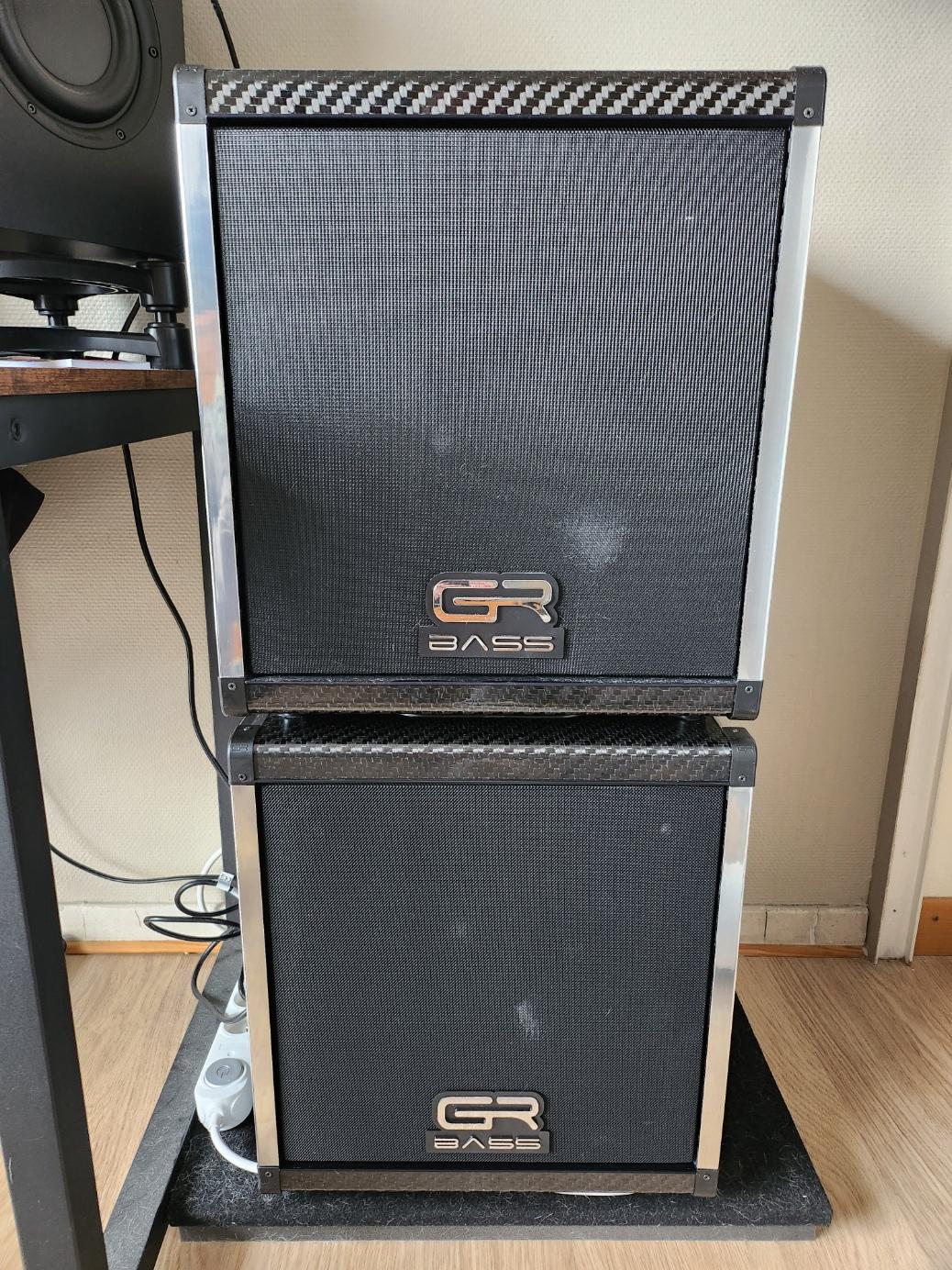
Now, back to our regularly scheduled programming. After many weeks of trying to track down an AT Cube 112 8 ohm 350 watt cab for my 500 combo, Thomann actually received a few in stock last weekend or Monday. I ordered one straightaway, and it showed up yesterday. All I can say so far after playing through it for an hour or so today while keeping it at acceptable apartment building volume (Master around 7 o'clock; almost off), it was still LOUD. Clean, pure bass. I love it. The cab is incredibly light and its top, recessed handle is positioned closer to the front of the cab, making it almost perfectly balanced while carrying it. The Pro Snake 1/4" to Speakon bass cab cable that I ordered with it was made in Germany, not China. Also happy about that.
Now, back to our regularly scheduled programming. After many weeks of trying to track down an AT Cube 112 8 ohm 350 watt cab for my 500 combo, Thomann actually received a few in stock last weekend or Monday. I ordered one straightaway, and it showed up yesterday. All I can say so far after playing through it for an hour or so today while keeping it at acceptable apartment building volume (Master around 7 o'clock; almost off), it was still LOUD. Clean, pure bass. I love it. The cab is incredibly light and its top, recessed handle is positioned closer to the front of the cab, making it almost perfectly balanced while carrying it. The Pro Snake 1/4" to Speakon bass cab cable that I ordered with it was made in Germany, not China. Also happy about that.
Last edited:
killer setup!Well, that was an interesting "black hole" that sucked up some of my time. At least I enjoyed it.
Now, back to our regularly scheduled programming. After many weeks of trying to track down an AT Cube 112 8 ohm 350 watt cab for my 500 combo, Thomann actually received a few in stock last weekend or Monday. I ordered one straightaway, and it showed up yesterday. All I can say so far after playing through it for an hour or so today while keeping it at acceptable apartment building volume (Master around 7 o'clock; almost off), it was still LOUD. Clean, pure bass. I love it. The cab is incredibly light and its top, recessed handle is positioned closer to the front of the cab, making it almost perfectly balanced while carrying it. The Pro Snake 1/4" to Speakon bass cab cable that I ordered with it was made in Germany, not China. Also happy about that.
D
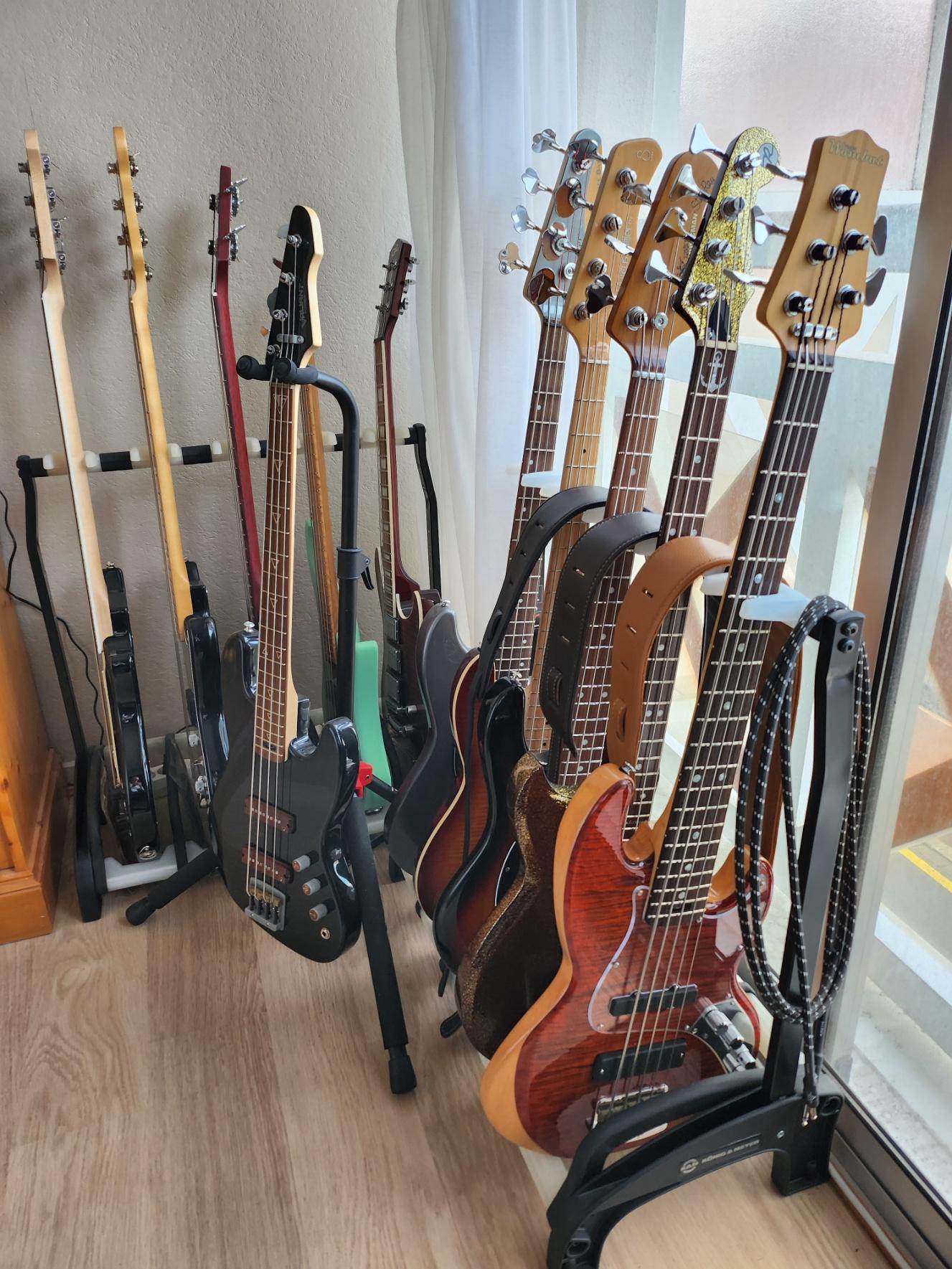
Now comes the hard part. Which one do I play through it next?killer setup!


Well, that was an interesting "black hole" that sucked up some of my time. At least I enjoyed it.
Now, back to our regularly scheduled programming. After many weeks of trying to track down an AT Cube 112 8 ohm 350 watt cab for my 500 combo, Thomann actually received a few in stock last weekend or Monday. I ordered one straightaway, and it showed up yesterday. All I can say so far after playing through it for an hour or so today while keeping it at acceptable apartment building volume (Master around 7 o'clock; almost off), it was still LOUD. Clean, pure bass. I love it. The cab is incredibly light and its top, recessed handle is positioned closer to the front of the cab, making it almost perfectly balanced while carrying it. The Pro Snake 1/4" to Speakon bass cab cable that I ordered with it was made in Germany, not China. Also happy about that.
GR is going to have to come up with a lightweight Speakon cable to go with the cabinet!
D
GR is going to have to come up with a lightweight Speakon cable to go with the cabinet!


When I was searching Thomann's site for a speaker cab cable, the Pro Snake specifically said it was for a bass speaker cab. My expectation was that it was made with a thicker gauge wire than a regular speaker cab cable due to the higher power of bass amps and thus the higher current required to drive a bass cab. That was the first time I'd ever seen a cable marketed specifically for bass cabs. In this case, a little heavier is better.
It's maybe not necessary for the 250 watts the 500 combo can drive the extension cab with, but an 800 head or combo would push 2x400 watts, or GR Bass's insane ONE 1400 head pushing 2x700 watts. The last thing I'd want is a speaker cable feeling warm to the touch.
Last edited:
- Feb 12, 2006
- 60,989
- 5
- 220,789
- Disclosures
- Development Engineer-Mesa Boogie, Development Engineer-Genzler (pedals), Product Support-Genz Benz
There is no difference between a SpeakOn cable for a bass cabinet or a PA cabinet unless it’s specifically a 4 wire cable for biamp purposes in pro audio.
Pro audio applications are as powerful and more powerful than bass applications, made even more demanding by the longer runs in pro audio.
Pro audio applications are as powerful and more powerful than bass applications, made even more demanding by the longer runs in pro audio.
D
You certainly know much more about the subject than I do. I'm just wondering why that cable would be marketed as a bass cab cable if it's identical to a cable being sold for speaker cabs in general. Wouldn't that limit the audience for the product? Wouldn't that be antithetical to a company's desire to sell as many of its products as possible?There is no difference between a SpeakOn cable for a bass cabinet or a PA cabinet unless it’s specifically a 4 wire cable for biamp purposes in pro audio.
Pro audio applications are as powerful and more powerful than bass applications, made even more demanding by the longer runs in pro audio.
Note that I'm willing to accept the explanation that I'm way overthinking this.


This speaker cable that is called a bass cable seems to be a Speakon to Jack cable. At least it has Neutrik connectors, but I suspect its aimed at people who have older speakers with jack connectors and a more modern bass amp with Speakons. It makes no difference to the performance of the cable, but is potentially capable of destroying an internally bridged class D amp if you happen to touch earth with the jack connector. The jack looks as if it has a metal casing, so not recommended. Both positive and negative connections on most modern class D amps should not be earthed. If you have a less powerful vintage amp with a jack speaker output, the cable will work ok. The jack plug is the limiting factor for current flow.You certainly know much more about the subject than I do. I'm just wondering why that cable would be marketed as a bass cab cable if it's identical to a cable being sold for speaker cabs in general. Wouldn't that limit the audience for the product? Wouldn't that be antithetical to a company's desire to sell as many of its products as possible?
Note that I'm willing to accept the explanation that I'm way overthinking this.
Last edited:


