• TalkBass has been independent since 1998. Add your voice.
    Create a free account to reply to discussions, view embedded media, and browse with fewer display ads.
    Join freeLog in
    Want zero display ads or expanded classifieds tools? Compare plans.

Graphite bars or Quartersawn? Which is better?

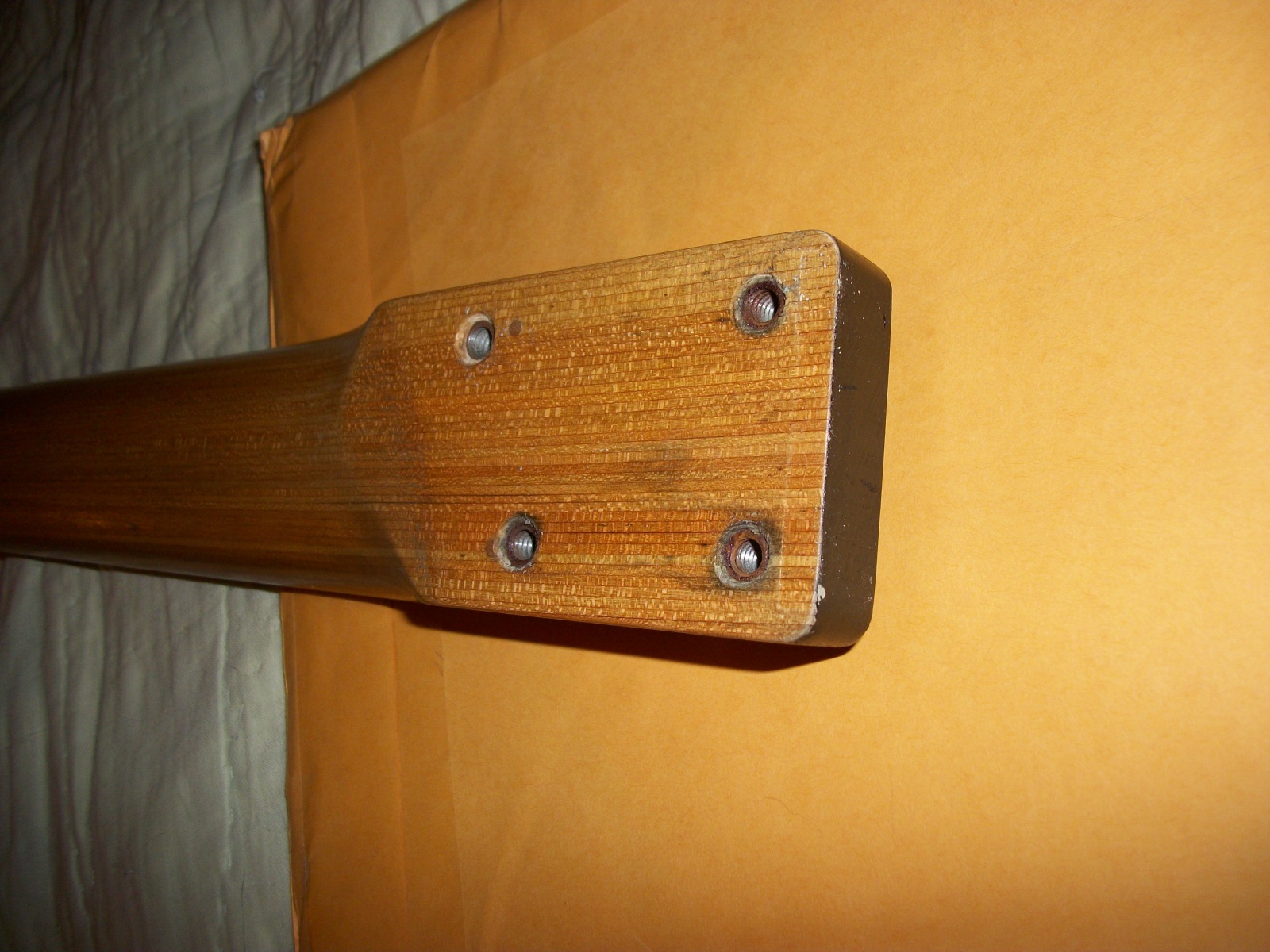
I count 38, at least at the end. You were right, that is a bizarre piece of plywood (above a certain price point it becomes "hardwood laminate", of course :)). Being Kubiki (pre-Fender?), I'm sure it's top quality wood and very, very stable.

Reid
This is a little OT, but I don't think "pre-Fender" is relevant with respect to the neck construction. I think the only change made to the necks was with the position markers, and I am not certain, but I think Phil made all the necks anyway. Mine is a Fender Kubicki, but it is early enough that it has the Kubicki Kubicki preamp.
 
I think you have to accept that all wooden necks are a compromise. The thinner they get (think Geddy Lee Jazz) the more prone to instability they are in weather changes. The graphite rods do help a lot, but the only true stability is a full graphite neck/phelonic fingerboard. I've done temperature variations in one given day from minus 20 degrees C outside to plus 20 in a theatre with no change in my graphite necks day after day.

Sometimes a very hard wood for the fingerboard combined with a very high quality piece of neck timber helps - the ebony fingerboard and a seriously quality piece of maple on my Enfield seems to keep the neck very stable, whereas my Music Man Classic Sabre (spalted maple/rosewood) needs fairly regular adjustment, annoyingly.

While I agree with the most part of your post, I have heard of a graphite neck bass which was left exposed to the sun in the back of a car. It was left in direct sunlight under the windows during the height of summer and without a case. The neck was substantially warped due to the way carbon graphite reacts to direct solar heat. Wood doesn't exhibit this trait and probably wood (soz) have been fine. So while agree that carbon graphite necks are generally clearer tones, more stable and more resistant to enviornmental changes...it's not impervious to direct sunlight and heat absorption.
I like basses with multi-laminate necks, carbon rods and two way truss rods. But that's just me...i have tried a few Modulous and Status basses to and I've really liked them as well.
 
Multi piece necks are going to be more stable than either of those cuts. adding rods will further stabilize an already superior neck. Which one you choose is up to you because at that point its really probably not going to matter. The strongest neck I've encountered is a 5 piece.

As always, IMO, YMMV.
 
Since 2000 or a little after, I have been usin basses having multi-lam necks WITH graphite reinforcement rods. Had a Smith CR 6 at the time. 5 piece neck with rods. Soon after, I got an American Deluxe Jazz 5. It was a single piece neck, with graphite reinforcement. At that time, both basses were the most stable song to song, night to night, gig to gig, region to region that I'd ever used. I still play a Fender Am Del 5 today. Graphite rods surrounded by wood sheaths or tubes. I guess to keep the graphite from touchin the neck wood, but I gotta say the tone of reinforced necks changes very little next to non reinforced necks. If anythin, there is more sound reflected off the neck than absorbed by it in necks containin graphite. Currently I play a 2010 Deluxe Jazz 5 (graphite, single piece quartersawn), an '04 Warwick Streamer Stage One 6 string (multi-lam neck, no reinforcement), an a Carvin 5 fretless (single piece, graphite). All these basses are as stable as any. Seasonal changes do nothin. I never have to tune them, action an relief stay consistent and the necks, all three, project sound, not absorb it. I think the thickness of the fingerboard has a lot to do with stability. The Warwick and Carvin have very thick Wenge and Ebony boards, respectively, and I am sure they have somethin to do with the stability of the neck. My Am Deluxe has blocks and binding, so I can't tell the thickness of the board, but it is the only maple boarded bass I have ever used, as in my experience, maple boards tend to have more dead spots than any other fingerboard material. I attribute this to the graphite reinforcement, and my Fender, which has traveled all over the world with me, is the most consistent, stable and best feelin neck I ever played. I believe in graphite reinforcement. I don't consider buyin basses without it. And if I hadn't gotten this Streamer at a ridiculous price, $600 out the door at a pawn shop, I prolly wouldn't own it. But, I will say... Reinforced or not, the Warwick's neck don't move. But it is HUGE! With that much wood? That many crossed grain laminations? Of course it's stable. I believe you can take any neck, put graphite in it, and it'll be great.
 
  • Like
Reactions: MSIMSBASS and n1as
Not trying to spam, but we use one piece necks with a ratio of 10% carbon fiber to 90% maple - no trussrod, no issues. Ever. It's glorious. Tonally, it's great, too - more sustain, absolutely no dead spots ever, more even response from string to string...

I left my bass in our van the last two weeks (temps hovering around 1F certain nights), got on stage on Saturday still in tune.
 
I may have exaggerated a little. I counted them once years ago, but don't remember the number. Still it is a bit unusual looking. Not mine, but:
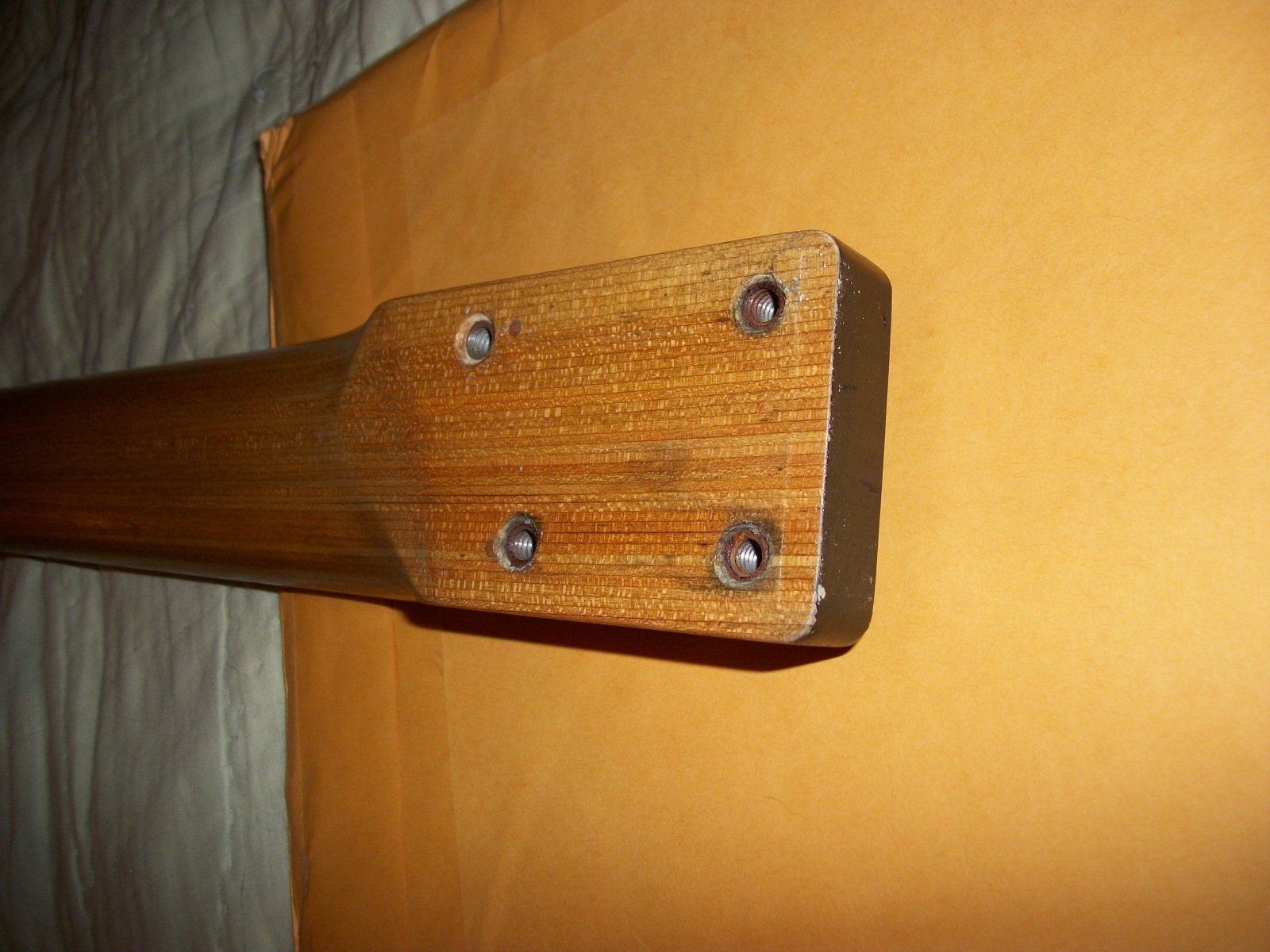
2l8ggmr.jpg
That's from a Framus! :smug:
 
While I agree with the most part of your post, I have heard of a graphite neck bass which was left exposed to the sun in the back of a car. It was left in direct sunlight under the windows during the height of summer and without a case. The neck was substantially warped due to the way carbon graphite reacts to direct solar heat. Wood doesn't exhibit this trait and probably wood (soz) have been fine. So while agree that carbon graphite necks are generally clearer tones, more stable and more resistant to enviornmental changes...it's not impervious to direct sunlight and heat absorption.
I like basses with multi-laminate necks, carbon rods and two way truss rods. But that's just me...i have tried a few Modulous and Status basses to and I've really liked them as well.

Yes, I've seen a severe heat affected Status neck with a twist in it, but it is thankfully very rare, especially in the UK where we rarely get that sort of heat.

I've also seen one that was purposely driven over by a truck as a demonstration. Scratches apart, it was perfectly intact, not that I'd recommend such actions on one's beloved bass!

I like the use of the graphite rods too and multi laminates do seem to be the strongest of wooden necks as you say.
 
Op here - yea multi lam plus bars would be great but I have limited choices. I an debating btwn Fender am std P bass and g&l LB100. The fender is flat sawn with bars, the G&L quarter sawn with no bars.

So for me it is an "or" not an "and".
 
How about all three? ;)

3-piece all quarter sawn, two outside pieces are from the same board, but flipped 180 degrees (so if one goes "up", the other naturally wants to go "down" and they cancel each other out), center piece from a different piece of wood (same species or another, extremely stable wood - purpleheart, wenge) also quarter sawn, then two graphite rods.

Nothing is 1000% infallible, but I can tell you from 10 years of direct personal experience, ^that combination has a failure rate that essentially approaches zero (well under 1 "failure" - defined as a twist or warp that cannot be adjusted out - per 3000 necks), and still sounds and feels like a wood neck.
 
  • Like
Reactions: n1as
How about all three? ;)

3-piece all quarter sawn, two outside pieces are from the same board, but flipped 180 degrees (so if one goes "up", the other naturally wants to go "down" and they cancel each other out), center piece from a different piece of wood (same species or another, extremely stable wood - purpleheart, wenge) also quarter sawn, then two graphite rods.

Nothing is 1000% infallible, but I can tell you from 10 years of direct personal experience, ^that combination has a failure rate that essentially approaches zero (well under 1 "failure" - defined as a twist or warp that cannot be adjusted out - per 3000 necks), and still sounds and feels like a wood neck.

The only danger with incorporating a different species, or even a different board from the same species, is that there my be a difference in reactivity to moisture changes. Careful selection of the woods involved is critical, and Gard is a master at this kind of thing.
 
Which produces a more stable neck?

Which produces better tone?

Firstly, a quarter sawn neck has absolutely zero structural advantage over a flat sawn neck. If anything, a flat sawn neck is less prone to twisting compared to a quarter sawn neck. The stability of the wood itself is much more important than how it was cut. As far as graphite bars go, I find them unnecessary on a 4 string, but they surely do not hurt, and will make the neck move less during a climate change. They will have a very minimal, if not zero effect on tone.
 
Firstly, a quarter sawn neck has absolutely zero structural advantage over a flat sawn neck. If anything, a flat sawn neck is less prone to twisting compared to a quarter sawn neck. The stability of the wood itself is much more important than how it was cut. As far as graphite bars go, I find them unnecessary on a 4 string, but they surely do not hurt, and will make the neck move less during a climate change. They will have a very minimal, if not zero effect on tone.

I've been involved in several tests on this - quarter sawn wood is significantly stronger than flat sawn. And a properly made quarter sawn neck will be less likely to twist than the same flat sawn neck. But, selecting the wood for proper grain orientation (which leads to stability) is indeed an important part of the job of building a good neck. That said, the same piece of wood, properly selected for stability, will be stronger and more stable quarter sawn than flat, 100 times out of 100.

You're entitled to your opinion on the graphite reinforcement, but I'll take it over not having it - better to have and not need than to need and not have.
 
  • Like
Reactions: The Nameless