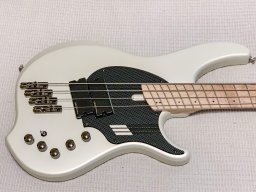
I have few questions about basses with graphite necks like modulus or status graphite.
1. Does graphite neck have a truss rod? or does the neck bend or need adjustments?
2. Does it sound different than a bass with wood neck?
3. Does it feel different?
4. Is bass with a graphite neck heavier than a bass with a wood neck?
There are , AFAIK, no new Modulus replacements necks, since the company went belly up a few years ago. Mind you even if it has been taken over by someone else they seem to just produce finished basses at this time. So left only, are Moses and Status. Moses makes - lo and behold - Modulus replacement necks.
1. Depends on brand, wheter its Modulus, Moses, Status. On Moses site, there's a slight biased history, on the history of truss rods in graphite necks. Moses used them all of the time, since they are not completely solid necks! They have a "beeswax cave system" inside that is semi-solid plus truss rod.
2. Depends on brand. Mostly, I would say yes, but you can't say there's a clear difference between wood and graphite. Like...there's just ONE wood, and if there's different woods (maple, wenge, rosewood) they would sound exactly the same. There's too much difference between wood necks too, so that assumption or question isn't really valid. I'ts like asking: "do they have the same color as ... friday?"
3. Yes, unanimously. But different is neither worse nor better. Moses have a soft vibrant feel, since their necks often vibrates with the notes, others are stiff and have no resonance at all that you can feel in your fingers. I've played wooden necks that has been so stiff and dull, that you'd thought they were made of plastic or anything else (but graphite). The main thing is - though - that there is a slightly higher rate of consistency in tone and feel among the same graphite necks manufacturer. Even if you'd try to do everything identically with a maple neck from Warmoth or USACG, chances (or risks) are that they sound different between two exactly similar items. How much difference that's allowed is always up to you. Not so much with any graphite.
4. Depends on brand, but I would like to say on the contrary, by and large. If you have a neck diving bass with a wood neck, chances are that you'll level it out with replacing it with a graphite neck. Without jeopardizing tone, dead spots, or overall tonal character.
Graphite necks, do have DEAD SPOTS but less so that wooden necks. The dead spot is not removed by graphite, but mosly making the neck headless (see for the uptenth time on Fender protoype headless made in 70's, the dead spot didn't disappear until HEADSTOCK was completely removed). Graphite necks plus headless such as Steinberger are a safe bet if you will avoid dead spots to the greatest extent. You'll minimize them, at least. But there are other things than dead spots to be concerned of.
Maintenance: refretting or maintaining a graphite necks, may require different tools and skills than any wooden neck. Moses has their shortcomings too, in spite of them being the easiest to work on, regarding filing, or screwing things into them. My biggest gripe with Moses graphite necks are the truss rods. It's almost impossible to get the neck straight and you can't get a proper "drop off" at the end of fretboard.
MOSES graphite necks are way too flexible for me to use. If a string breaks on the bass , which it actually did a couple of years ago, the top g-string, the relief and "bow" of the neck reacted immediately, in the middle of a tune, so it had a severe backbow due to the lost tension and made the rest three strings fret buzz like hell on all frets, so it was impossible to finish the tune on three strings. Which I would normaly do.
Wooden necks, shows some healthy tardiness, and when adjusting truss rods, it takes like 15 minutes before it has settled together with string tension. You can't even do drop tunings on a Moses graphite without adjusting action. If you've taken all strings off, and put them on one by one, and bring them up to pitch ist impossible. You must tune up all strings simultaneosly. If you take all but one string off, that string will buzz severely. It's because of their blend. If they make them stiffer, to cope with that, they sound and feel worse. I think the best solution is a double throw truss rod, that can be set and no single action truss rod. But no, they wont go that way.
Mind you, this is just Moses, not the other ones. The only company I have never ever heard any flak towards, are English Status. Both their necks and basses. Modulus comes second (some issues with earliest models) and last Moses. Moses are the cheapest though. Go figure why.
Graphite necks should have adjustable truss rods, period. If it hasn't, shy away. The relief should be adjustable to a varied amount of string tension, and different string gauges as well as different tunings needs different reliefs. There's no such thing as one relief fits all.