
That would be nice. Not wrapping my head around the written description.
Quick and dirty video but I think you can get the idea from it.

TalkBass has been independent since 1998. Add your voice.
Create a free account to reply to discussions, view embedded media, and browse with fewer display ads.
Join free Log in
Want zero display ads or expanded classifieds tools? Compare plans.
That would be nice. Not wrapping my head around the written description.
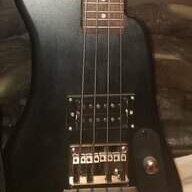

Thanks. Doesn't work on flats I'm guessing
It’s hit and miss on any type of strings.
Some types are more sensitive than others. If the windings slip relative to each other or to the core wire, the string may not ring true after cutting. Symptoms range from buzzes to rattles to dead spots or intonation problems.
That’s why string changing instructions generally tell you to make a 90 degree bend in the string before cutting off any excess.

I think the discriminating factor is core shape: up until a point (1980s?) all strings were round-core, and prone to winding slippage if not crimped precisely because of that. (It didn't necessarily occur, but it might. Hence the instruction to crimp before cutting that DR Strings - IIRC - include in their round-core products.) Right now the majority are hex-core, the corners of the hexagonal section bite into the winding wire some and slippage is less of a thing as a result.In days ago yes. Strings were a bit more lax in their manufacture. With today’s round wounds, I haven’t had any difficulty with this procedure. As I am aware, the instructions for the 90 bend were meant to address the very issue of poorly made strings unraveling once cut. I’ve not seen that as an issue since the late 1980s. I regularly cut all of my strings to length without bending them first. The studious eye will note though that, almost instinctively I bent the string in my video whilst I was mispronouncing different parts of the guitar so...

It depends on the types of strings you use.In days ago yes. Strings were a bit more lax in their manufacture. With today’s round wounds, I haven’t had any difficulty with this procedure. I regularly cut all of my strings to length without bending them first...

Doesn't the Sojourn 4K runs on steel core strings stock?So, I actually bought yet another set of CB40s and tried to put them on the new Sojourn.
Didn't fly. The E string must have been sitting much further down. Massive buzz. Had to bail out and put the stock E back on.
Quick fix if a nut slot is filed too low: remove string and mask off the fingerboard around the slot you want to raise. Then file the top of the nut with a flat file. The file shavings will accumulate in a small pile in the nut slot. Now drop a few drops of super glue into the nut slot. Allow a few minutes for the glue to set and then use a nut file to re-cut the slot to the proper depth.So, I actually bought yet another set of CB40s and tried to put them on the new Sojourn.
Didn't fly. The E string must have been sitting much further down. Massive buzz. Had to bail out and put the stock E back on.

For white and creme nuts, you can also use baking soda to build up the slot.Quick fix if a nut slot is filed too low: remove string and mask off the fingerboard around the slot you want to raise. Then file the top of the nut with a flat file. The file shavings will accumulate in a small pile in the nut slot. Now drop a few drops of super glue into the nut slot. Allow a few minutes for the glue to set and then use a nut file to re-cut the slot to the proper depth.
Although meant as a temporary fix, I’ve played basses for years without replacing the nut after using this fix (learned this on Stew-Mac website)
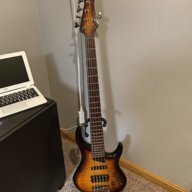
It just left Argentina. Ups is saying by the end of the day Thursday. I’m pretty excited.
Got it. I’m crazy-busy at the moment. First impression is good. I’ll goin to more detail ASAP. Not disappointed.


