
Enjoy the benefits of a premium membership!
Upgrade Account
-
TalkBass has been independent since 1998. Add your voice.
Create a free account to reply to discussions, view embedded media, and browse with fewer display ads.
Join free Log in
Want zero display ads or expanded classifieds tools? Compare plans.
You are using an out of date browser. It may not display this or other websites correctly.
You should upgrade or use an alternative browser.
You should upgrade or use an alternative browser.
Half step down...tune down or learn the song 'wrong'?
- Thread starter mmbongo
- Start date
More options
Who Replied?I gotta say that this has been a pretty interesting thread. It's cool to see how everyone approaches this scenario. In my band there are 3 guitar players and there are times where not everyone is playing in the same tuning. We use everything from Eb tuning, open G, Drop B (drop C tuning down a half step) and several variations of those. To be totally honest there are some tunes where I have no idea what these guys are tuned too  On some of these tunes I'll play in standard (open G for instance). On some I switch basses in different tunings. One song we have is in C#F#C#F# for me. I tried it as a straight up Drop D down a half step but it just didn't sound right and my left hand was having to make some extremely awkward jumps. I think the whole thing is finding what works best for you and going with it. Every approach mentioned works. None of them are "wrong."
On some of these tunes I'll play in standard (open G for instance). On some I switch basses in different tunings. One song we have is in C#F#C#F# for me. I tried it as a straight up Drop D down a half step but it just didn't sound right and my left hand was having to make some extremely awkward jumps. I think the whole thing is finding what works best for you and going with it. Every approach mentioned works. None of them are "wrong."
Back when this started coming up a lot, I did pick up a decent 5er. That did work fine.
I have smaller hands, and I really do like the smaller necks. I installed a hipshot detuner on a Geddy Lee and that solved both Eb and D for me. I rarely ever use a low open B, but having that low D there makes a huge difference to me.
My band likes the sound of my old Ibanez with the DiMarzio P pup. That has a 2 x 2 headstock that won't fit a detuner, so I go without then. I will use a jazz bass tuned to Eb if the gig has a song like "Superstitious" or there is a couple of horn players hanging in with us that are flat key types. But I don't have an issue playing in Ab, Eb or Bb without changing string tuning if called for.
So, my answer is pretty much all of the above, depending what the gig calls for. Basically you need to be versatile enough to work with whatever gear and music that is at hand.
The one thing I won't do is change my tuning for a guitar player's convenience re hand sight reading. I know my fretboard, you know yours.
I have smaller hands, and I really do like the smaller necks. I installed a hipshot detuner on a Geddy Lee and that solved both Eb and D for me. I rarely ever use a low open B, but having that low D there makes a huge difference to me.
My band likes the sound of my old Ibanez with the DiMarzio P pup. That has a 2 x 2 headstock that won't fit a detuner, so I go without then. I will use a jazz bass tuned to Eb if the gig has a song like "Superstitious" or there is a couple of horn players hanging in with us that are flat key types. But I don't have an issue playing in Ab, Eb or Bb without changing string tuning if called for.
So, my answer is pretty much all of the above, depending what the gig calls for. Basically you need to be versatile enough to work with whatever gear and music that is at hand.
The one thing I won't do is change my tuning for a guitar player's convenience re hand sight reading. I know my fretboard, you know yours.

The worst thing I know is when you play a song "on the fly", and ask what key you play in, and they respond with "G" or something. Then you start playing in G, and it sounds all wrong, until you realize that the guitar player uses a capo and the keyboardist has activated a transpose-function on the board.
- Apr 15, 2009
- 539
- 260
- Disclosures
- Sales and electronic tech/piano tech: England Music Center - Clinton IA - now closed
My current band was a handful of songs we do 1/2 step flat. For those I have a Peavey Foundation 5 string that I keep tuned 1/2 step flat (Im a guitar/amp technician so it's no problem for me to set up the bass for that purpose). For our regular tuned stuff I have a Warwick Corvette Std 6 string bass. We also do a few tunes in dropped D tuning. For those I have a Hamer Chaparral 12 string bass that I have tuned to dropped D. Sounds huge.
And yet I have 2 other basses for other purposes - a 4 string Hamer that I keep for bass lessons and an Ibanez SR406 that I made fretless.
Today's bassist really needs to have more than one bass for situations like this. Sounds like you need to get at least one more bass and keep it set up for this band (and any others you might go on to play in) that play in both normal tuning as well as 1/2 step flat.
It could be worse. One band that I played with (for a couple weeks) tuned to 420. Talk about a weird tuning.....
And yet I have 2 other basses for other purposes - a 4 string Hamer that I keep for bass lessons and an Ibanez SR406 that I made fretless.
Today's bassist really needs to have more than one bass for situations like this. Sounds like you need to get at least one more bass and keep it set up for this band (and any others you might go on to play in) that play in both normal tuning as well as 1/2 step flat.
It could be worse. One band that I played with (for a couple weeks) tuned to 420. Talk about a weird tuning.....
One of my projects is a sludgy dessert rock thing, translates to a muddy friggin mess in the studio - its a 3 piece guitarist/singer plays all material downtuned to drop C# - so half step down with the E string tuned down to C#. I learned the material in standard tuning first...only because he neglected to tell me he was downtuned when I auditioned. I play with a lot of open string work and we improv a lot too - its a lot easier to do so if tuned to match the guitars in the project. Downside is that if you like your tone to be heard and you like articulation to be heard you will want to scrub off some of the lows and low mid out of your eq and add high and high mid. If not, even the half step down will put your primary low frequencies right at where your drummers kick drum is and your mids will land right where his snare is.
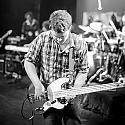
From October to about April I was in a band playing a bunch of covers from different eras.
The singer left in April, and we've started rehearsing with a new singer for some gigs this month, but with mostly the same material.
The new singer needed a 'lower' key to sing the material comfortably. But instead of transposing everything we had already learnt, me and the guitarist just tune down to Eb and everyone's happy. The guitarist can sing backups easier with the slightly modified tuning, too.
I don't know if the new singer will be around after these booked gigs, but at least I haven't spent too much time/effort transposing 3+ hours of material only to never play it again.
The singer left in April, and we've started rehearsing with a new singer for some gigs this month, but with mostly the same material.
The new singer needed a 'lower' key to sing the material comfortably. But instead of transposing everything we had already learnt, me and the guitarist just tune down to Eb and everyone's happy. The guitarist can sing backups easier with the slightly modified tuning, too.
I don't know if the new singer will be around after these booked gigs, but at least I haven't spent too much time/effort transposing 3+ hours of material only to never play it again.
Last edited:
The worst thing I know is when you play a song "on the fly", and ask what key you play in, and they respond with "G" or something. Then you start playing in G, and it sounds all wrong, until you realize that the guitar player uses a capo and the keyboardist has activated a transpose-function on the board.
I have found this to often be the case with open mike players/acoustic players used to solo performance, not used working with a band or others, and generally people with poorly developed BL skills.
Not that I play open mikes much anymore, but I set some ground rules for being thrown into those situations. They are not all bad, as forcing yourself to take on and play new material is actually very good practice. But my rules were:
Bring a chart or;
Run me through the songs & keys before you start or;
Stand where I can see your hands or;
Call the changes on the fly.
And yes, I have absolutely had someone call a song in I and fire off in IV. Many times. Call G but fire off in A. Throw in a bridge they never mentioned, didn't call and turned around so I had no visual clue. Even had one beech me out on stage for peeking slightly over the fretboard as I was 'crowding her'. They usually get an off mike whisper after the song except for that one. I stopped playing and left and I won't ever play with her again. You got a problem, it ain't gonna get addressed rudely on mic. The issue was completely her fault IMO.
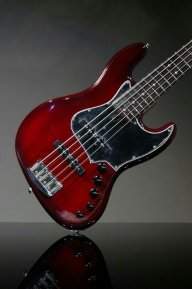
Always interesting if you sit in with the veteran blues folks in Chicago who just start without calling the song, looking at you or any indication of key. And most aren't straight I IV V
That ups your game fast
Agreed, and the jazz guys in NYC are even worse. They love burning cats that can't hang.

I love 1/2 down tuning because you play the same notes on the fretboard as you would in standard (obviously), but it's just flat one note and it makes it sound darker. What I would do if I'm frequently playing 1/2 step down: Get a bass that I'll be using for that tuning only, get the best strings for that tuning, get a setup done (or do it myself) in that tuning, and leave that bass tuned down. There you have a perfect 1/2 step down bass!
I guess everyone has their own approach, but this sure makes it easy. I'm not a fan of drop tuning because it just never sounds right to me, but 1/2 step down, your ear gets used to that pretty quickly. It's also not a big deal to set up a dedicated bass for this, you just go one gauge heavier on the strings and adjust the setup accordingly. I run into this more and more as the singers I gig with get older and have more trouble reaching the high notes.
If it was my only gig and rock music or something I might consider it. It's a pain if you often play with other people using the same bass.

This is quite the challenge! Off the top of my head I would like to see "Aenema" by Tool or "A.D.I.D.A.S." by Korn played that way.
I'll give them a go. I'm not familiar with the Korn tune...is it tuned below B? Are their Tool songs NOT in D minor? I'll give it a whirl when I get a chance.
This is quite the challenge! Off the top of my head I would like to see "Aenema" by Tool or "A.D.I.D.A.S." by Korn played that way.
So the intro is definitely the hardest part. You can play the low E and D on the B string and either play the high D on the A string (5th fret), or just use the open D string. Is that the part you are talking about? The rest of it seems like it could be played on just about any bass. Ill check out the other song now.
This is quite the challenge! Off the top of my head I would like to see "Aenema" by Tool or "A.D.I.D.A.S." by Korn played that way.
So too pull of ADIDAS exactly like the recording you would have to tune the B string down to A...so you win that. However, I think you could pull it off close enough without down tuning to the point where only the bass players in the crowd would know you are Cheating. I would do a bass boost to make it feel like I was hitting that low A...I can get that to sound pretty beefy on my Stingray 5.
I guess i should have said pretty much any song that is played within a STANDARD 5 string basses tuning can be pulled off on a 5 string for the semantically inclined lol!

So the intro is definitely the hardest part. You can play the low E and D on the B string and either play the high D on the A string (5th fret), or just use the open D string. Is that the part you are talking about? The rest of it seems like it could be played on just about any bass. Ill check out the other song now.
Yeah exactly - the intro is just an example of a more 'guitaristic' riffy style of bass playing involving pulloffs to open strings. I would find that part to be tricky to play clean with the ringing notes and certainly wouldn't like the more muted tones...

I'd like to think that anyone who plays a transposed instrument would be able to convert this in their head and give you the right answer. But then again, I'm used to playing with horn players who play either Eb or Bb instruments and are used to talking in "concert" pitch.The worst thing I know is when you play a song "on the fly", and ask what key you play in, and they respond with "G" or something. Then you start playing in G, and it sounds all wrong, until you realize that the guitar player uses a capo and the keyboardist has activated a transpose-function on the board.
I don't play much music that has specific riffs that require open strings. I actually avoid open strings, and I think in terms of intervals (broadly speaking) rather than specific note names. Thinking about parts this way isn't harder than thinking in note names IMHO, and it doesn't feel like transposing to change keys.
I have played with a guitar player that tuned 1/2 step lower, and I will keep a 4 string bass tuned to Eb. This is so that I can kit that Eb, more than to avoid transposing.
Ideally, I'd play my 5 string, but the one that I have has setup issues, so I've been playing 4 strings almost exclusively lately.
I have played with a guitar player that tuned 1/2 step lower, and I will keep a 4 string bass tuned to Eb. This is so that I can kit that Eb, more than to avoid transposing.
Ideally, I'd play my 5 string, but the one that I have has setup issues, so I've been playing 4 strings almost exclusively lately.
Latest posts
-

-
Post a funnier picture than the one above - Parallel Universe Edition
- Latest: BassicJazzy
-
-

-
