
Enjoy the benefits of a premium membership!
Upgrade Account
-
TalkBass has been independent since 1998. Add your voice.
Create a free account to reply to discussions, view embedded media, and browse with fewer display ads.
Join free Log in
Want zero display ads or expanded classifieds tools? Compare plans.
You are using an out of date browser. It may not display this or other websites correctly.
You should upgrade or use an alternative browser.
You should upgrade or use an alternative browser.
Hard Classical Pieces
- Thread starter RoccoBass04
- Start date
-
- Tags
- technique
More options
Who Replied?

As far as I know, still true:
24 Caprices – Paganini
Often cited as the hardest works for solo violin, Niccolò Paganini's Caprices make up 24 fiendishly demanding pieces for the string instrument, packed with double stops, left-hand pizzicato and endless spiccato bowing.
24 Caprices – Paganini
Often cited as the hardest works for solo violin, Niccolò Paganini's Caprices make up 24 fiendishly demanding pieces for the string instrument, packed with double stops, left-hand pizzicato and endless spiccato bowing.
Note that in a "Crossroads"-like mythology but decades earlier, Paganini was accused of selling his soul to Satan, not so much for dreaming these tunes up, but for actually being able to play them! 

Ahh, yes, a little bit of the old Ludwig van. Well played, Sir.Beethoven's 9th.

Rameau, Couperin, Scarlatti, Bach:
you'll never run out of stuff to play.
you'll never run out of stuff to play.
Last edited:


Difficult is subjective in classical music. Well, all music. But sometimes slow and emotional pieces can be difficult to play convincingly and with proper phrasing. I saw someone on reddit post a Chopin waltz adapted to electric guitar and it had a lot of notes and technical difficulty, but it didn't sound anything like a waltz or like how this specific Chopin waltz should sound.
I would love to see a good interpretation of this Schubert sonata on bass guitar:
I would love to see a good interpretation of this Schubert sonata on bass guitar:

If you play Jazz, check the "Thesaurus of Scales and Melodic Patterns" by Nicolas Slonimsky.
This will keep you busy for a while and although is classical music, you will learn a lot of concepts to introduce to your repertoire.
This will keep you busy for a while and although is classical music, you will learn a lot of concepts to introduce to your repertoire.
You can make any piece or exercise or scale as hard as you want it to be by focusing and experimenting with different aspects of its musicality. The real question is what are you trying to gain by playing something “hard”? Speed? Fluidity? Dynamics? Bragging rights? Figure that out than choosing a piece gets easier. If you’re looking for a real workout Bach’s cello suites are always popular. But to make them “harder” come to a fuller understanding of them. Listen to different players interpretations. read a few books on why he wrote them, who he wrote them for, who paid for them, what he wrote before them and after. Listen to accurate historical interpretations on period correct instruments, watch videos of the dances that people did to them. Try the dances yourself. You wanna master a piece? That’s one way to do it.
Last edited:

I'm looking for a challenge, does anyone have any ridiculously hard Classical Pieces on bass.
are you willing to learn/tack multiple parts?
https://www.youtube.com/shorts/v4tLpj22vyc
Almost any really interesting piece that's physically possible will warrant multiple parts.
if you're willing to use a 6 string bass, your options grow quite a bit. i'd definitely say the fugue from BWV 1001 is one of the most difficult (but definitely playable) transcriptions for 6 string bass. i've played it in pieces but never recorded the whole thing.
i'd definitely advise against finding some lightning fast piece by paganini or whatever. obviously i love that music, but if i'm going to put in hours and study a piece i definitely would crave more substance. some good examples are any of the solo violin partitas by Bach. they are playable and many of the movements are actually quite simple. same goes for cello suites, even easier.
i'm a bit conflicted on what you mean by ridiculously hard - i have a feeling you mean speed and shredding (bach to paganini
 ) - but i would say "hard" comes in so many varieties, particularly when transcribing from one instrument to another. taking a chopin nocturne for example, and reducing it down to a bass note, perhaps some chordal tones, and the melody... would be amazingly difficult and very beautiful if you can execute it well.
 anything that involves being true to an orchestration seems to be the most difficult. if you can take a piece of Berlioz, and do it justice while changing the orchestration... that's really difficult and amazing. same would go of course for anyone else known for their orchestration - Brahms, Stravinsky, etc.
you could always look up some insane etude or sonata by ysaye for violin. but i think so much more satisfaction can be had pursuing really exquisite music that also happens to be difficult (no shade to ysaye
 )
)remember that the majority of classical repertoire can be had for free in imslp.org. if i were you i'd scroll bach, beethoven, mozart, brahms and look for things that you think you can make work. definitely don't shy away from lesser known names or peices in multiple parts, but those names carry such authority for many valid reasons.
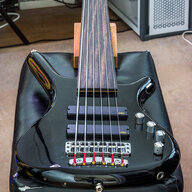
Bach Suites for Unaccompanied Cello will keep you busy for the rest of your life.

I dont know if it counts but "Failing" seems ridiculously hardI'm looking for a challenge, does anyone have any ridiculously hard Classical Pieces on bass.


Lol, I wasn't sure if I ought to post that version or the one I did end up posting.


