• TalkBass has been independent since 1998. Add your voice.
    Create a free account to reply to discussions, view embedded media, and browse with fewer display ads.
    Join freeLog in
    Want zero display ads or expanded classifieds tools? Compare plans.

Headphones vs IEMs: muddy bandshell

Reiterate - Get up close and personal with the drummer so you feel the kick and see the 2 & 4 (presuming rock/pop 4/4 etc).

just tunnel vision on that as much as yo can. People mostly just think you and the drummer are sharing awesomeness together (I suppose, as long as you aren't broadcasting your misery and dismay via SAD BASS FACE....)
 
  • Like
Reactions: hgregs
Sorry bad edit... it only travels 7m in 20ms... so if you're further than 7m from a sound source then you get a problematic delay.
Yep, that's generally correct. Converted for imperial units it's commonly cited as 1ms per foot, which makes for a pretty easy calculation. This is all affected by elevation and relative humidity to a degree, but they're good enough approximations to make some reasonable assumptions.
 
USAF personnel working around jet aircraft engines can be exposed to sound greater than 150 dB, though not in every location around the jet. For hearing protection, two items are used. ACCES earplugs are similar to custom molded in-ear-monitors. Over the ACCES earplugs, a set of over the ear protectors is worn. This combination give about 50 dB of sound isolation, more than enough for a live performance.

I have used a variation of this approach to practice bass in an apartment. I play music through a set of ear buds and listen to my bass through a set of over-the-ear headphones worn on top.

The only uncertainty is how long it is comfortable to wear over-the ear headphones. Especially if you wear glasses.
 
Once a year I play a large outdoor gig in a tall cement bandshell. This year the subs were on the stage, and the stage sound was extremely muddy and loud ... drums, bass amp, subs, FOH, and reflections from the shell.


I use custom earplugs, and they work well for most bar/club gigs. But in this situation I had a hard time hearing the beat as a precise event. The kick and bass felt smeared across time, presumably from low-end buildup, reflections, and different arrival times from the subs, cab, monitors, and acoustic drums. The “one” felt like a wide zone instead of a clear point. Any small timing variance became hard to correct, and for much of the gig I felt like I was working just to stay locked.


I’ve tried IEMs before and found them fatiguing, even for passive listening. I’m wondering whether closed-back isolation headphones are a better solution for this kind of large-stage / low-end-smear situation.


Questions:


  1. Have any bass players here used closed-back isolation headphones instead of IEMs for loud outdoor stages?
  2. Did they help with time clarity, or did they create a different problem?
  3. Which models are actually suitable for live stage use?
  4. Would I be better off with a direct/preamp signal into a small personal headphone mixer, rather than relying on amp/cab/monitor wash?

I do need a full-band reference, not just “more bass” or only kick/snare/hat. The issue is that the stage sound was too smeared to be useful. I’m trying to get a clear, controlled monitor reference where I can hear the band and still feel the time as a precise thing instead of a low-end blur.
If I were force into this situation, what I would do I’d continue to use my IEMs, but use sound isolation (not sound cancelation safety ) sealed headphones over them.
 
  • Like
Reactions: hgregs
I have what could charitably be called "sizable ears that stand out from the head at a larger than average angle", and can't wear over-ear headphones for very long without the pain from bent cartilage becoming unbearable. Sealed molded IEMs for me - currently 64 Audio 6Ts. Can recommend.

I did have the problem at first that the left ear mold went too deep, and had to send the molds back twice to get shortened.

On boomy stages where I can't really find the kick or even my own bass in the IEM because of stage wash, I have found that the best thing to do is to put a High Pass / Low Cut filter on my IEM Aux channel and to bump the mids where the beater of the kick drum is most prominent. Nothing replaces the feel of the kick, but this lets me treat the kick almost like a click, and it adds some much needed definition to my bass tone when everything else is a boomy soupy mess of "whuuuuummm", which is a technical term I just invented.

Another thing you could do ($$$) is to get a backbeat or some other transducer (like an Eich BassBoard) and get the kick drum sent to an Aux channel to feed it. This is an expensive luxury item that requires an extra Aux, extra cable (or a second IEM wireless transmitter / receiver), and time to configure, but it is "a" way to mitigate this issue. I saw Tim Lefebvre use the BassBoard with the Tedeschi Trucks Band and their two drummers along with substantial amp/cab setup - not sure if he had the kick(s) or just the bass routed that way.

Great news that you are playing stages this big, though! Congratulations!
 
  • Like
Reactions: hgregs
I play a similar genre (can you tell from my profile pic? :-)) and my experience is that the thing I don't like about using headphones is that they are terrible at sealing out lows and low mids. IEMs work much better, but they are very dependent on the seal you get. I started out with universals 25 years ago from Future Sonics and UE, moved to custom Future Sonics and then settled on Sensaphonics 2XS and also the 3DME system. They have really excellent isolation. However, I tried the Plunge Audio Stage IEM universals (not the dynamics, which have a lot more leakage) and they are really good. Not crazy expensive in the IEM world and sound very nice. My Neumann NDH20s, various Beyerdynamics, and Audio Technical sealed headphones don't hold a candle to the Sensaphonics or the Plunge Audio IEMs when it comes blocking out the big and boomy. I would still love to get some over the ear headphones that would compete, but my budget has been blown for headphones for a while (my latest mixing phones are the Slate VSX Immersion Ones, which are truly wonderful, but they are open back so absolutely no isolation).

The first thing I would do is make sure your IEMs are really sealing properly. If they have vents like the Plunge Unity Dynamics, all bets are off.
hey edwin... i just got the plunge audio unity stage on your suggestion. they are great, and much wider range than the shures. thanks for the suggestion. there are 6 sets of tips... 3 with metal, and 3 with plastic. do you know the difference? there's no documentation provided.
 
  • Like
Reactions: edwinhurwitz
hey edwin... i just got the plunge audio unity stage on your suggestion. they are great, and much wider range than the shures. thanks for the suggestion. there are 6 sets of tips... 3 with metal, and 3 with plastic. do you know the difference? there's no documentation provided.
The only real way to figure out the difference is to try them all and see which work best, especially size wise. There are three sizes of each type. I use the Sonicfoam SF-1s, which used to come with them. However, they don’t seem to be available on Amazon at this time. I have emailed them and will let you know what they say.
 
  • Like
Reactions: hgregs
All told big dome ceiling rooms or band shells create some strange reflections and build up, as low of stage volume as possible and IEMS helps the most.
Clam shell portable stages can sound strange as well.

There's a room I've worked in a few times, tile floor, glazed brick walls.........and a large glass domed ceiling. Lets just say the few type of acts that would sound good in there acoustically is NOT what they book in that room!
 
  • Like
Reactions: s0c9 and hgregs
Since it's only once a year, consider just dealing with it. Ask yourself if it's actually worth the effort and expense. If it sounds awful out in the audience area as well, why bother?

Sealed headphones can work okay. Better if they are specifically designed to provide maximum isolation. No matter how well they work, they will look a bit out of place on stage IMHO.

To find potential candidate headphones, do an internet search for Best Drummer Isolation Headphones.


Good luck!
 
  • Like
Reactions: s0c9 and hgregs
Once a year I play a large outdoor gig in a tall cement bandshell. This year the subs were on the stage, and the stage sound was extremely muddy and loud ... drums, bass amp, subs, FOH, and reflections from the shell.


I use custom earplugs, and they work well for most bar/club gigs. But in this situation I had a hard time hearing the beat as a precise event. The kick and bass felt smeared across time, presumably from low-end buildup, reflections, and different arrival times from the subs, cab, monitors, and acoustic drums. The “one” felt like a wide zone instead of a clear point. Any small timing variance became hard to correct, and for much of the gig I felt like I was working just to stay locked.


I’ve tried IEMs before and found them fatiguing, even for passive listening. I’m wondering whether closed-back isolation headphones are a better solution for this kind of large-stage / low-end-smear situation.


Questions:


  1. Have any bass players here used closed-back isolation headphones instead of IEMs for loud outdoor stages?
  2. Did they help with time clarity, or did they create a different problem?
  3. Which models are actually suitable for live stage use?
  4. Would I be better off with a direct/preamp signal into a small personal headphone mixer, rather than relying on amp/cab/monitor wash?

I do need a full-band reference, not just “more bass” or only kick/snare/hat. The issue is that the stage sound was too smeared to be useful. I’m trying to get a clear, controlled monitor reference where I can hear the band and still feel the time as a precise thing instead of a low-end blur.
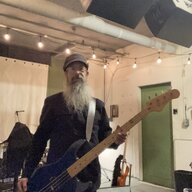
Yes I have and actually prefer them at times even for indoor rooms that are tough to work in due to building materials :) JBL brand lightweight and they
have great bass response :)
1781817353108.png