• TalkBass has been independent since 1998. Add your voice.
    Create a free account to reply to discussions, view embedded media, and browse with fewer display ads.
    Join freeLog in
    Want zero display ads or expanded classifieds tools? Compare plans.

Help! Luithiers WELCOME!

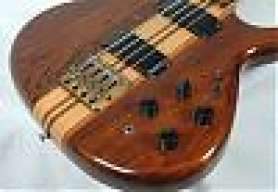
Hello Fellow Bass Players and nuts alike! I gotta problem, I bought an amazing Aria Model 1810 (ie a nice Gibson EB-3 copy with a Toggleswicth vrs. the chicken-Head Nob) Circa 1970-1974. Walnut over Mahogany w/ some sort of under veneer, veneer. PROBLEM!!!! This Bass RULZZZZZZ!!!!! Despite the fact this bass rules, It's gotta few Issues. The most Important is the fact that the Rosewood (? Dark, not black) Is seperating from the Mahogany neck in Great Amounts! On the Trebel side, from the 2nd. to the 12th. fret. On the BASS!!! side from the 4th. to the 9th. fret. I can get the action pretty low with no FRET BUZZ! But I get this hollow acoustic buzz whrn I fret the strings. I don't have much tension on the tressrod, and the neck is straight as an arrow. QUESTION! What can I use to fill the void, and still get a good tone? The seperations are fractions of a millimeter, but strings buzz even with flatwounds!Is it possible for me to fix this neck? SuperGlue, Gorrlia glue? Suggestions? Otherwise this Bass RULES! Nice U neck style, DEEEEP SOUNDS on my SWR wmp-10 pre fender! Just some empty clicking sounds when fretting acousticly. Can't really hear it amplified, but it pisses me off! Any Help would Help!

 
I would STRONGLY suggest you take this instrument to someone who does this sort of thing.

Flooding the voids can invite adhesives into your truss rod cavity (which could ruin the adjustability of the rod), and you may end up gluing in the cup that (by your description) has formed.

If losing this bass as a long-term player is not an issue you can tend to this yourself. There is nothing wrong with a project instrument as long as you are willing to live with the consequences of a learning curve.


....my $.02
 
I would STRONGLY suggest you take this instrument to someone who does this sort of thing.

Flooding the voids can invite adhesives into your truss rod cavity (which could ruin the adjustability of the rod), and you may end up gluing in the cup that (by your description) has formed.

If losing this bass as a long-term player is not an issue you can tend to this yourself. There is nothing wrong with a project instrument as long as you are willing to live with the consequences of a learning curve.


....my $.02
+1. If you have to ask what type of glue, then this repair is beyond your skill set. As far as the right glue, none of the above is the best answer. Take your bass to a skilled luthier. NOW! :D
 
If you put Gorilla glue in there, I can just about guarantee that you will ruin the neck beyond repair!!!!!!!!!!!!!!!!!

Go DIRECTLY to a luthier who knows how to fix this. If the neck can be re-glued using proper technique and appropriate glues (NOT white glue or Gorilla glue) then it won't be too expensive.