• TalkBass has been independent since 1998. Add your voice.
    Create a free account to reply to discussions, view embedded media, and browse with fewer display ads.
    Join freeLog in
    Want zero display ads or expanded classifieds tools? Compare plans.

Help! My bass has two truss rods!

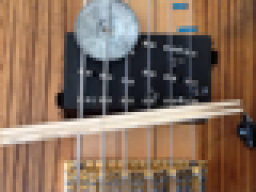
Hey guys, I know how to adjust a truss rod. But today I was going to adjust the truss rod on a bass and to my surprise, there was two truss rods. Now, I know some basses have two, but I never seen any in person.

So my question is, What do I do differently? Any feedback or links are appreciated. Rock on guys \m/
 
Like this?
This is a Rickenbacker trussrod.
If you do have a Ric, be careful when adjusting the trussrod. It is not adjusted like a regular trussrod but with two rods

2971974569_49c1aa5577_m.jpg
 
My 12 string bass has dual truss rods. Mine each work on their own side of the neck.. in theory it's pretty cool.. you could make the side of the neck with the D and G strings flatter, with less relief and the side with the E and A strings slightly more relief

I did that a bit since I hit the strings hard.. my E and A have more motion than the D and G strings and I was able to allow for more string movement. I partly did it as an experiment. But they each work just as a normal truss rod I'm used to, just for half the neck. that's what I've seen. I'm open to other people's expertise.
 
my older fodera 6-string basses have double truss rods. i like them because sometimes s neck responds differently on its different sides. and you could use less relief on the high string side and more relief on the low string side, if you like.

i also like the way they sound better (more mass/stability).
 
My 12 string bass has dual truss rods. Mine each work on their own side of the neck.....But they each work just as a normal truss rod I'm used to, just for half the neck.

...op: is one side of the neck bothering you more than the other? if so, address that side *first*.

In theory each rod would adjust only it's own side of the neck, in practice they both will have an effect on the whole neck, not just one side or the other, so keep that in mind while making adjustments.

If the whole neck (both sides) needs the same amount of relief change adjust both rods the same amount at first, a small amount at a time, say 1/4 turn every day or so, then tweak one side or the other to make minor changes to that side but you may have to go back and tweak the other rod to compensate for changes made to the other one. If you are tightening the rods it is good practice to pull back on the neck to take pressure off of the rods so they do not have to do all the work, preventing any damage from compressing the wood fibers. It is far easier do do double truss rods than people think, really.

As far as the old style Rickenbacker truss rods go, I find them to be superior in holding a neck in place than any other truss rod design, at least that is my experience from the many basses, by different makers, I have owned and/or played over the decades.
 
In theory each rod would adjust only it's own side of the neck, in practice they both will have an effect on the whole neck, not just one side or the other, so keep that in mind while making adjustments.

...It is far easier do do double truss rods than people think, really.

I agree; that's been my experience in the past as well. I had a Washburn MB-6 6-string bass for a while that had two rods. Controlling twist in the neck was pretty cool, but I personally never got it to where I should have. I stripped both nuts.
 
In theory each rod would adjust only it's own side of the neck, in practice they both will have an effect on the whole neck, not just one side or the other, so keep that in mind while making adjustments.

If the whole neck (both sides) needs the same amount of relief change adjust both rods the same amount at first, a small amount at a time, say 1/4 turn every day or so, then tweak one side or the other to make minor changes to that side but you may have to go back and tweak the other rod to compensate for changes made to the other one. If you are tightening the rods it is good practice to pull back on the neck to take pressure off of the rods so they do not have to do all the work, preventing any damage from compressing the wood fibers. It is far easier do do double truss rods than people think, really.

I have quite a few double truss rods and this is my experience as well. The sides are certainly not independent. For that reason (and to try to keep from inducing twists in the neck) what I try to do is back the rods off until they both are loose. Then I tighten each nut up until they start to produce tension. I try to set them so they both are just starting with about the same torque needed to turn each nut. At that point what I do is then make all adjustements to BOTH rods equally. In other words to add a 1/4 turn to each rod with each adjustement. Do that until the center relief is where you want it. At that point then check relief on high and low strings. I don't think I've ever needed to correct that but I can see where you might. Point is that such a correction is going to minor if needed at all. Again. Take it slow with tiny 1/4 turn increments observing the relief after letting it settle.

Works for me.