• TalkBass has been independent since 1998. Add your voice.
    Create a free account to reply to discussions, view embedded media, and browse with fewer display ads.
    Join freeLog in
    Want zero display ads or expanded classifieds tools? Compare plans.

Double Bass Help settle a bet!

Sep 24, 2011
1,335
318
Would a professional DB player be expected to read ANYTHING put in front of them, and play it, first time, without having seen the music before? Not saying "interpreting" - rather play all the notes, in time, at minimum?

Thanks for reading!
 
If they are referred to as professional by themselves or anyone else, yes.

Some dude who slaps an upright in a rockabilly band from ny to tokyo to belfast is not a professional, IMO, he's playing a character for amusement.

:hiding:
 
To the OP, that kind of thing happens in professional orchestras all the time. For example, movie soundtracks are sight reading sessions, and what you hear at the theater is typically the first or second reading of the music.

So yes, any pro player worth the name can sight read the #¿?! out of some music...
 
Yes! I just joined a 17 piece jazz big/jazz/dance band. I either get "fake book" charts where you get the chords, the melody and half the time, the lyrics. The rest of the time i get the piano music or bass music with the bassline and no chords. It's not uncommon to be asked to play a solo in either format.
 
I think there should be a distinction here: a classical DB professional player is expected and required to sight read.
A jazz DB player is expected and required to improvise and read charts.
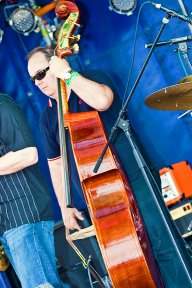
A rockabilly player is expected and required to rock (and play standing on his bass).

The genre defines the requirements.
 
I think there should be a distinction here: a classical DB professional player is expected and required to sight read.
A jazz DB player is expected and required to improvise and read charts.
A rockabilly player is expected and required to rock (and play standing on his bass).

The genre defines the requirements.
There's certainly some truth to this, but, I have yet to meet a professional jazz musician who cannot read the dots pretty well. In my circle, whether you can sight-read or not seems to be a significant difference between professional musicians and advanced amateurs.
 
It entirely depends on the context of the professional's job. A bassist playing in a full-time symphony orchestra should be a competent sight-reader, but it's actually pretty rare for the music to be completely unavailable before the first rehearsal. Some orchestras may even have it in their contracts that the music must be ready X days in advance.

Truth be told, however, most symphony orchestra players generally aren't spending huge amounts of time on their parts. They will learn the licks they don't already have, but they won't exactly be agonizing over every little bar. In a sense, this amounts to sight-reading on the job. If you are a competent sight-reader, it will significantly reduce the amount of time you need to prepare a part.

Someone recording for movie studios probably has the highest expectations for sight reading. These parts are generally being recorded as they're made. Since the studios lose money for every wasted minute of recording time, they really will try to get it right on the first take.

As a professional freelancer, it is not uncommon to come to a gig with little or no rehearsal and be expected to sight read relatively standard repertoire. It's rare for something difficult and completely unknown to come up in these cases, but it happens. If you manage to ruin the performance, it's possible the contractor won't be calling you again.

New music ensembles will also have to do a fair amount of reading, usually when workshopping with composers. Given the enormous difficulty of many of these parts, I'm not sure what the expectations can realistically be in some cases. However, many of my non-bass player friends in new music ensembles are ludicrously gifted sight readers.
 
There's certainly some truth to this, but, I have yet to meet a professional jazz musician who cannot read the dots pretty well. In my circle, whether you can sight-read or not seems to be a significant difference between professional musicians and advanced amateurs.

Then you haven't been around long enough. Uncle PDub doesn't read and he'll prob be able to play just about any jazz tune you need.

I suck at reading. I can do it but I don't enjoy it. I was once a pianist and prefer treble clef. It's annoying have to read bass clef. Reading music in general has always felt very unnatural to me.

But then again, I'm not a pro.
 
There's certainly some truth to this, but, I have yet to meet a professional jazz musician who cannot read the dots pretty well. In my circle, whether you can sight-read or not seems to be a significant difference between professional musicians and advanced amateurs.

I would certainly agree with this in the UK - over the last 10-15 years or so I have met a lot of professional Jazz players and been to a lot of Jazz gigs.

The one things that chracterises those players - whether as sax/trumpet players or paano/guitar/bass players - is their ability to read absolutely anything put in front of them.

I have seen it many times on gigs, with the most difficult music I can imagine and I have talked to many who make a living in London out of turning up and being able to read literally anything - whether for a show, dance band, big band, sessions etc. etc.

In fact, I often amuse myself by reading credits for many big-selling albums by pop/rock acts - where you invariably see that the horn players are Jazz players, I might have seen the Friday before playing live at our local Jazz club! ;)
 
I think there should be a distinction here: a classical DB professional player is expected and required to sight read.
A jazz DB player is expected and required to improvise and read charts.
A rockabilly player is expected and required to rock (and play standing on his bass).

The genre defines the requirements.

I completely agree with this.

If you define "professional" as someone who makes his/her living playing music then reading in not a prerequisite to being "professional" but crucial/essential for many genres.

-Jeff
 
The question was : "Would a professional DB player ..."

Now, Pino Palladino is a great bass guitar player - but he is in no way a Double Bass professional , so is irrelevant to this discussion.

I disagree that it's irrelevant, there is nothing particularly special about DB professionals versus other professionals in music. Ultimately if you make your living playing music you are a music professional regardless of the instrument you play.

-Jeff