
There's a guy here locally, Tim Lawson, at tims guitar. He takes a while but Jesus his results are phenomenal. He is old school and his attention to detail is crazy.

TalkBass has been independent since 1998. Add your voice.
Create a free account to reply to discussions, view embedded media, and browse with fewer display ads.
Join free Log in
Want zero display ads or expanded classifieds tools? Compare plans.




...with the correct neck angel, the bass plays and sounds better than it ever has! I am very happy to have my baby back!

As noted previously Hofner necks are glued into place (with hide glue). No screws, bolts, dovetails or mortise and tenon joints. Over time, the glue eventually begins to give way. A competent luthier can simply reglue the neck and it's fine for another few decades or so.Excuse my ignorance, why is it necessary to reset the necks on these? Is it something you do when a particular condition shows up or it has to be done with a certain regularity? Thanks.



Thankfully the neck on my '64 500/1 has never needed to be reset, though it has worried worried me sometimes over the past 29 years of owning it.
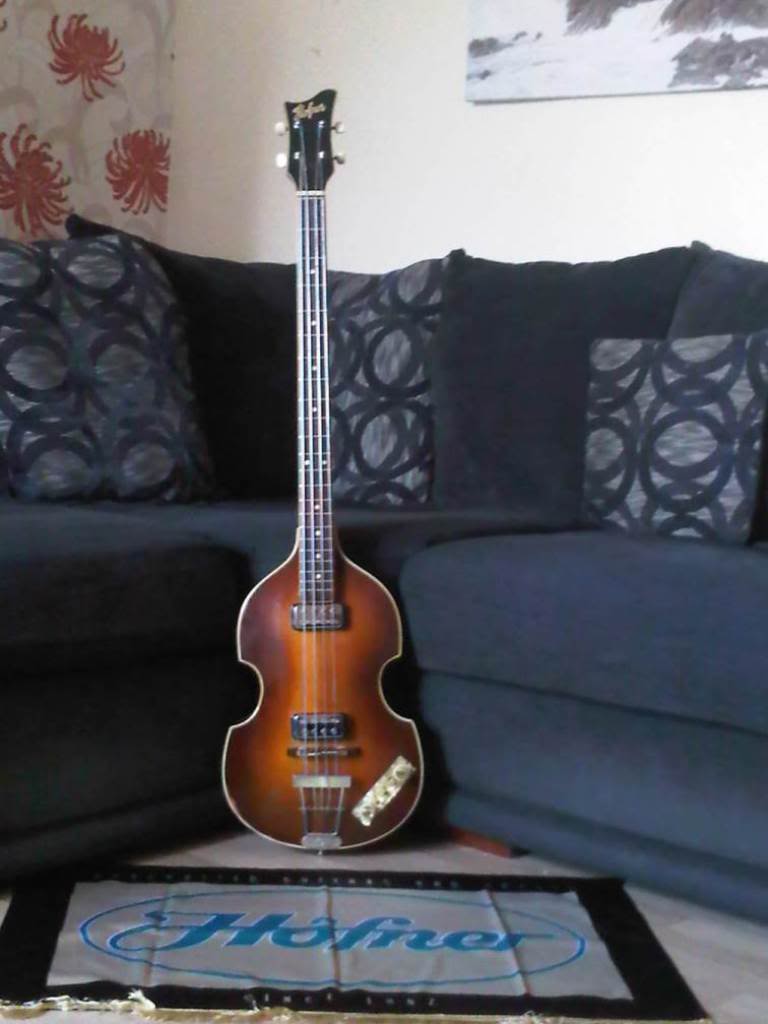
As noted previously Hofner necks are glued into place (with hide glue). No screws, bolts, dovetails or mortise and tenon joints. Over time, the glue eventually begins to give way. A competent luthier can simply reglue the neck and it's fine for another few decades or so.
What kind of strings you got there? Also do you add neck relief or keep it straight?
I debated whether or not to go into detail about hide glue, but decided not to. However, you are correct, although it's my understanding that Hofner still uses hide glue. Maybe the cheaper ones not assembled in Germany don't.The giving way of hide glue is a bit dependent on the circumstances.
Hide or bone glue is sensitive to moisture and heat, so a lot of sweat in steamy clubs could become a problem on the long run. It also depends on how tight the neck fits in it's joint, how much clamp-pressure was used to keep the neck in place when the glue dried and not unimportant, how old the hide glue is (is it the first time it got dissolved & heated of the third time).
Anyway, I seem to remember some salesmen talk, that the modern Hofners are glued better with modern glue. So according to that, resetting a neck is a more of a sixties models problem.
The giving way of hide glue is a bit dependent on the circumstances.
Hide or bone glue is sensitive to moisture and heat, so a lot of sweat in steamy clubs could become a problem on the long run. It also depends on how tight the neck fits in it's joint, how much clamp-pressure was used to keep the neck in place when the glue dried and not unimportant, how old the hide glue is (is it the first time it got dissolved & heated of the third time).
Anyway, I seem to remember some salesmen talk, that the modern Hofners are glued better with modern glue. So according to that, resetting a neck is a more of a sixties models problem.
I debated whether or not to go into detail about hide glue, but decided not to. However, you are correct, although it's my understanding that Hofner still uses hide glue. Maybe the cheaper ones not assembled in Germany don't.

I'm glad you found a neck angel, but isn't there still a pretty obvious crack in the finish?
Thanks for all the comments guys. The first Luthier who butchered it builds truly beautiful acoustic instruments. Very elaborate affairs, I still have a difficult time understanding how he botched it. I was going to do it myself, we'll within my skill set but I was so busy I thought I would pass it on. Legal action? Oh I'd love to but for $375? More hassle than it is worth. Someone mentioned the cracks on the back, they have been there as long as I have owned the bass. Ben Bruton did a fantastic job I couldn't be more pleased. When he took it in he told me "I can make 90% of the damage go away" I think he got real close to 100%
You can delete it yourself. Look for these at the bottom of your
Modern Hofners, at least those made in Germany, still have the neck glued with hide glue. It's a great method. The glue is strong with only a very thin film applied, and it dissolves when heated, so the violin maker can open the neck joint, do whatever repair is needed, and then re-glue it to place. Not as easy as 4-bolt plates, but looks cleaner.Anyway, I seem to remember some salesmen talk, that the modern Hofners are glued better with modern glue. So according to that, resetting a neck is a more of a sixties models problem.


