
We used to carefully cut the filters off a couple cigarettes. They did a decent job, and you could still smoke the cigs.Long time shooters will sometimes use wetted and wadded tissue. It’s effective.

TalkBass has been independent since 1998. Add your voice.
Create a free account to reply to discussions, view embedded media, and browse with fewer display ads.
Join free Log in
Want zero display ads or expanded classifieds tools? Compare plans.
We used to carefully cut the filters off a couple cigarettes. They did a decent job, and you could still smoke the cigs.Long time shooters will sometimes use wetted and wadded tissue. It’s effective.
Take a poll on how many members here on TalkBass that suffer from tinnitus and you'll get your answer!

Actually at that sort of extreme volume levels I find hearing protections help me hear better - otherwise my ears will compress and distort the signal coming into them.I can’t play live with hearing protection. I need to hear everything. Especially myself. I’ll wear it watching/listening to it though.
Hearing protection has come a long way. In 1979, Army training introduced me to the concept. The plugs were rubber stems with three flanges, and they worked quite well. Then in the Navy it was the yellow foamies. They're great for taming machinery noise. I liked them so much, I used them for sleeping. Unfortunately, the music and the gunfire and the machinery all took its toll anyway. Right now, as I'm writing this, there is a fan on in my house along with the AC because the weather is sinking hot, and the fan is triggering my tinnitus.pretty much every boomer aged player I know has hearing damage, many quite severe. My father was in the same band for 35 years, he was the only one who used hearing protection and when they quit it was because the drummer and guitar player went completely deaf (like even with hearing aids could barely converse let alone play kinda deaf). I've always used protection and yeah, foamies are crap, but these days one need not spend a mint on westones or other customs. last few years I've been using Earpeace brand silicone plugs, they work great and are affordable (around $25usd). they come with different DB cut inserts and the lowest cut one is perfect for me (as a drummer and bass player). I prefer them to my IEMs unless it's a group I sing in. cheers
off topic but i thought i could respond to anyone with this little nugget of information, but basically i’ve picked up some sort of instinctual way of protecting my hearing in situations of loud noise. when you blow in your nose, like sniff really hard, and you create basically a low pressure suction sort of thing in your head, your hearing reduces and becomes muffled. i do this playing drums (part of the reason why i don’t play drums often, it’s become increasingly unpractical to play because i’m sure this isn’t something you’re supposed to be doing to your ears) and i believe it works from basically pushing your eardrums against the ear canal, effectively muffling its movement by slightly prohibiting its vibration. not sure if that’s what is really happening, but try it out yourself and see how your hearing becomes all weird.





Long time shooters will sometimes use wetted and wadded tissue. It’s effective.
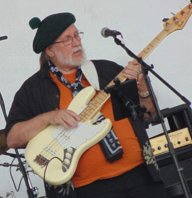
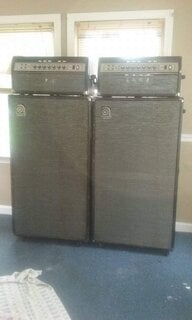
OK, I started playing bass in 1965 although it was 1966 before I had an amp, a 1966 Fender Bassman amp. No ear protection used...Then in late 1971 while I was touring, I bought a Standel piggy-back amp that was outrageously LOUD (louder than an acoustic 360/361 and that's LOUD!). No hearing protection in use, but it flapped my bell bottoms if I stood within 3 or 4-feet of it and there were a number of times when my ears would be ringing afterwords. Toured for 3-years playing 5-nights a week, 50-weeks a year (thought I was invincible back then). Played weekends after that. And of course, I'm still playing.these days, you always hear the advice “wear hearing protection onstage if you don’t want to go deaf” in the situation of live shows. but… what in the hell were they doing back then??? you don’t hear every musician from the 60s and 70s saying they have significant hearing loss, apart from the odd pete townshend. but even so, they were loooooud back then, and they had to be. amplification was less reliant on venue speakers, and the power was in the amps and how loud the drummer was… which is suuuper loud. these days, playing drums without hearing protection (i don’t do it regularly, if at all) for me literally brings pain to my ears, and i don’t understand how musicians played live with such loud playing environments and loud instruments without being in constant pain. think beatles shows, cream shows, any rock show being onstage with a drummer.



I'm a former Audiologist, this is not protecting your hearing. Please be careful with you hearing, don't take chances. You are not going to outsmart your physiology or the physics of sound. You might be changing the perception, and maybe slightly changing the input that actually gets to your cochlea, but you are not going to make sustained loud sounds safe.
I play in some bands with moulded plugs that are quoted at 27 dB attenuation. They are recommended for industry and not music and I still wish they were stronger haha. I've had very little luck convincing fellow musos to take heed, until of course they ring me in distress with hearing loss or tinnitus. Everyone who is exposed to loud sound long enough will suffer from hearing loss. The threshold of how loud/how long varies and some people retire, get safer or die before the loss becomes an issue. It also impacts you years after the exposure in some cases and there are several groups around the world looking at pre-clinical damage, which appears to be significant for at risk groups like us.
Thanks for raising the question OP!
Why don't you use foam? Some are rated at more than 30db attenuation, and they are far more comfortable, not to mention cheap.
I have hearing loss related to noise exposure from music, work, and war, plus some due to Meniere's, but most of my loss is in the higher frequencies which I don't want to hear anyways. Good riddance.


