• TalkBass has been independent since 1998. Add your voice.
    Create a free account to reply to discussions, view embedded media, and browse with fewer display ads.
    Join freeLog in
    Want zero display ads or expanded classifieds tools? Compare plans.

How did you learn songs before the internet?

Thought some of the younger folks might get a kick out of how we used to do things....or not...so here it goes.

I used to use one of these...
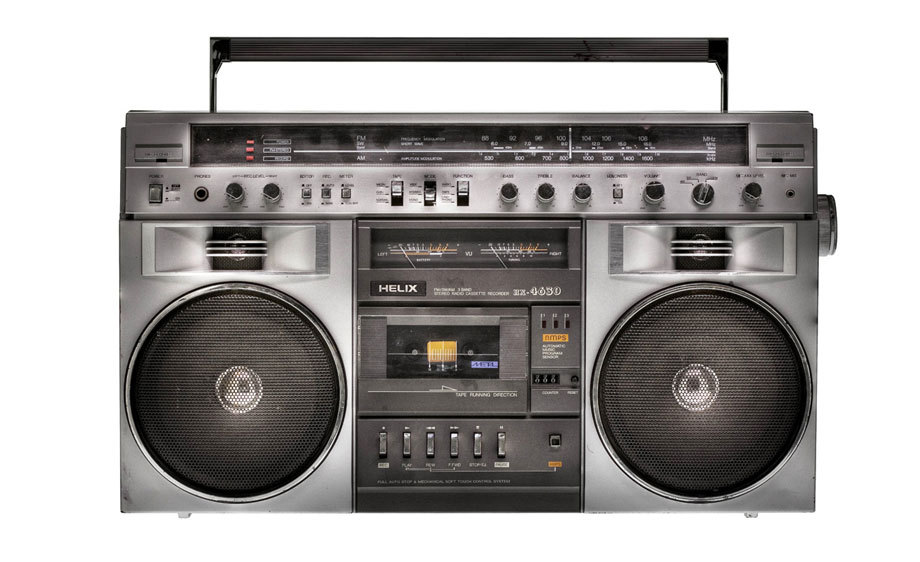
boombox1.jpg


Mine had 2 cassette decks and also if you pushed record while the radio was playing, it would record what was on the radio to the tape. So, I would call up the radio station (from the rotary phone on the wall) and request songs I wanted to learn. Then I sit by the boombox to hit record when they played it. I could then dub from that tape onto others to give to the band. I was my own little napster. :)


For more portable recordings, I used on of these.
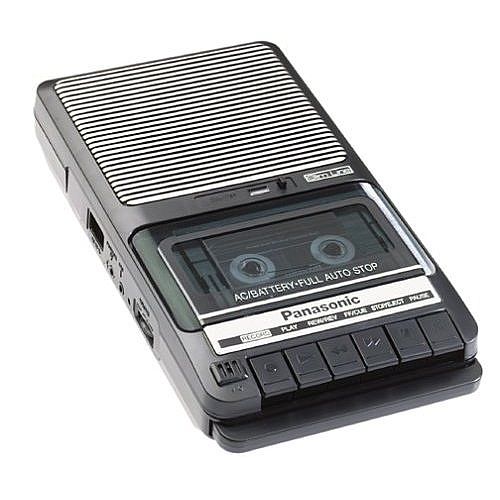
taperecorder_full.jpg


This device was used to make recordings of records by placing it between the stereo speakers and recording while the record played. I also used it to record and learn TV show theme songs such as The Jeffersons and Barney Miller by waiting for the show to come on and holding it up to the television speaker.

Cassette tapes were genius for conveniently taking music with you or being able to play it in your car, and the blank cassette was THE tool of the trade for copying and recording music. With a little innovation, you could record any song you wanted and play it whenever, or wherever you felt like it. They were also great for recording lessons or even secretly recording peoples conversations. :)

Back in the (my) old dayz we listened to the radio and used records and a turntable. Now I use MP3 files and charts - much faster.
 
My ear is awful and it's never developed or improved. In the 1970s/early 80s version of myself as a bass player, I used to have weekly lessons with a Berklee student who had perfect pitch. I would give him a list of the songs I wanted to learn and he would listen (once!) and then teach me the bass lines.

If anyone is reading this and lives anywhere near me and wants to be my teacher in such a capacity again, get in touch.

No one gas bad ears! You need to practice tuning by eat to a piano or tuning pitch pipes. Learn how to tune by harmonics and then use a tuner every single time after you've done it yourself! This trains your ears and the tuner lets you know how far out you were! Ears aren't tone deaf but not everyone knows how to use them. There are qualities to listen for beyond the pitch such as the vibration in the room caused by the resonating string . But start simply ! Once your instrument is in tune then learn the intervals! Ie a major second but do it on every single position of every string/strings!!! Try working out a note or three from adverts if you watch tv. These are great as you only get 30 seconds before the tune is gone and forgotten! Learn nursery rhymes by playing a first note and sing the rhyme. It hen one note at a time slowly and patiently add the rest! (Most nursery rhymes were written within a major scale) learn a tune like jaws or Simpsons and concentrate on the first two notes and how they sound to each other and work out which interval is which. I have several songs for every interval in my head and this is how I tune my bass with open fourths!
 
No one gas bad ears! You need to practice tuning by eat to a piano or tuning pitch pipes. Learn how to tune by harmonics and then use a tuner every single time after you've done it yourself! This trains your ears and the tuner lets you know how far out you were! Ears aren't tone deaf but not everyone knows how to use them. There are qualities to listen for beyond the pitch such as the vibration in the room caused by the resonating string . But start simply ! Once your instrument is in tune then learn the intervals! Ie a major second but do it on every single position of every string/strings!!! Try working out a note or three from adverts if you watch tv. These are great as you only get 30 seconds before the tune is gone and forgotten! Learn nursery rhymes by playing a first note and sing the rhyme. It hen one note at a time slowly and patiently add the rest! (Most nursery rhymes were written within a major scale) learn a tune like jaws or Simpsons and concentrate on the first two notes and how they sound to each other and work out which interval is which. I have several songs for every interval in my head and this is how I tune my bass with open fourths!

iPhone typos sorry!
 
When I want to learn a song I still do it by ear. Usually with a CD player these days. I found that a lot of tabs have some inaccuracies depending where it came from. I trust my own ear. Always get compliments. Just like anything. The more you do it, the better you get.

Some forms of modern music have all but made using the ear moot point. You can't learn what you cannot clearly hear.

Here's a good example.

 
I still like to use a Marantz PMD-201. It's a cassette deck that can record/play at half speed. A great tool for trying to learn traditional Irish music, guitar solo's, and bass lines

Invalid Link Removed
 
I did a lot of lifting the needle on the turntable. I had an old Sanyo that the arm lifting lever would also move it back a groove or two. It was perfect for listening to the same 5 seconds over-and-over.

Sometime around '83 I found a cassette player for audio books in the Goodwill second hand store. It would play at normal and 1/2 speed. THAT was the most awesome find back then. It was a little weird being an octave down, but I learned a lot of stuff on that thing. The name was kinda weird, I'm not sure I remember it right "Light House For The Blind"? Something like that.
 
No one gas bad ears! You need to practice tuning by eat to a piano or tuning pitch pipes. Learn how to tune by harmonics and then use a tuner every single time after you've done it yourself! This trains your ears and the tuner lets you know how far out you were! Ears aren't tone deaf but not everyone knows how to use them. There are qualities to listen for beyond the pitch such as the vibration in the room caused by the resonating string . But start simply ! Once your instrument is in tune then learn the intervals! Ie a major second but do it on every single position of every string/strings!!! Try working out a note or three from adverts if you watch tv. These are great as you only get 30 seconds before the tune is gone and forgotten! Learn nursery rhymes by playing a first note and sing the rhyme. It hen one note at a time slowly and patiently add the rest! (Most nursery rhymes were written within a major scale) learn a tune like jaws or Simpsons and concentrate on the first two notes and how they sound to each other and work out which interval is which. I have several songs for every interval in my head and this is how I tune my bass with open fourths!

What you're talking about here is "relative pitch", which I have in spades. Not to be confused with "perfect pitch", which I couldn't pull out of my hindend with a gun to my head, though some people do have it.

I can't hear some tone and think, "hey, that's an F#" or whatever. What I do hear is intervals. 1/2 step, whole step, minor/major 3rd, 4th, 5th, 7th, etc. (do they use 6ths in rock-n-roll?).

It's gotten to the point where for simpler songs...say if I'm going to learn 4 songs, I'll sit down and listen to a few seconds of each one...long enough to find the root or dominant chord, (some songs don't start on the root, which is way cool), and I'll start by doing that for all 4 tunes. I, at that point, don't need an instrument in my hands anymore. I can listen to them in the car or wherever, with pen and paper in hand, and get all the intervals (changes).

Little more complicated stuff I might have to rewind and listen to a particular passage 2 or 3 times. Some even more complicated stuff, I may have to sit down with it again with an instrument in my hands, (any instrument), and finger out the intricate details, though, at that point, it becomes a good indicator that this particular song may be something more "heady" and isn't exactly inspire too many of the female form of the species to suddenly get out of their seats and commence to shaking their moneymakers.


Anyway, relative pitch is the musicians joker up the sleeve/ace in the hole. If you like to sing and especially harmonize...it's priceless.
 
Some forms of modern music have all but made using the ear moot point. You can't learn what you cannot clearly hear.

Here's a good example.


He has a lyric sheet for this?! It'd be interesting to know what it was about (if anything). Sounds angry (of course), but could just as easily be about growing daisies I suppose.

I often wonder if metal-core (or whatever this is) lyricists spend much time crafting lyrics (must be disappointing if they do) or whether they just put any old guff together safe in the knowledge that it's likely to be unintelligible\irrelevant to the vast majority of listeners anyway.

I remember going out of my way to look up some Dimmu Borgir lyrics a while ago, and they were not entirely uninteresting (but not at all apparent to the casual listener). Who knows what new Shakespeares we are missing?
 
What you're talking about here is "relative pitch", which I have in spades. Not to be confused with "perfect pitch", which I couldn't pull out of my hindend with a gun to my head, though some people do have it.

I can't hear some tone and think, "hey, that's an F#" or whatever. What I do hear is intervals. 1/2 step, whole step, minor/major 3rd, 4th, 5th, 7th, etc. (do they use 6ths in rock-n-roll?).

It's gotten to the point where for simpler songs...say if I'm going to learn 4 songs, I'll sit down and listen to a few seconds of each one...long enough to find the root or dominant chord, (some songs don't start on the root, which is way cool), and I'll start by doing that for all 4 tunes. I, at that point, don't need an instrument in my hands anymore. I can listen to them in the car or wherever, with pen and paper in hand, and get all the intervals (changes).

Little more complicated stuff I might have to rewind and listen to a particular passage 2 or 3 times. Some even more complicated stuff, I may have to sit down with it again with an instrument in my hands, (any instrument), and finger out the intricate details, though, at that point, it becomes a good indicator that this particular song may be something more "heady" and isn't exactly inspire too many of the female form of the species to suddenly get out of their seats and commence to shaking their moneymakers.


Anyway, relative pitch is the musicians joker up the sleeve/ace in the hole. If you like to sing and especially harmonize...it's priceless.


On the same page here. I find it better for the ear and mind to do most of your practicing in my head. on the way to work in the car etc. I do find though that if you know a song well enough then you can memorise notes and tune to those notes that way too! I have dance to the music in my head and use it to check the low g on the e string when I haven't got a tuner. Always ends up bang on. Same with the open strings. It's not perfect pitch at all. Simply a case of studying and remembering some notes in my head.

Back to the op I do my best to avoid YouTube tuition videos or tab . So often that tab is wrong or playing the right note on the wrong thickness string. They are a last resort for me. Always exercise the ears if you can.