• TalkBass has been independent since 1998. Add your voice.
    Create a free account to reply to discussions, view embedded media, and browse with fewer display ads.
    Join freeLog in
    Want zero display ads or expanded classifieds tools? Compare plans.

How did you learn to modify your basses?

I see a lot of great threads where guys have modified their basses in great detail. I just wonder how you learned to do these mod's? Is there a site that you learned from?, or was it just by doing?

I would love to be able to do my own work on my basses, but I don't know where to begin....any ideas?

 
I see a lot of great threads where guys have modified their basses in great detail. I just wonder how you learned to do these mod's? Is there a site that you learned from?, or was it just by doing?

I would love to be able to do my own work on my basses, but I don't know where to begin....any ideas?

Everybody starts at the same place: Dumb!

So the best way to learn is to start by doing. Start by doing simple common jobs like shielding a bass or changing pots. Start developing skills like soldering and wiring etc. You'll find quite a few videos and other hints on line to help get you started. In fact there seem to be videos for almost anything you want to do to your bass from defretting to proper setups and making it active or passive.

My view is that to get the maximum out of your instrument MUSICALLY you really need to understand what every last thing on that instrument does and if you change it how it will change the way the instrument plays. That is some pretty detailed knowledge. But just like the impressive experts you see, you start with simple things and then add to what you know project by project, setup by setup and repair by repair. Eventually YOU are the expert!

And not only videos, but try to find local luthiers and techs that you can pester and hang around to try to absorb as much information as you can. You'll find there is vast amounts of expert knowledge here on TB. But to tap it you'll have to learn how to ask the detailed pointed questions. The wrong questions (which pickup is "best" etc.) will get you no answers.

So just begin. That's where it starts.
 
Piece by piece, trial and error.

Start on a lower end bass, change pots, maybe pickups, stuff like that.

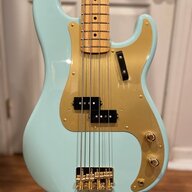
On my precision I began by changing the pickguard (which isn't exactly a mod) then added chrome covers. The bridge was rusting and not functioning right, so I replaced it with another fender. I learned how to solder and did my own jack, pots, and pickups. Added straplocks for functionality, slapped a graph tech tusq nut, and added newer tuning heads. Then I had a local luthier refret it with massive frets. Piece by piece, tried new things. You pretty much jump right into it.
 
trial and error for sure , just dont be afraid , and start buy building a cheap parts bass, tools help, this site helps, line6man helps ,JohnK10 helps , if you have common sense youll be ok
 
Learned basics like soldering, pup changeing, bridge replacement, with friends who also did upgrades. Also took electronics class in high school. Learned about doing guitar and bass elctronics the most from that. Simple things like bridge and tuner replacements just takes simple screwdriver use ability and drilling new moutning holes for bridge if needed.
 
Basic logic and common sense go a long way. Don't try anything you're not ready to be extremely careful with. Do everything in a methodical way. Draw pictures; take photographs, to know how things go back together once you have disassembled them. Strive for precision in every move. Don't over-tighten anything before you are really clear on what constitutes over-tightening. Don't drill holes unless you're ready to live with a mistake. Learn how to fix the mistake. Learn from everything.

Research TB. There is nothing bass-related that hasn't been discussed here at some point. Guaranteed.

Recognize that even well-intentioned advice is not always correct or worth heeding.

Godspeed, John Glenn. :)
 
I started modifying my basses out of necessity, beginning with electronics. I learned the basics of soldering as a hobbyist and I also took an electronics tech class in HS. One of the easiest and most effective mods I made was a switch to lightweight tuners to help with balance.

Know what you want out of your instrument and then investigate which modifications will get you there. For me it was a combination of speculation, trial and error and "research" on luthier forums. Peruse the instrument makers' forums such as MIMF and OLF on subjects that interest you.
 
Well as most of the people here by trial and error, but there are a lot of great ressources on the net (TB of course beeing the first).
My original modding threats on this forum http://www.talkbass.com/forum/f57/my-sg-bass-modding-project-528690/ and http://www.talkbass.com/forum/f8/my-fretless-conversion-part-2-sound-clips-747688/ also had some links (for fretless conversion), which were particularly helpful to me and which you might want to check out if thinking about fretless.
all the best and (most importantly) have fun
 
A lot of curiosity, common sense and the internet (for plans, schematics, ideas from other forumites) were what really got me to modify my instruments.

My bass teacher in college, however, was who planted the seed. I had just picked up (for free) a 70's Hondo bass that was completely junked. After looking at it and deeming the neck was still good (he was a luthier, so I took his opinion as gospel), he told me to just drop some new pickups in it and it would be good. When I told him I didn't know how to do that, he showed me out and explained the basics.
 
Begin by being genuinely interested in instruments and how they work and how they are made. Read! Read books, websites, guitar catalogs, go to stores or trade shows and look closely at everything you've never seen before.

The things you learn will help you minimize errors when you actually start hacking and modding. Also accept the fact that you will make mistakes and sometimes things won't turn out as good as you expected. So start with cheap instruments.

Most importantly. Don't trust your ears alone when it comes to evaluating your results. Your mind is biased to let you hear what it wants you to hear or what is suggested that it hears. So try to be as critical as possible, but have fun along the way.
 
For me, the first step was when I got brave with hex wrenches and the Phillips head screw driver.

Learning how to do a solid basic set-up is the first step; Truss rod, saddle/bridge height and intonation adjustments, re-setting bolt-on necks correctly in the pocket, adjusting pickup height, changing out tuners and bridges, etc. All reversable, non-permanent tweaks.

After that, I bought a set of nut files, and learned how to touch up and improve nut slots. Be sure to have some super glue and baking powder handy the first few times.

Then I started making complete nuts from blanks.

My latest foray is into the world of solder and wiring. Practice on old transistor radios and circuit boards for awhile.

Frets are the final frontier for me, and fretwork scares me to death. I just learned how to use a finishing file on fret sprout. Practice on your kid's Affinity Squier if possible.

But start at the set-up stage. I'd say the majority of basses and bass players would be in a much happier place if they just got good at properly setting up a bass right out of the box.
 
I just started doing it. I started w/ passive basses and testing pickups. You get basic wiring, mild soldering and a chance to see what pickups you like. Then move on to an active bass and figure that wiring out. Then never stop because it's fun and informative.