• TalkBass has been independent since 1998. Add your voice.
    Create a free account to reply to discussions, view embedded media, and browse with fewer display ads.
    Join freeLog in
    Want zero display ads or expanded classifieds tools? Compare plans.

How do you figure out how much space a speaker needs by looking at specs?

Netherlord

Guest
Oct 16, 2014
76
14
34
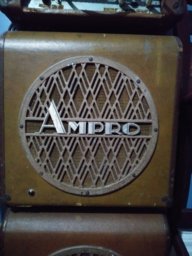
Hi, I'm currently playing through Acoustic 106 with stock speakers and Earth 215 (copy of Peavey shallow 215) with BW on top and Eminence CA154 on the bottom.

My new amp is coming in soon and it's Peavey Classic 400.

I don't think either Acoustic or Earth can handle CL400.

Maybe I should get new drivers for these enclosures.

So, how do you figure out how much space a speaker needs by looking at specs?

Since my cabs are 215, do I have to double the whatever cubic feet I need for one driver?
 
I suggest you start with describing what your end goals for tone and volume are. Also what kind of budget are you working with? You may be better off re-evaluating your cab situation. If you plan on trying to find speakers to work in your cabs, it's quite possible just searching out different, proven cabs is a better way to achieve the best results.

But, yes, if you know what volume you need for 1 speaker, then double it for two.
 
I'm planning to play in low G standard and I would like to at least tell apart one note from the other when I play the lowest string. Also, I assume that when I play with such low tuning, mids would matter more than lows.

Volume wise, 100 people.

I might have to sell my current gears in order to have budget, but roughly it's around $500.
 
So, how do you figure out how much space a speaker needs by looking at specs?

By looking at the specs:roflmao:


It helps to understand what each of them stands for and the trade offs involved to get there. There are quite a few modeling programs, but if you don't know what the numbers and graphs mean, it does you no good.

If the cab is in good shape, do a search for it. I'm pretty sure there are recent threads of people replacing them with 3015's with good results.
 
You don't have to understand the theory behind speaker cabinet design. Most people don't. You just have to know how to run the software that tells you what to do to get the job done.

So it is in this day and age.
 
So even if I contact Eminence, which made stock speakers for my Acoustic 106 cab, and ask for replacement speakers, it might not be worth it?

Can you explain why? It's quite hard to find a good bass cab for an affordable price where I live.
 
So even if I contact Eminence, which made stock speakers for my Acoustic 106 cab, and ask for replacement speakers, it might not be worth it?

Can you explain why? It's quite hard to find a good bass cab for an affordable price where I live.

Because the cab you have was never meant to do what you want to do. The stock speakers are not going to handle the power or the frequency range gracefully. Add in to that, the cab was never meant to work with the speakers that can do what you want. That pairing is more important than you might realize.
 
  • Like
Reactions: seamonkey
So, how do you figure out how much space a speaker needs by looking at specs?

You can get an idea about that by looking at the vas parameter. When contained in a space, air becomes a spring--it would resist being compressed for example. A speaker cone with its suspension is essentially a spring. The vas parameter of a speaker is basically the volume of air that will have the same spring force as the speaker suspension.
 
I guess that's the drawback of playing through a vintage gear.

Well, I asked some questions in Bill Fitzmaurice forum as well, so I'll also hear from them.

It will neve hurt to ask Eminence. They might recommend a modern equivalent speaker. There are relatively inexpensive alternatives that sound good such as the Eminence Delta 15a. Peavey sells some nice speakers as well.
 
You don't have to understand the theory behind speaker cabinet design. Most people don't. You just have to know how to run the software that tells you what to do to get the job done.
I disagree - the software will get you in the ballpark but you still have to fine-tune for optimum results. Plus you should be able to understand why you might want to tune at other than FS, and what effect cabinet size has on boomyness and articulation, etc etc.
 
I disagree - the software will get you in the ballpark but you still have to fine-tune for optimum results. Plus you should be able to understand why you might want to tune at other than FS, and what effect cabinet size has on boomyness and articulation, etc etc.

Listening tests and tweaking is the most important part. The more that you understand the better. My sarcastic point was that plugging numbers into a computer is done all too often. Using it as a tool is good, not understanding what it is doing is not so good.
 
True, Beans. However, it's still more complex than just adding this spec to that one and dividing by pi. That's what the computer programs bring to the table, the interaction between variables. Then, as you've said, one needs to have some understanding of what the parameters are, and how they interact.

Raf
 
Eminence has some great info on their website. Pick the speaker you want, click on the details for that driver and look for the PDF files. One will give you all the specs, the other gives suggested enclosure options that include internal volumes and port dimensions. They also have examples of single and multiple driver options.
If you have additional questions, send them an email with the specifics.
I revamped a 72' 4x12 Bassman cab into a 2x12 by cutting the box down in height. I sent them an email to them and asked how much height I needed for the given width and depth I had to work with a pair of their new drivers. I got a message back right away with all the info I needed. The revamp came out awesome and works perfect for my needs.
 
Thiele/Small parameters. However, if these are going into an existing cabinet (especially ported enclosures), that will throw a wrench in the works. It's not really recommended--from what I have encountered mathematically, the only feasible "different speaker into existing cabinet" situation l have seen that can easily work is a 4x12 guitar cabinet and loading 12" Eminence bass drivers and adding 2 or 3 ports.

However, it's not recommended.

Edit:. I should say LARGE sealed guitar cabinet.