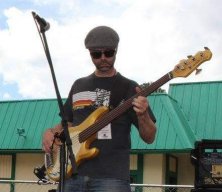
I think it's a matter of bringing a lot to the band that is hard to replace. For example, if I quit my own band, they would lose rehearsal space, gigs, PA, massive amounts of haulage I do, access to the network of musicians I've developed over the years, all the brand awareness and repeat clients, and the customer service element I seem to be able to do. They will have to pay web hosting, domain name, and marketing fees if they replace me. They will be sending people music all the time, which is the bane of my existence. Lots of tedium will land on their doorstep.
Interesting, I needed to hire a keyboard player a while ago. The keyboard player, when I called him, thought I was a guitarist or sax player or something, because when he balked at pay, he suggested we "replace the bass player with left hand bass on the keyboard to increase the musician pay". The fact that I had the client gave me the power to say "no" to replacing me with left hand bass..
The other thing is to write music the other musicians like, and provide lots of practical creativity to the band, about 1 hour or more of our set list are songs I have written. There are other innovations that make us a bit unique, that I think help as well, and I bring those to the band.
And by the way, always be improving as a bass player so people just want to play with you.
And last of all, keep working on those interpersonal skills. After early years (10 years ago) of being an over-achiever who ticked everyone off or had ideas that required the cooperation of other people, leading regularly to ticking off musicians, I seem to have reduced that significantly....here are a few principles..
1. If you ask someone to do something, make sure you wait for an answer. [Always ask people if they are willing to do such and such. Don't call and say "We need to do such and such". Never order people around unless all nice approaches have failed and the issue is dead critical to the success of the band, I only seem to have to do that once every 2 years].
2. Minimize telling people what to play or how to play their instrument. Rather than saying "You should do the solo section double time like they do on this recording. "
Say, "I'd like to see us pick up the energy after the solo. Listen to how this band does it. How about coming up with something that is our style, that really brings the song some contrast at this point".
3. Apply the four principles of transformational leadership.
1.Intellectual Stimulation -- challenge them to learn new skills, and model that behavior yourself (learning).
2.Individualized Consideration -- basically showing you care about the people in the group, they are important, they are valued for what they bring to the table.
3. Inspirational motivation -- for me this means having a pretty clear vision of what your band is, how it works, and the ability to tap into the passions of individual people. Set this up before you bring them on... I have a drummer who loves fusion and prog rock, but we are jazz, so when I write, I pull in elements from tunes he knows, but which fit the jazz tune. We talk prog rock all the time, share CD's, and there is talk of doing a few Tom Scott and other tunes from that era that he likes. Keyboard player likes traditional jazz, so we're always learning new Real Book tunes to expand the repertoire. But none of that is at the expense of my own vision of the band -- it's in concert with it.
4. Idealized Influence: Be someone other people would like to be. I don't really try to do that. I just try to be myself.
Not everyone can do all that in a way that is authentic, and for me it has taken a lot of work and falling down. And the last golden rule -- be prepared for anything to implode at any given time


 )
)

 , as well as any other of our members contributions.