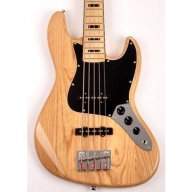
stains tend to give a warmer deeper tone , Pastels a somewhat brighter sound in the upper mids. Never get a bowling ball finish it just confuses it
Kandinsky, the great modernist painter, claimed he could hear color(s).

TalkBass has been independent since 1998. Add your voice.
Create a free account to reply to discussions, view embedded media, and browse with fewer display ads.
Join free Log in
Want zero display ads or expanded classifieds tools? Compare plans.
stains tend to give a warmer deeper tone , Pastels a somewhat brighter sound in the upper mids. Never get a bowling ball finish it just confuses it

Maybe it depends on the type of guitar? The Beatles had Epiphone Casinos in the mid 60's, on which John and George sanded off the finish. George said that once they’d removed the finish, they became much better guitars. “I think that works on a lot of guitars,” he explained. “If you take the paint and varnish off and get the bare wood, it seems to sort of breathe.” Of course, those Casinos are acoustic instruments, to an extent, not solid body, no center block. So there's that. They did change the color, by scraping it off to the bare wood, though this may be more about finish than color. Anyway they felt it made a difference, and they were pretty savvy about music. For what that's worth.
 )
)Or maybe he just cared more about how it looked at that point.Yeah, then when he got a Strat, he painted over the existing paint with more paint, which apparently didn't affect it's sound. Strange, because surely if less paint made a guitar sound better, more paint would make it sound worse...

It seems though that the original question is about whether a layer of paint will affect the tone on a natural ash (unpainted) Warwick. And I wouldn’t be surprised if some luthiers chime in with their insights, it is perfectly possible that the resonance of the wood is altered when there is a (thick?) layer of paint applied to it?


Kandinsky, the great modernist painter, claimed he could hear color(s).





Yeah, but wood is not as dense as thick metal so the affect would be a little more noticeable. Imagine dipping an acoustic in paint. Noticeable difference. Dip an solid electric, a very little difference. Like many have said, noticeable change in sound comes from electronics. I still say that a bass pressed against your body will decrease the resonance/vibration in the bass. More than a finish will affect it.I totally believe adding that much paint to a sheet of metal makes it dull-sounding. Now, does adding a 1/8" coat of paint to a 1.75" slab of metal make it sound duller than keeping it unpainted, or using a lighter coat? And what do we mean by "sounding"? Knocking on it through the painted face, or other? These questions would be more germane to the thread topic.

How much, is the whole cruciferous of the matter! As you said, electronics make a bigger difference, but what's missing in these conversations is not simple order, but orders of magnitude: sheer audibility aside, if it turned out a coat of paint is equivalent to, um, blowing on the tone control knob so that it turns the fraction of a degree, well, anyone would conclude that the impact of the former, while there, is not something to fret over.Yeah, but wood is not as dense as thick metal so the affect would be a little more noticeable. Imagine dipping an acoustic in paint. Noticeable difference. Dip an solid electric, a very little difference.
This is an above reply. Maybe you need to discuss this with this person:How much, is the whole cruciferous of the matter! As you said, electronics make a bigger difference, but what's missing in these conversations is not simple order, but orders of magnitude: sheer audibility aside, if it turned out a coat of paint is equivalent to, um, blowing on the tone control knob so that it turns the fraction of a degree, well, anyone would conclude that the impact of the former, while there, is not something to fret over.
It may be proportionally a lot more impactful for all I know, but as others pointed out, it's hard to isolate variables: a stripped (and/or repainted) guitar is also a guitar that has had its hardware removed and reinstalled, and screws retightened.
I definitely do not need to do so.This is an above reply. Maybe you need to discuss this with this person:
If this is indeed the question, I can verify that layers of paint most definitely affect the sound. I had a 1964 Precision with original paint job. A friend of mine stripped off all the layers of paint right down to the wood and put on a clear finish - no paint. The sound was never quite the same - it still sounded good, because of that amazing 1964 neck, but it DID sound different -
as others pointed out, it's hard to isolate variables: a stripped (and/or repainted) guitar is also a guitar that has had its hardware removed and reinstalled, and screws retightened.
Ok,I definitely do not need to do so.
Here's a part of my own post you already quoted twice [EDIT - pardon, only once]:
People may claim anything they want to. We now have nine more pages confirming this. Claiming something does not make it so.
The general phenomenon is callen synaesthesia:Indeed. I never quite believed Kandinsky in that respect although he may have believed it himself.