• TalkBass has been independent since 1998. Add your voice.
    Create a free account to reply to discussions, view embedded media, and browse with fewer display ads.
    Join freeLog in
    Want zero display ads or expanded classifieds tools? Compare plans.

How many frets and why?

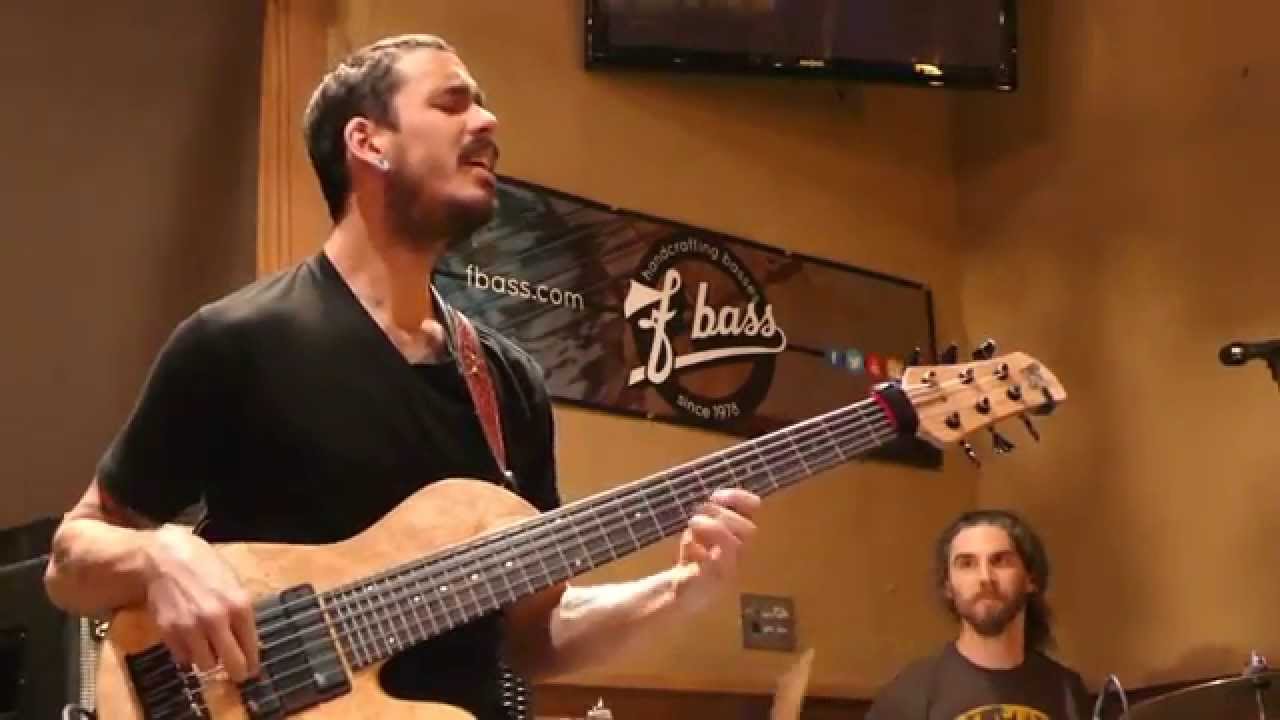
When I saw Felix Pastorius he had a 27 fret 6 string Fodera. He definitely used the higher frets but not excessively. He has such huge hands that he was able to make some chord shapes and fingerings which would be virtually impossible for the average player. It was interesting that he used a fretted and not a fretless like his father preferred.
maxresdefault.jpg
 
Funny story, I was almost going to ask a luthier to make me a bass, and 24 frets was one of the things I asked for, but he told me "I don't recomend going beyond 22 frets, because is bad for slaping" (?)

I think there may be a legitimate tonal (!) reason for the choice of 24 frets, especially if your luthier said that.

There is a node at the 24th fret which divides the string into 4 equal lengths. We know that many guitars intentionally do not have 24 frets, so as to place a pickup at this node point because it happens to sound good to have a pickup there. This is not the case on bass, but on a bass, if we slap an open string, and it hits a 24th fret vs a 21st... I have always wondered if it negatively affects the tone of slapped notes. It makes sense that exactly 24 frets could de-emphasize the fundamental and first harmonics, in a way that more or less frets do not. (Think about how it might emphasize the 12th fret harmonic sound if one were to slap an open string of a 12-fret bass.)

Upon reflection, I have never owned a bass that was not 24 frets. And I have never been great at thumb slapping or getting my slap tone to retain bottom end. Can someone who owns both 21 and 24 frets, and plays slap, speak to their experience with any low end tonal differences?
 
Mind you, I'm thinking your typical Fender Jazz/Precision type bass here.

Is the number of frets a bass has inconsequential in most cases because most bassists don't play above the 12th fret?

Could anyone share their preferences for number of frets in relation to some standard scale lengths?

The Fender Mustang has 20 frets. Would it be silly to have that few frets on a longer scale bass? How many bassists actually utilize two octave scale fretboards?

While it's interesting to play in the upper registers at times, it seems most basses aren't even ergonomic enough to accommodate and facilitate that.


Not your typical Fender Jazz/Precision type guy here, but to answer your question;

I prefer 24 frets. On a five string.

Ninety percent of the time I'm playing in the conventional range, but there are times that I want to step out of it - either higher or lower. Twentyfour frets means I can. Less means I'm limited. Limits aren't good for me.
 
  • Like
Reactions: Matthew Fisher
I prefer 21 or 22 frets. While I personally only go up to 19, it's much easier to play that note if the bass is made to go a bit higher.

I also prefer the sound of slap there compared to 24 frets, on the other hand maybe that's because I got better at it.
 
I think there may be a legitimate tonal (!) reason for the choice of 24 frets, especially if your luthier said that.

There is a node at the 24th fret which divides the string into 4 equal lengths. We know that many guitars intentionally do not have 24 frets, so as to place a pickup at this node point because it happens to sound good to have a pickup there. This is not the case on bass, but on a bass, if we slap an open string, and it hits a 24th fret vs a 21st... I have always wondered if it negatively affects the tone of slapped notes. It makes sense that exactly 24 frets could de-emphasize the fundamental and first harmonics, in a way that more or less frets do not. (Think about how it might emphasize the 12th fret harmonic sound if one were to slap an open string of a 12-fret bass.)

Upon reflection, I have never owned a bass that was not 24 frets. And I have never been great at thumb slapping or getting my slap tone to retain bottom end. Can someone who owns both 21 and 24 frets, and plays slap, speak to their experience with any low end tonal differences?
I slap alot, although usually on my A string, on both standard P and J basses as well as my 24 fret basses. Ive never encountered loosing low end, I will pick up more mid and high end though, I can see how that might seem like loosing low end. I suppose it depends on where you slap in relationship to the pick up(s) location and how long you leave your thumb on the string as well as how you hit the string. I use a rotating motion, thumb mostly perpendicular to the string, Softly somewhat mutes some of the high and mid, a quicker attack emphasizes them. But I never notice much difference on a P for sure. A little brighter on a J. Fwiw, I use stainless steel strings on all of mine and will turn off my effects when I slap most of the time because it gets a bit blurred with them on.
 
  • Like
Reactions: bridgecables
How many frets and why?
On a 4 string: 20, because it is enough.
On a 5 string: 29, because that gives me the range of a usual 6 string whilst avoiding a C string.
...or none.
 
Last edited:
When I saw Felix Pastorius he had a 27 fret 6 string Fodera. He definitely used the higher frets but not excessively. He has such huge hands that he was able to make some chord shapes and fingerings which would be virtually impossible for the average player. It was interesting that he used a fretted and not a fretless like his father preferred.
maxresdefault.jpg

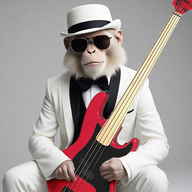
Never heard him before tonight, but I like him a lot. He's got a sense of humor. And just look at all those reachable frets.

FelixPastorius.png
 

Attachments

  • pedro-de-pacas-film-characters-photo-u1.jpg
    pedro-de-pacas-film-characters-photo-u1.jpg
    46.7 KB · Views: 90
Mind you, I'm thinking your typical Fender Jazz/Precision type bass here.

Is the number of frets a bass has inconsequential in most cases because most bassists don't play above the 12th fret?

Could anyone share their preferences for number of frets in relation to some standard scale lengths?

The Fender Mustang has 20 frets. Would it be silly to have that few frets on a longer scale bass? How many bassists actually utilize two octave scale fretboards?

While it's interesting to play in the upper registers at times, it seems most basses aren't even ergonomic enough to accommodate and facilitate that.


FRETS! We don't need no stinkin' frets!!!
 
I play a lot of musical theater pits. I think the highest note I've seen is in "Addams Family" that goes up to D (I think that's the 19th fret). The sound up there is not very 'bass-like'. Probably would work in solo situation. For what I see in musicals notes above G or A are always doubled by something else, so it's really not an issue. If not doubled, more often it works down an octave. In musicals it's fairly common to find music that is not orchestrated by bass players.
 
  • Like
Reactions: Shrubber
Personally, I like a wide spaced 6 string and 24 frets. That gives 2 octaves for each string. Anything over 24 frets and the tone seems to sound odd to my ears...which is why many prefer fanned frets on the higher strings (it has little to do with the lower strings).
4 string Fenders have lots of room for more frets, but the lower horn limits access to them. The problem with shorter scale length 24 frets basses and more than 24 fret basses is that the spaceing between the bridge and neck can get limited and pickups get pushed back towards the bridge.
 
Last edited:
Mind you, I'm thinking your typical Fender Jazz/Precision type bass here.

Is the number of frets a bass has inconsequential in most cases because most bassists don't play above the 12th fret?

Could anyone share their preferences for number of frets in relation to some standard scale lengths?

The Fender Mustang has 20 frets. Would it be silly to have that few frets on a longer scale bass? How many bassists actually utilize two octave scale fretboards?

While it's interesting to play in the upper registers at times, it seems most basses aren't even ergonomic enough to accommodate and facilitate that.

All of my basses have 20 frets except for one which has 22. Over the years I've never found that i need 24 I do play above the 12th fret routinely given the music that we play in the band I'm in. My thinking on the matter is perhaps an extended range would be helpful if you were soloing and I generally share that thought for extended string basses as well (6 and beyond). I have a 5 string which gives me some additional flexibility but, find that in the overwhelming majority of the time a 4 string with 20 frets is very adequate for most songs and styles of music. Others may have other preferences but, it could be that to some degree it's in what you get used to playing as well.
 
Mind you, I'm thinking your typical Fender Jazz/Precision type bass here. Is the number of frets a bass has inconsequential in most cases because most bassists don't play above the 12th fret? Could anyone share their preferences for number of frets in relation to some standard scale lengths? The Fender Mustang has 20 frets. Would it be silly to have that few frets on a longer scale bass? How many bassists actually utilize two octave scale fretboards? While it's interesting to play in the upper registers at times, it seems most basses aren't even ergonomic enough to accommodate and facilitate that.

on "fender jazz/precision type bass(es)" i would use the whole fb (fretless): granted: usually for soloing. but i do that with two octave instruments as well. so: i'll use what i have, mostly because i can = it's fun! although i'm playing 34" scale lengths, i don't think my 'acceptance' or preference would be different if i played shorter scales: in other words, i'd play 'what i was given'. i think a lot players use two octaves, if for no other reason = because they have them.

so: i prefer more fb length rather than less, but i can make do with what i've got either way. not a big deal, IMO. fb length is a lot less important to me than the way the instrument feels and responds at any given moment in the playdown. i prefer 'obedience' from my basses but sometimes it's me that has to obey! ha! :thumbsup:
 

Latest posts