
Enjoy the benefits of a premium membership!
Upgrade Account
-
TalkBass has been independent since 1998. Add your voice.
Create a free account to reply to discussions, view embedded media, and browse with fewer display ads.
Join free Log in
Want zero display ads or expanded classifieds tools? Compare plans.
You are using an out of date browser. It may not display this or other websites correctly.
You should upgrade or use an alternative browser.
You should upgrade or use an alternative browser.
Double Bass How much humiliation is appropriate?
- Thread starter Michael F Clef
- Start date
More options
Who Replied?Wynton Marsalis and some of his group came to a session gig in Mpls several years ago. They were playing in town and heard about the session. I wasn't there but heard they were very friendly and complementary. It helped that some of the best local players were playing. On a somewhat related note, when I played with older players as a young pro, I learned fairly early on that I wouldn't be complimented for correct playing but if I played something they didn't like I would be corrected with varying degrees of emphasis. The right stuff was expected, the wrong pointed out- nothing personal.

I was a student there during the name change and the implications on KNTU FM were amusing.
I *think* the name change started as a student thing and the first choice was "Texas State University", which resulted in the creation of a bar called "The State Club", where...well, actually I don't remember much about what happened there.
When North Texas made the transition from "college" to "university" in the early 60's, they wanted to change the name then to "University of North Texas." But apparently some folks affiliated with the University of Texas thought that would cause confusion with them, so North Texas was forced to go with NTSU. When the go-ahead finally came in the late 80's, there was also a contingent that wanted to change the name to Texas State University, but University of North Texas won out.
I haven't done an open jazz jam with strong players either. I'm a double bass and jazz novice that plays with a combo of some better players who are very patient. I really want to dip my toe in, but the jazz jams have a reputation for being pretty tough on new guys, at least in my area. I like learning from those better than me, but I'm not in a hurry to be berated either.
The most humiliating thing is not trying. Go and learn. I bet everyone will be more encouraging than you imagine.
I haven't done an open jazz jam with strong players either. I'm a double bass and jazz novice that plays with a combo of some better players who are very patient. I really want to dip my toe in, but the jazz jams have a reputation for being pretty tough on new guys, at least in my area. I like learning from those better than me, but I'm not in a hurry to be berated either.
Go. It will be a good experience. All the teachers recommend playing with others to improve. Most people, even jazz musicians ha, are encouraging. If any of them are not, so what? These guys I referred to in my original post are all very nice. They still have me sit in once in a while, and a couple of them invited me to shed with them.
Go. It will be a good experience. All the teachers recommend playing with others to improve. Most people, even jazz musicians ha, are encouraging. If any of them are not, so what? These guys I referred to in my original post are all very nice. They still have me sit in once in a while, and a couple of them invited me to shed with them.
My concern is being able to adapt to charts fast enough. I read music and chord charts just peachy, but as someone on year one with a DB, making a program for fingering has been tough to do on the spot. The better players in my combo can read off the chart and just go. It’s been rocky for me.
I tell my beginning school jazz band students who are often thrown into the deep end pretty quickly to try to keep steady rhythm above all and do the best they can to keep their place in the music and play meaningful notes as they can. It takes time, but they do improve. We work on time at that stage as much or more than notes.
I mean, is this a situation where when you're overwhelmed you defer to like a I V kind of thing? I hate doing that because I like getting some color notes in, but sometimes maybe that simple approach is best. We tried "Some Time Ago" out of the book, and I kept trying to over do it. I just listened to a practical bassist podcast on "groove," and what stuck with me is the phrase "serve the song." I think I get so fixated on bebop and post bop speed of light bass that I forget that sometimes, most of the time, simple is better. I guess save the crazy for solos.
In one of Mr. Fitzgerald's truly great online lessons, he mentioned a poll he took concerning what bandmates wanted in their bassist. Of ten things listed, the first nine were the same: groove and form were mentioned together as most important. Tenth was note choices. What this means to me is: "play good time and don't lose your place." Words to live by.
In one of Mr. Fitzgerald's truly great online lessons, he mentioned a poll he took concerning what bandmates wanted in their bassist. Of ten things listed, the first nine were the same: groove and form were mentioned together as most important. Tenth was note choices. What this means to me is: "play good time and don't lose your place." Words to live by.
Makes sense. Other than "just doing it," what kind of advice would you more experienced jazz guys offer to someone like me who wants to improve proficiency at playing off a chart at the drop of the hat. I'm thinking of things like picking a song at random from the real book, finding (and probably adjusting) an ireal pro backing track and just winging it a bunch of times with different songs every day as part of my routine?
Makes sense. Other than "just doing it," what kind of advice would you more experienced jazz guys offer to someone like me who wants to improve proficiency at playing off a chart at the drop of the hat. I'm thinking of things like picking a song at random....."
What books are you working on to work on your arpeggios? That would be my first goal: to know all your chord tones: major seven, dominant seven, Minor 7, Minor 7 flat five. From my experience, if you can hit those notes on the beat that's a great first goal to shoot for. Can you connect with a New Orleans or Gypsy Jazz Ensemble, or even bluegrass? Arpeggios will get you far with those genres, and it's a great way to sharpening your ax to move on to bop. My two cents.
Last edited:
I wouldn't pick a song at random.
Pick a blues in F. Then a blues in Bb.
Then something like Autumn Leaves in G minor, then in E minor
Then a Rhythm Changes tune.
Playing with a backing track is fine, but transition to good, approachable recordings. Find bassists who you "hear". People who play like you imagine yourself playing.
Know the changes, know the chord tones (as @Michael F Clef said) and use passing tones in addition to chord tones. Which passing tones? The ones that sound good and get you to the next chord. If they sound good and get you where you're going, they're right.
Listen to jazz. We're in the golden age of streaming, every recording ever is a few clicks away. You can't play what you don't hear. You won't be able to play some things that you can hear either (I can't), but that's what you practice and you keep moving the bar.
My other advice on jam sessions is go and make notes of the songs that get called. Keep doing that and you'll get an idea of a priority list for standards. It's regional and sometimes session specific, so ignore lists or us telling you what to learn beyond those first few. Learn what the people you want to play with expect you to know.
Pick a blues in F. Then a blues in Bb.
Then something like Autumn Leaves in G minor, then in E minor
Then a Rhythm Changes tune.
Playing with a backing track is fine, but transition to good, approachable recordings. Find bassists who you "hear". People who play like you imagine yourself playing.
Know the changes, know the chord tones (as @Michael F Clef said) and use passing tones in addition to chord tones. Which passing tones? The ones that sound good and get you to the next chord. If they sound good and get you where you're going, they're right.
Listen to jazz. We're in the golden age of streaming, every recording ever is a few clicks away. You can't play what you don't hear. You won't be able to play some things that you can hear either (I can't), but that's what you practice and you keep moving the bar.
My other advice on jam sessions is go and make notes of the songs that get called. Keep doing that and you'll get an idea of a priority list for standards. It's regional and sometimes session specific, so ignore lists or us telling you what to learn beyond those first few. Learn what the people you want to play with expect you to know.
Most of the time, when the going gets tough, the not-so-tough play in two.I mean, is this a situation where when you're overwhelmed you defer to like a I V kind of thing? I hate doing that because I like getting some color notes in, but sometimes maybe that simple approach is best. We tried "Some Time Ago" out of the book, and I kept trying to over do it. I just listened to a practical bassist podcast on "groove," and what stuck with me is the phrase "serve the song." I think I get so fixated on bebop and post bop speed of light bass that I forget that sometimes, most of the time, simple is better. I guess save the crazy for solos.
If it gets even tougher, you can get away with muted thumps for a bar or two while you figure out where the heck you are.
Priorities for bass player, especially in playing something new he doesn't really have a great handle on yet:
1) Time
2) Time
3) Time
4) Time
5)
6
....
32)playing the right chords and keeping the form
33)
34
---
150) Playing hip stuff to impress people
What books are you working on to work on your arpeggios? That would be my first goal: to know all your chord tones: major seven, dominant seven, Minor 7, Minor 7 flat five. From my experience, if you can hit those notes on the beat that's a great first goal to shoot for. Can you connect with a New Orleans or Gypsy Jazz Ensemble, or even bluegrass? Arpeggios will get you far with those genres, and it's a great way to sharpening your ax to move on to bop. My two cents.
I have the following chords comfortably as arpeggio patterns: Normal triads, maj7, min7, dom7, min7b5, min/maj7. I'm comfortable rooting them on either a first/second finger or 4th finger on the E and A string, and with reasonable comfort on the D. I'm not comfortable with staying inline on the G as my intonation is still going to hell as I get to the end of second position. I also find that my intonation suffers when I do inversions which seems to rule out a lot of starting on the G for me. I also find that the inverted 7th when rooting off the D sounds kind of weird whenever I do it in practice, unless it's a major 7th and it works as an easy passing tone in the chord progression. It seems like if I start on the first beat of the measure, and go to a 7th that's inverted, it sounds weird.
I have an ever increasing and decent beginners grasp of theory. It's being able to at the drop of a hat, open the real book and play along with the rest of my band with a song I don't know. Our flute player who is very, very good, can just open the book, sight read the melody and is bopping along like she's played it a million times before. Same to a slightly lesser extent with our trumpet player and pianist. The guitarist and I seem to take too long to adapt and need to build the muscle memory.
Am I just expecting too much from myself? As I'm learning restraint and trying not to just spam notes, I'm growing happier with the parts that I create and am able to improvise variants. I have to REALLY know the song though for that. Autumn leaves is a good example where we've played it so many times, I feel comfortable taking some risks, same with softly as a morning sunrise and a few other standards.
There's also just some basic stuff that I'm not sure about. Like chord extensions, especially things like b9 etc that aren't diatonic. In normal bass lines, is that worth worrying about including to really emphasis the color of the chord, or am I okay using 3s and 7s and limit coloring to tetrachords?
Soloing is something we all do in practice even if we don't plan on including it in a performance. My solos are pretty much me using a scale to blanket as many chords as possible and swapping to arpeggios where that doesn't work, or just noodling arpeggios and trying to link them with some fluidity. I haven't gotten comfortable with some of the crunchy stuff, like using arpeggios of substitutions and approach tone type stuff.
I'm also very on edge using modal playing, outside of them happening normally in ii V I while playing a single scale or other diatonic progressions. I struggle, for example, to truly improvise over ii V i as it's so non-diatonic, there are so many options, and all of them include some landmine notes. I feel like from years of playing other types of music that, at most, sub a dom7 for the V chord in a minor key that my hands auto pilot too much.
Here's another question for you experienced guys: If you are working with a scale or substitution which has some crunchiness to it, if you land on something dissonant and it sort of sounds foul, do you just try to use it as an approach tone to a semitone above and below. I feel like whenever I hit a dissonant note by accident, I seem to hang on it and emphasize it because I'm surprised and embarrassed.
I love jazz, it's been an amazing journey in this last 6 months of really delving into it. I was playing lead guitar in a rock band before this and deeply unhappy with it. I LOVE this. It's just also so intimidating.
Also, thumb position feels impossibly far away from doing competently!
You might be expecting too much of yourself.
Upper extensions can probably wait. For walking line accompanyment just think of the obvious notes and "other notes". Just play through the clams and get better over time.
Do you have a teacher?
Upper extensions can probably wait. For walking line accompanyment just think of the obvious notes and "other notes". Just play through the clams and get better over time.
Do you have a teacher?
One year studying Jazz Double Bass? Don't get down on yourself for not being able to walk any chart thrown in front of you at a glance.My concern is being able to adapt to charts fast enough. I read music and chord charts just peachy, but as someone on year one with a DB, making a program for fingering has been tough to do on the spot. The better players in my combo can read off the chart and just go. It’s been rocky for me.
Keep practicing your arpeggios and scales nice and slowly with clean form. Keep practicing walking lines over VI-II-V-I. Work Ray Brown's Book or the many other Walking Bass Tutorials that are available. Walk a dozen or so tunes you've been asked to play. Listen to the thousands of recordings of the jazz masters. Differentiate between practice and play. And give it 5 or 10 years or so ha.
I don’t have a teacher for double bass. The combo I’m in is actually a class run at the philharmonic music school in Rhode Island. It’s been great. Our instructor is like our band leader and we try to balance theory and chalk talk with instructive playing as a band.
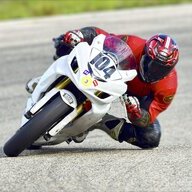
As you may have noticed in my avatar, I am / was a motorcycle racer. I got seriously injured at the end of the 2021 season. It was a traumatic brain injury which involved a series of neurosurgeries. The net effect has been that racing hasn’t been part of my life since then. I still hope to in the next year or two to be back at that. I’m a hobby centric person and grew up playing rock, metal and sort of fusiony kind of stuff. I never stopped playing, but I stopped really actively pursuing it and just sort of noodled around here and there.
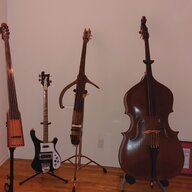
After getting hurt, I knew I would lose my physical fitness, the activities associated with that beyond motorsports, and there would be some serious gaps in my life that playing music could help fill. That’s what started me on this journey. The RI Bluegrass Alliance has given me a loaner double bass which I’ve had a luthier sort out. NS was also very generous in giving me a deeply discounted wav 4 which is what I practice with at the philharmonic. I play the traditional at home mostly. I’m sure that wrankles some, but I’ve found it to be a great compromise and they inform one another nicely. I enjoy playing both.
Unfortunately, my circumstances with my health along with being involved with a struggling robotics startup has left me financially pretty much at zero. A year of not being able to do my freelance work due to the injuries saw that business dry up, and while the startup is progressing, I along with the other two cofounders have never taken a paycheck. I now live at home to heal and recover and try to pursue that dream. Suffice to say, a teacher hasn’t been in the budget. I’m liquidating gear and toys from a time in my life where I was reasonably successful to pay the bills. Hopefully this will change because I can get a great quality teacher through the Philharmonic school. It’s a goal, but not one that I’ve been able to make much headway on. I’m a hard worker and am doing my best to try to not pickup as many bad habits as I can. Of course that’s hard when you’re learning in a bit of a vacuum.
I’m open to suggestions on books. The Simandl Method felt a little draconian and rigid, but maybe that’s what I need. I do want to make sure that my ambition to improve doesn’t rob me of enjoyment. I love the double bass and have always wanted to play it and play jazz. Thanks to the generosity of others, I’ve been able to get this far. Hopefully I will continue to grow as a player and be able to pay it forward one day.
As you may have noticed in my avatar, I am / was a motorcycle racer. I got seriously injured at the end of the 2021 season. It was a traumatic brain injury which involved a series of neurosurgeries. The net effect has been that racing hasn’t been part of my life since then. I still hope to in the next year or two to be back at that. I’m a hobby centric person and grew up playing rock, metal and sort of fusiony kind of stuff. I never stopped playing, but I stopped really actively pursuing it and just sort of noodled around here and there.
After getting hurt, I knew I would lose my physical fitness, the activities associated with that beyond motorsports, and there would be some serious gaps in my life that playing music could help fill. That’s what started me on this journey. The RI Bluegrass Alliance has given me a loaner double bass which I’ve had a luthier sort out. NS was also very generous in giving me a deeply discounted wav 4 which is what I practice with at the philharmonic. I play the traditional at home mostly. I’m sure that wrankles some, but I’ve found it to be a great compromise and they inform one another nicely. I enjoy playing both.
Unfortunately, my circumstances with my health along with being involved with a struggling robotics startup has left me financially pretty much at zero. A year of not being able to do my freelance work due to the injuries saw that business dry up, and while the startup is progressing, I along with the other two cofounders have never taken a paycheck. I now live at home to heal and recover and try to pursue that dream. Suffice to say, a teacher hasn’t been in the budget. I’m liquidating gear and toys from a time in my life where I was reasonably successful to pay the bills. Hopefully this will change because I can get a great quality teacher through the Philharmonic school. It’s a goal, but not one that I’ve been able to make much headway on. I’m a hard worker and am doing my best to try to not pickup as many bad habits as I can. Of course that’s hard when you’re learning in a bit of a vacuum.
I’m open to suggestions on books. The Simandl Method felt a little draconian and rigid, but maybe that’s what I need. I do want to make sure that my ambition to improve doesn’t rob me of enjoyment. I love the double bass and have always wanted to play it and play jazz. Thanks to the generosity of others, I’ve been able to get this far. Hopefully I will continue to grow as a player and be able to pay it forward one day.
A few things to address your comment:
Best of luck with your challenges in your life. I've had a few. They suck. I can't sugar coat calling a spade a spade. For me looking back, when a door closes another one opens. We have to keep moving forward doing what we can with what we have. Best of luck.
In my opinion, Simandl is not draconian. It's an excellent text to learn to read bass clef and get to know your fingerboard.
There are many inexpensive books for learning walking jazz bass. Of the books I have I like Ray Brown's the best. There are many out there that guys speak well of that I don't have. I also have some online video courses but I think a book is more cost effective than say a hundred dollar video course.
It sounds like the workshop you're in is a cool situation
Lastly, I play the NS NXT. It's a great bass. No one - or at least a tiny minority - will uninvite you to a session because you play the NS. Just hold a great bass line and be a good guy and you'll get invited back. That's been my experience
Best of luck to you.
Best of luck with your challenges in your life. I've had a few. They suck. I can't sugar coat calling a spade a spade. For me looking back, when a door closes another one opens. We have to keep moving forward doing what we can with what we have. Best of luck.
In my opinion, Simandl is not draconian. It's an excellent text to learn to read bass clef and get to know your fingerboard.
There are many inexpensive books for learning walking jazz bass. Of the books I have I like Ray Brown's the best. There are many out there that guys speak well of that I don't have. I also have some online video courses but I think a book is more cost effective than say a hundred dollar video course.
It sounds like the workshop you're in is a cool situation
Lastly, I play the NS NXT. It's a great bass. No one - or at least a tiny minority - will uninvite you to a session because you play the NS. Just hold a great bass line and be a good guy and you'll get invited back. That's been my experience
Best of luck to you.
Latest posts
-
 Vintage German parlour looks classical but needs steel strings?
- Latest: EdwardofHuncote
-

-

-

