Humidity changes between summer and winter seasons means I have to adjust the truss rod twice every year. On the P-Bass I have to take the neck off to adjust the truss rod- no problems with stripped screw holes as I take care when reattaching the neck, I insert the screws first by hand to feel the old threads. Usually loosening a half turn in the spring and a half turn the other way in the fall is enough to keep the neck relief where I like it.

Enjoy the benefits of a premium membership!
Upgrade Account
-
TalkBass has been independent since 1998. Add your voice.
Create a free account to reply to discussions, view embedded media, and browse with fewer display ads.
Join free Log in
Want zero display ads or expanded classifieds tools? Compare plans.
You are using an out of date browser. It may not display this or other websites correctly.
You should upgrade or use an alternative browser.
You should upgrade or use an alternative browser.
How often do you tighten your truss rod
- Thread starter bump9987
- Start date
More options
Who Replied?
Not enough to notice a pattern.
On a separate issue,I used to have to loosen and separate the A and D strings to adjust the trussrod.
But since I got a set of ball end hex T wrenches I don't have to do that any more.
I can adjust under string tension.
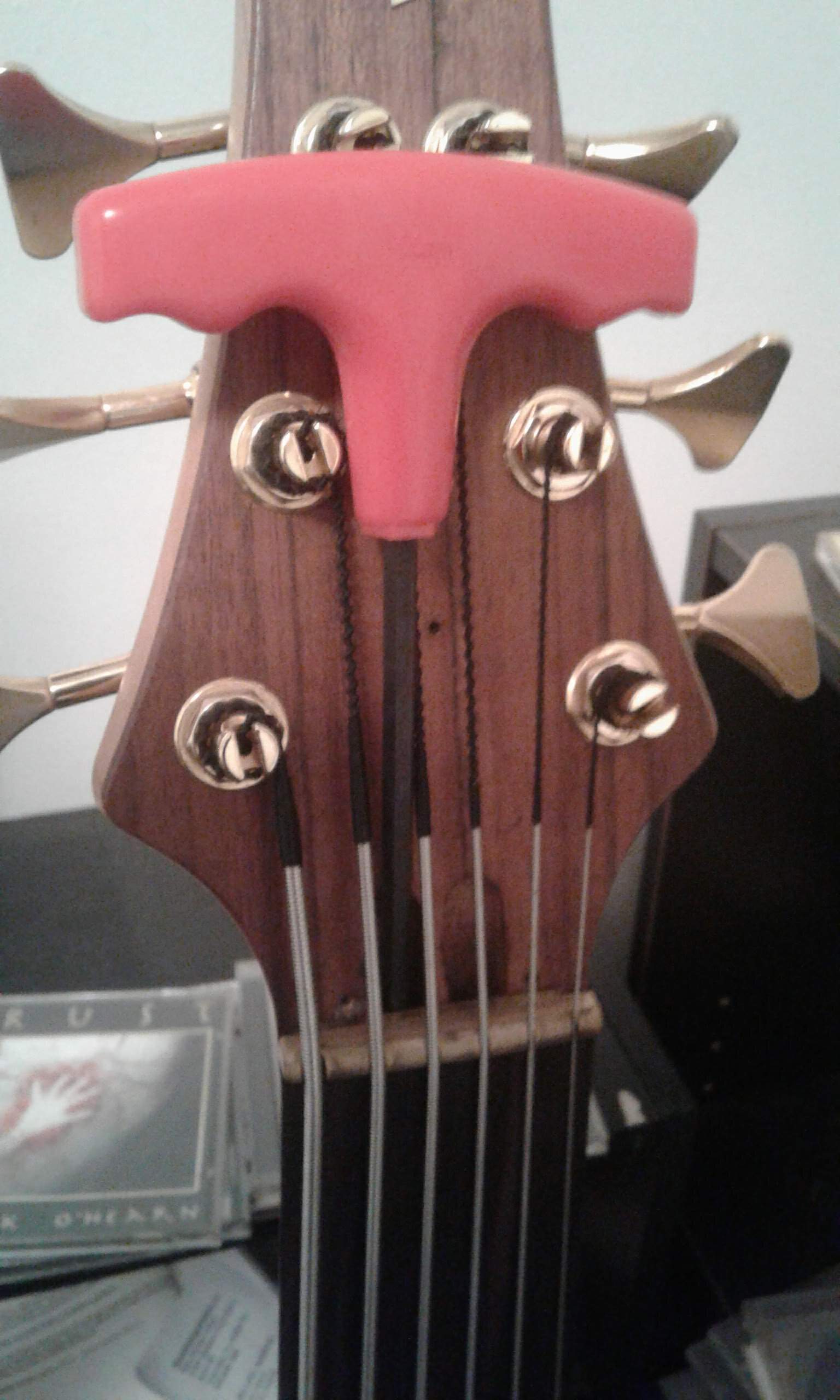
On a separate issue,I used to have to loosen and separate the A and D strings to adjust the trussrod.
But since I got a set of ball end hex T wrenches I don't have to do that any more.
I can adjust under string tension.
Last edited:


Turnaround
Commercial User
The frequency of truss rod adjustments will depend on a number of factors:
1. The amount of protracted change in relative humidity the instrument is exposed to
2. The quality of the wood of the neck and fingerboard
3. The amount and type of finish on the neck and fingerboard
4. Your preference for very low, low, medium, high or very high action
5. Your sensitivity to small changes in neck relief
Since I like really low action and am very sensitive to small changes in neck relief, I would have to say I adjust the truss rod on average once every two weeks.
1. The amount of protracted change in relative humidity the instrument is exposed to
2. The quality of the wood of the neck and fingerboard
3. The amount and type of finish on the neck and fingerboard
4. Your preference for very low, low, medium, high or very high action
5. Your sensitivity to small changes in neck relief
Since I like really low action and am very sensitive to small changes in neck relief, I would have to say I adjust the truss rod on average once every two weeks.

I have several basses in rotation and some of them are more sensitive to humidity changes than others and need frequent adjusting. It is not uncommon for a sensitive bass neck to get adjusted several times through out the year. I do have others that are more stable and rarely need adjusting if at all, unless I am changing the type of strings.

The fact you are living close to the lakes doesn't help the RH situation.The frequency of truss rod adjustments will depend on a number of factors:
1. The amount of protracted change in relative humidity the instrument is exposed to
2. The quality of the wood of the neck and fingerboard
3. The amount and type of finish on the neck and fingerboard
4. Your preference for very low, low, medium, high or very high action
5. Your sensitivity to small changes in neck relief
Since I like really low action and am very sensitive to small changes in neck relief, I would have to say I adjust the truss rod on average once every two weeks.


I use light gauge flats. After the initial couple of weeks I've never adjusted either my P, J, or PJ again, and the violin isn't even adjustable or a Fender.
What violin are you mentioning, or a Fender?I use light gauge flats. After the initial couple of weeks I've never adjusted either my P, J, or PJ again, and the violin isn't even adjustable or a Fender.
My Hofner violin bass isn't a Fender.What violin are you mentioning, or a Fender?
I see; I thought you were talking about an actual violin, and you caught me out of left field.My Hofner violin bass isn't a Fender.
I see; I thought you were talking about an actual violin, and you caught me out of left field.
Well my violins aren't Fenders either; one is purported to be a Tecchler, but I have my doubts. I only paid ~400 USD for it, so it's almost certainly a copy, just a pretty good one.
Last edited:

Do you play violin too? Many great violinists have 2 bridges, one for the warmer weather, and one for winter, because the neck trajectory changes slightly according to the RH. As well, violin luthiers introduce a little bit of scoop into the fingerboard, for the same reason that basses and guitars have a little bit of relief.Well my violins aren't Fenders either; one is purported to be a Tecchler, but I have my doubts. I only paid ~400 USD for it, so it's almost certainly a copy, just a pretty good one.
ime it's very very depends on the bass. I will say that I'm on the South coast of England so likely not seeing the radical changes in temp / humidity others may.
But some necks - eg on my Westone Thunders just never seem to need adjustment. Others eg OLP MM2 and Ibanez ATK require frequent monitoring and adjustment.
The Westones necks are laminated while the OLP and Ibanez are basically 'one piece' so read what you will into that.
I'll also advise avoiding ball end hex keys if you can. They can certainly be useful with access upto 30 degrees off axis. But they will always damage the hex socket and eventually that damage adds up.
But some necks - eg on my Westone Thunders just never seem to need adjustment. Others eg OLP MM2 and Ibanez ATK require frequent monitoring and adjustment.
The Westones necks are laminated while the OLP and Ibanez are basically 'one piece' so read what you will into that.
I'll also advise avoiding ball end hex keys if you can. They can certainly be useful with access upto 30 degrees off axis. But they will always damage the hex socket and eventually that damage adds up.


I think that fretless needs more often truss rod adjustment in search of more mwah.Depends of season and humidity but usually two to three time in a year on all my basses.Also,how much outdoor gigs do you do.

In general; I tighten - or loosen- a truss rod the first time I set a new bass up. After that? If I change or replace strings, I will run through the standard set-up procedure, and if anything needs to be adjusted - including the truss rod? I'll do whatever needs to be done. But, since all but 2 of my 25 basses wear flats? Adjustments - other than tuning tweaks - don't happen very often...
As for truss rods that adjust at the heel? I have several basses like that - and only one of them is a Fender. And, no; you don't really have to take the neck completely off to adjust the TR. On all those basses, I loosen the neck screws just enough to let the neck tilt up to where I can get a screwdriver on the nut (none of mine use a hex key). My Fender is a '78 P-Bass that I've owned for 34 years; I've always done the TR adjustment this way, and the screw holes in the neck are perfectly fine. So are all the screw holes in all the other bass's necks... Most of the stripping-out problems with neck screws - and screw holes in wood generally - can be caused by putting a screw in the hole, that isn't the same screw that you took out (yeah, it might sound a little anal; but hey- it's not my bass you're messing up); but, mainly it's the result of not putting the screws back in the screw thread holes exactly the way they came. Cross-threading them, in other words. The best way to avoid stripping the holes out - other than not taking the screws completely out of the holes - is to gently start the screws into the holes like you're taking them out. When the screw's threads find the existing threaded hole? There will be a little 'click' that you can feel - and the screw will go back in the wood, in exactly the hole it came out of. Aside from just making a TR adjustment quicker; cleaner; and easier, backing the neck screws out just enough to tilt the neck also avoids stripping out the neck holes...
As for truss rods that adjust at the heel? I have several basses like that - and only one of them is a Fender. And, no; you don't really have to take the neck completely off to adjust the TR. On all those basses, I loosen the neck screws just enough to let the neck tilt up to where I can get a screwdriver on the nut (none of mine use a hex key). My Fender is a '78 P-Bass that I've owned for 34 years; I've always done the TR adjustment this way, and the screw holes in the neck are perfectly fine. So are all the screw holes in all the other bass's necks... Most of the stripping-out problems with neck screws - and screw holes in wood generally - can be caused by putting a screw in the hole, that isn't the same screw that you took out (yeah, it might sound a little anal; but hey- it's not my bass you're messing up); but, mainly it's the result of not putting the screws back in the screw thread holes exactly the way they came. Cross-threading them, in other words. The best way to avoid stripping the holes out - other than not taking the screws completely out of the holes - is to gently start the screws into the holes like you're taking them out. When the screw's threads find the existing threaded hole? There will be a little 'click' that you can feel - and the screw will go back in the wood, in exactly the hole it came out of. Aside from just making a TR adjustment quicker; cleaner; and easier, backing the neck screws out just enough to tilt the neck also avoids stripping out the neck holes...
Last edited:

Seldom more than once, when I get the bass. I play flats and I don't change them. Once installed, the bass is set up and that's usually that.
Two things:
1) You can normally grind away a bit of the pickguard to get access to the truss rod nut. In many cases a paint can opener with a curved end or similar tool give you enough purchase to adjust the neck with the strings loose.
2) If you really need to remove the neck so often, have inserts installed so that you're not messing with screws and wood. There are a number of threads on installing inserts and changing to bolts.
Paint can opener with curved tip:

Two things:
1) You can normally grind away a bit of the pickguard to get access to the truss rod nut. In many cases a paint can opener with a curved end or similar tool give you enough purchase to adjust the neck with the strings loose.
2) If you really need to remove the neck so often, have inserts installed so that you're not messing with screws and wood. There are a number of threads on installing inserts and changing to bolts.
Paint can opener with curved tip:

I always check it when I change strings but adjustment is not very often and never much.
I've got Fender Jazz basses that adjust at the headstock, all my MIM std Js and my 32 YO US J Plus, while my MIA highway one J basses adjust from the heel, but I can do it with a ball driver (included with every new Fender I've ever bought) by removing my scratch guards. If the two styles, I much prefer the headstock option and have in fact passed on otherwise acceptable basses with a Phillips heel adjustment requiring neck screw involvement to adjust. I've got an S driver with Phillips heads but it's a PITA to use while trying to put pressure on the neck with one hand to make it easier to move the adjusting nut, an operation made simple with a T handle ball driver.
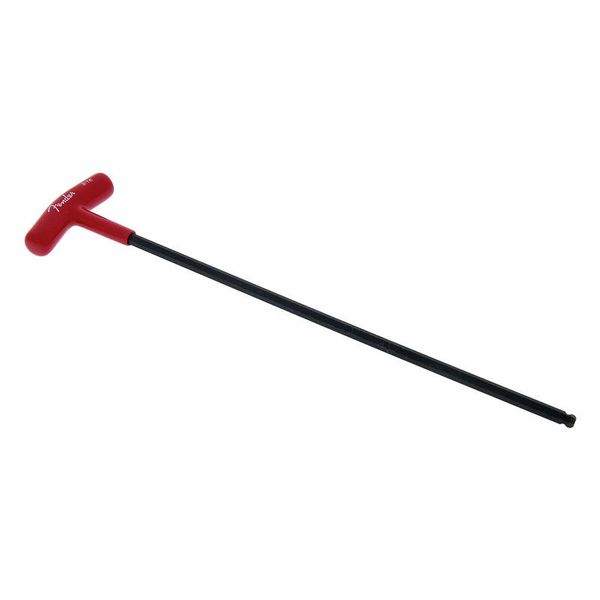
I've got Fender Jazz basses that adjust at the headstock, all my MIM std Js and my 32 YO US J Plus, while my MIA highway one J basses adjust from the heel, but I can do it with a ball driver (included with every new Fender I've ever bought) by removing my scratch guards. If the two styles, I much prefer the headstock option and have in fact passed on otherwise acceptable basses with a Phillips heel adjustment requiring neck screw involvement to adjust. I've got an S driver with Phillips heads but it's a PITA to use while trying to put pressure on the neck with one hand to make it easier to move the adjusting nut, an operation made simple with a T handle ball driver.
Last edited:

I've never seen a bass or guitar with a philips head for the truss rod nut. I assume that you're referring to cross-slotted heads like on vintage/vintage-style Fenders, for which you shouldn't use a philips driver as you risk damaging the nut - these are designed to be turned with a flat-headed screwdriver, and do not match the shape of a philips driver. As I mentioned earlier in this thread, there is a method for doing this which doesn't require the neck to be removed.and have in fact passed on otherwise acceptable basses with a Phillips heel adjustment requiring neck screw involvement to adjust. I've got an S driver with Phillips heads but it's a PITA to use


