
Enjoy the benefits of a premium membership!
Upgrade Account
-
TalkBass has been independent since 1998. Add your voice.
Create a free account to reply to discussions, view embedded media, and browse with fewer display ads.
Join free Log in
Want zero display ads or expanded classifieds tools? Compare plans.
You are using an out of date browser. It may not display this or other websites correctly.
You should upgrade or use an alternative browser.
You should upgrade or use an alternative browser.
How to forget the dents?
- Thread starter Bassguitar man
- Start date
More options
Who Replied?


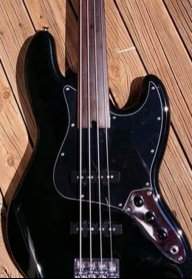
When I was freaking about scratching up my brand new car my good friend set me straight with these words of wisdom. He told meIt is always painful when I see a small dent on my black satin poly finish bass.
"It's all downhill from here"
And that was the end of new car stress !
I would apply this same logic to your bass.
Last edited:


Looks like those dings are next to the output jack. I suggest trying to inset the plug carefully, rather than stabbing at it like you're re-enacting the shower scene from Psycho.
Hey, I prefer my basses unblemished too, so I try to be careful. But I rehearse them, I gig them, they travel in commuter jet luggage holds... dings happen. Whaddaya gonna do? At the end of the day, if it still plays OK, I don't let it get to me too much. But if you can't stand to play it anymore, hang it up on your practice room wall as a memorial and buy yourself a new one. If you ding the new one, hang it up next to the first one and buy another. Eventually, you'll have a Dingwall.
I'll get my coat...



Black Satin is impossible. I stick with gloss so I can repair any dents myself.It is always painful when I see a small dent on my black satin poly finish bass.

You have to rethink. Dents are good and no dents mean you never gave it love.

I had a friend who, whenever he bought a new instrument, would immediately let it fall to the floor and get a dent, scratch, chip, scuff or whatever. "There, I don't have to fuss over it!" he'd say. Happy is the player who sees that music is not precious.

There are two ways I know of to forget about dents:
1. Sell the bass
2. In your practice room, build up a collection of calendars (either wall calendars or desk calendars, your choice), each from a different year, starting with the current year. Once you have a few calendars in your collection, the dents will have magically disappeared. This worked for me; it should work for you too.
1. Sell the bass
2. In your practice room, build up a collection of calendars (either wall calendars or desk calendars, your choice), each from a different year, starting with the current year. Once you have a few calendars in your collection, the dents will have magically disappeared. This worked for me; it should work for you too.

One week into ownership of my O.T. Fender Elite jazz i was removing it from the case and had to navigate around a piece of furniture. I probably should have used a compass as my navigational skills failed horribly and I bumped it into the furniture putting a nice chip in the pain where my arm rests.
I really stressed about this to the point of making posts here about it, and making calls to repairmen.
A few days later I noticed a nick in the back of the neck. I had no idea how that got there and that caused me more stress.
Im not quite full blown O.C.D. but I was bothered enough by both of these that I ordered new O.T. Elite jazz with the intention of selling the "damaged" one.
What ended up happening is that I string the new one with flats, and kept on playing the old one. Sort of glad that ended up that way as I've been on some tight stages, and have had B/L's request of me that they have their bass player friends sit in on my instrument. Generally Im not a fan of that latter at all (sit in using my amp sure, but bring your own bass), because I operate under the logic that no one really cares about your instrument as much as you, but these tend to be situations that I don't think i can say no to so I at least have a bass to give these guys that is already road-worn.
I really stressed about this to the point of making posts here about it, and making calls to repairmen.
A few days later I noticed a nick in the back of the neck. I had no idea how that got there and that caused me more stress.
Im not quite full blown O.C.D. but I was bothered enough by both of these that I ordered new O.T. Elite jazz with the intention of selling the "damaged" one.
What ended up happening is that I string the new one with flats, and kept on playing the old one. Sort of glad that ended up that way as I've been on some tight stages, and have had B/L's request of me that they have their bass player friends sit in on my instrument. Generally Im not a fan of that latter at all (sit in using my amp sure, but bring your own bass), because I operate under the logic that no one really cares about your instrument as much as you, but these tend to be situations that I don't think i can say no to so I at least have a bass to give these guys that is already road-worn.


*makesThinking about dents on other people's basses make me smile.
Correcting other people's grammar has a similar effect on me.


As long as a big chunk hasn't been taken out of it don't sweat it.It is always painful when I see a small dent on my black satin poly finish bass.

Unless it's on the neck, I don't even notice dents.
Seriously, I have on more than one occasion been completely surprised to discover a dent, nick, scratch, paint chip, etc. on one of my basses, and the only reason I even found it was because I was doing some atypical or infrequent repair/maintenance and just happened to flip the instrument over into a rare orientation.
Lord knows how they get there in the first place.
But if I can't feel it when I'm playing, it may as well be invisible.
Seriously, I have on more than one occasion been completely surprised to discover a dent, nick, scratch, paint chip, etc. on one of my basses, and the only reason I even found it was because I was doing some atypical or infrequent repair/maintenance and just happened to flip the instrument over into a rare orientation.
Lord knows how they get there in the first place.
But if I can't feel it when I'm playing, it may as well be invisible.


