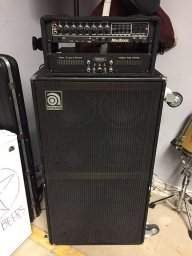
Bi-amping or Dual-Mono? They are different. If you have your cabs hooked up to separate channels and Bi-Amp engaged, then you are sending the lows form one channel to one cab and the highs through the other channel the other. And that's bi-amping.
If you do not have Bi-Amp engaged, then it sends 200-watts of full frequency signal to each cab. You're using both channels as individual amplifiers or what is sometimes called Dual-Mono mode. They are not the same thing. If you haven't run your amp with your speakers plugged into channel A and channel B outputs yet, you are in for a pleasant surprise when you do. You'll get much more volume because you are getting everything each cab has to offer instead of all from one cab and just the tweeter from the other one.
Typically the high side of the biamp puts out ~100-watts in Bi-Amp mode and the low side will put out whatever the max is for that side of the amp. Dual-mono on your Marshall puts out 200-watts at full-frequency per side. I have an Eden WT500/800 (modded to 800-watts bridged) and it runs 400-watts per side with a 4 ohm minimum load per side. However, it does not have bi-amp circuitry in it like the WT800 does. Dual-mono is a very nice way to run a different ohms load on one side without changing or influencing the ohms load on the other channel. A good "balance" knob (if there's one on you amp) then allows you to mix the sound from each side to get the balance of sound you like.