• TalkBass has been independent since 1998. Add your voice.
    Create a free account to reply to discussions, view embedded media, and browse with fewer display ads.
    Join freeLog in
    Want zero display ads or expanded classifieds tools? Compare plans.

How To Safely Remove Broken Bridge Screws?

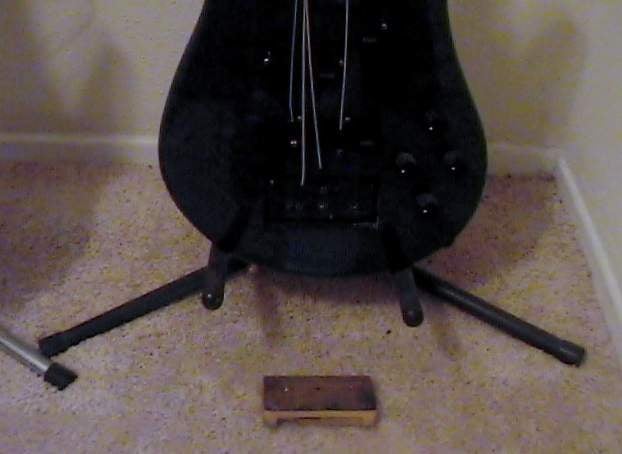
I woke up this morning to find the bridge on my Spector NS2 lying on the floor. All three screws broke in half and the ends are still in the body. Has anyone else ever heard of this happening? I've owned this bass since it was new. The bridge has never been taken off and it's always had light gauge strings on it (45-100). Any suggestions on how to remove the broken screw ends without damaging the body?
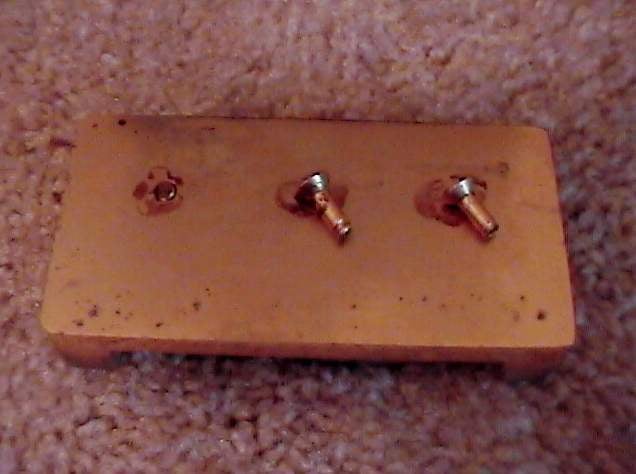
DVC00056.JPG


DVC00055.JPG
 
Last edited:
Astounding! If you are really handy you can handle this and we'll help. If you aren't, find a competent INSTRUMENT REPAIR person / luthier.

Are you really handy and do you own a drill press? You can extract them and plug the holes. And re drill for new screws.

OR

Because it is hidden you can try and cut slots in the screws with a Dremel to insert a screwdriver in. This requires cutting into the wood a bit and leaving your tracks under the bridge.
 
Last edited:
Astounding! If you are really handy you can handle this and we'll help. If you aren't, find a competent INSTRUMENT REPAIR person / luthier.

Are you really handy and do you own a drill press? You can extract them and plug the holes. And re drill for new screws.

OR

Because it is hidden you can try and cut slots in the screws with a Dremel to insert a screwdriver in. This requires cutting into the wood a bit and leaving your tracks under the bridge.

I'm pretty handy but I don't have access to a drill press. Can you extract them with a hand drill? I definitely don't want to cut into the wood even if it's under the bridge because this is a vintage Spector NS2.
 
There's no way I know of to back the screws out w/o removing at least a little wood around the screw shanks to be able to get a purchase of some sort. Half-worn Dremel cut-off wheels (may take several or more) will remove the least while cutting a screwdriver slot to remove them. Another way is to cut 'saw teeth' in the end of a piece of steel, brass, or even copper tubing that just fits over the screw shank, relieve a little wood around the shank, then use the Dremel cut-off wheels to cut screwdriver slots- it'll look better.
If there was an acid/oxidation process that would eat the screws w/o damaging the wood...XXX
As posted: "Drilling into uneven narrow screw shafts is pretty tough." And there won't be enough mat'l left for strength to remove the screws- works with bolts, but screws are too small.
Or, mount the bridge slightly ahead or behind (depending on intonation screw travel) with new screws alongside the old ones.
You've got a tough choice to make.
 
I woke up this morning to find the bridge on my Spector NS2 lying on the floor. All three screws broke in half and the ends are still in the body. Has anyone else ever heard of this happening? I've owned this bass since it was new. The bridge has never been taken off and it's always had light gauge strings on it (45-100). Any suggestions on how to remove the broken screw ends without damaging the body?

View attachment 602776

View attachment 602777

WOW! I've never heard of such a thing. How on earth does that happen? My first guess is weak/corroded screws and when one broke it led to a cascade failure of the other two.

Considering it's a vintage piece, you should probably have it repaired professionally.
 
Last edited:
There's no way I know of to back the screws out w/o removing at least a little wood around the screw shanks to be able to get a purchase of some sort. Half-worn Dremel cut-off wheels (may take several or more) will remove the least while cutting a screwdriver slot to remove them. Another way is to cut 'saw teeth' in the end of a piece of steel, brass, or even copper tubing that just fits over the screw shank, relieve a little wood around the shank, then use the Dremel cut-off wheels to cut screwdriver slots- it'll look better.
If there was an acid/oxidation process that would eat the screws w/o damaging the wood...XXX
As posted: "Drilling into uneven narrow screw shafts is pretty tough." And there won't be enough mat'l left for strength to remove the screws- works with bolts, but screws are too small.
Or, mount the bridge slightly ahead or behind (depending on intonation screw travel) with new screws alongside the old ones.
You've got a tough choice to make.

The broken ends are 1/4" to 3'8" below the surface so trying cut a slot in the screws with a dremel will do more damage than cutting out the screws and plugging the hole. And on a Spector bass the bridge is recessed into the body so repositioning isn't an option.
 
WOW! I've never heard of such a thing. How on earth does that happen? My first guess is weak/corroded screws and when one broke it led to a cascade failure of the other two.

Considering it's a vintage piece, you should probably have it repaired professionally.

I talked to Spector and they said they have never seen this happen before and they have been building basses since the late 70's. My guess is that the weight of the bridge (it's solid brass and weighs a ton), the use of only 3 screws to hold it on and defective screws all contributed to the failure.
 
My guess is that a previous owner over tightened them, over torqued, stressing the steel, causing micro fractures in the steel that over time and with vibration spread enough to weaken the screws til they let go. Same as any other fastener failure in the real world when over torqued.

Weight likely has nothing to do with it.
 
  • Like
Reactions: JustForSport
My guess is that a previous owner over tightened them, over torqued, stressing the steel, causing micro fractures in the steel that over time and with vibration spread enough to weaken the screws til they let go. Same as any other fastener failure in the real world when over torqued.

Weight likely has nothing to do with it.

Like I said in my original post, I've owned this bass since it was new. It's never had the bridge removed and I've never touched the bridge screws.
 
They may have been over-torqued at the factory, then. 200# (approx) of tension is way more than the weight of the bridge, tho.
That's an exception for sure (even only using 3 screws) since the screws broke off so far inside- usually the sideways stress would've broken them near flush. Looks like they broke at the beginning of the threaded section.
 
This is a prime example of one of my huge pet peeves, the quality of hardware a LOT of manufacturers use in their products. Even items considered high end often have just awful quality fasteners used in them. This is especially true if it's something that can be purchased from open stock. A lot of makers will spec a particular grade of hardware and their supplier will sell them lower grade crap or even ungraded counterfeit junk with the correct grade indicator markings, but for the most part it's manufacturers saving a little on their per unit price. I understand the reality of making a production budget often dictates this, but it should not in the higher end and (to me at least) Spector would be regarded to be higher end in the consumer grade market in terms of quality construction and materials used. -soapbox returned to the stowed and locked position.-

Just curious, is that some kind of slotted bridge that allows quick string changes? I'm just trying to wrap my head around how the bridge got loose from the strings. Even with a quick change bridge it just seems odd that all 4 strings would have popped completely free.

Also, did you happen to ask Spector what that stuff all over the screw shanks and bottom of the bridge is?

If the bass has any serious value to it I'd put it in the hands of a pro. More for the ability to say it was professionally repaired if I ever decided to off it, but also to avoid any excessive gouging, slotting, etc, that I'd surely wind up doing if I tried the fix. I've got quite a bit of experience removing stainless fasteners from aluminum outboard engine blocks, but things like paint and resale were not the prime concern.
 
If you don't have the right tools its best to take it to a luthier who does.
The right tool for this kind of job is an "easy out" but it requires a steady hand and an electric drill. Failing there the next best option would be to sleeve drill the screw out using a special hollow tube slightly larger than the screw, but this will remove some of the wood on the bass and require a wood plug to fill the hole and also requires an electric drill.
 
Just curious, is that some kind of slotted bridge that allows quick string changes? I'm just trying to wrap my head around how the bridge got loose from the strings. Even with a quick change bridge it just seems odd that all 4 strings would have popped completely free.

Also, did you happen to ask Spector what that stuff all over the screw shanks and bottom of the bridge is?

Yes the bridge on all US Spectors (and most if not all other models they make) is a slotted bridge so when the screws failed and the bridge fell off, the strings just popped free. I spoke with PJ at Spector, sent him the same pics and he said that they had never seen a failure like that happen before. This is a vintage NS2 that was made when Kramer owned so the "stuff" you refer to is probably do to it's age. It is solid brass after all.
 
My guess is that a previous owner over tightened them, over torqued, stressing the steel, causing micro fractures in the steel that over time and with vibration spread enough to weaken the screws til they let go. Same as any other fastener failure in the real world when over torqued.

Weight likely has nothing to do with it.

^^^ I'd bet a steak dinner that was the cause (Safe bet, right? I'm not there...)

The failure mode in this case points directly to excess stress having been put on the screws, causing them to fail eventually. The body on that bass must be hard wood to allow them to have been overtightened that much.

Galvanic corrosion is an interesting idea. The chart cited is interesting. I know that a steel valve in an aluminum scuba tank can create galvanic corrosion problems, and the difference in anodic index isn't much different than brass and steel. But I think that overtightening is more likely. If it were corrosion, it would appear where the metals were in contact, not halfway down the screws.
 
  • Like
Reactions: GBassNorth
Yep, definitely stress. All three screws broke at the weakest point, where the shank meets the threads and IIRC the body wood is hard maple. I'd guess all three screws were over torqued at the factory and as the wood body expanded with humidity and the strings pulled with tension the screws failed. Would have loved to seen it actually happen but I do feel sorry for the OP. fortunately its an easy fix.
 

Latest posts