As the title says, how would I go about this? I'm sure I need some kind of multimeter, but where on the amp would I take the reading?

Enjoy the benefits of a premium membership!
Upgrade Account
-
TalkBass has been independent since 1998. Add your voice.
Create a free account to reply to discussions, view embedded media, and browse with fewer display ads.
Join free Log in
Want zero display ads or expanded classifieds tools? Compare plans.
You are using an out of date browser. It may not display this or other websites correctly.
You should upgrade or use an alternative browser.
You should upgrade or use an alternative browser.
How to test an amps true power output
- Thread starter Ihaveshingles
- Start date
More options
Who Replied?


It can't be done. There are no two manufacturers in the world that agree on what "true power" is. It's going to be really hard for anybody to measure what it could be unless you can find a standard.
But ... Let's assume though you have a dmm that can measure volts rms and you have a solid state amp. With absolutely no load connected, just hook up the meter put a 60hz tone in, and measure the max voltage you can get out. With just that voltage you can figure out what the potential max power would be. Make up a ohm of say 8 ohms, then use ohms law to calculate the power at 60hz. Repeat at different frequencies and I doubt you'll read much difference in voltage, but you can stop at 1khz.
Search ohm law calculator on the webs, put the voltage in, and 8 for resistance and although you measured at 60hz, you'll get what the potential equivalent of power would be. Some might call this "RMS" and that would be same power a DC circuit would give.
There's no way in real life an amp could sustain that level of power for any amount of human measured length of time. It'd decay in the blink of an eye's time, but manufacturers only rate their power for 30ms, so a voltage only reading actually gets pretty close to what a manufacturer might rate their amp.
But ... Let's assume though you have a dmm that can measure volts rms and you have a solid state amp. With absolutely no load connected, just hook up the meter put a 60hz tone in, and measure the max voltage you can get out. With just that voltage you can figure out what the potential max power would be. Make up a ohm of say 8 ohms, then use ohms law to calculate the power at 60hz. Repeat at different frequencies and I doubt you'll read much difference in voltage, but you can stop at 1khz.
Search ohm law calculator on the webs, put the voltage in, and 8 for resistance and although you measured at 60hz, you'll get what the potential equivalent of power would be. Some might call this "RMS" and that would be same power a DC circuit would give.
There's no way in real life an amp could sustain that level of power for any amount of human measured length of time. It'd decay in the blink of an eye's time, but manufacturers only rate their power for 30ms, so a voltage only reading actually gets pretty close to what a manufacturer might rate their amp.

- Feb 12, 2006
- 61,083
- 5
- 221,188
- Disclosures
- Development Engineer-Mesa Boogie, Development Engineer-Genzler (pedals), Product Support-Genz Benz
SOME manufacturers may rate their amps for 20mSec or 30mSec, but many do not as well.
With the questions the OP is asking, it's clear that he doesn't understand enough to try any of this without jeopardizing the safety of the equipment itself. There are enough risks to recommend against doing so without learning a whole lot more about what NOT to do.
Also, there is the necessary equipment such as a scope, signal generator, load bank and multimeter that will work at least reasonably accurately above sat 120Hz.
With the questions the OP is asking, it's clear that he doesn't understand enough to try any of this without jeopardizing the safety of the equipment itself. There are enough risks to recommend against doing so without learning a whole lot more about what NOT to do.
Also, there is the necessary equipment such as a scope, signal generator, load bank and multimeter that will work at least reasonably accurately above sat 120Hz.
And had it been an easier method to test it, just wanted to see how accurate the manufacturer ratings were on the amps I own. Thanks again

The ratings are most likely accurate within the parameters of their test conditions. However, some test conditions do not compare well to real world use.And had it been an easier method to test it, just wanted to see how accurate the manufacturer ratings were on the amps I own. Thanks again
An honor that agedhorse chimed in,
my first post ever on TB after years on the sidelines...
However I may abandon Talkbass as every time I check in the main threads are the most mind numbing of subjects and I assume are placed to watch people brand bash each other or people need others approval to buy or like something.
my first post ever on TB after years on the sidelines...
However I may abandon Talkbass as every time I check in the main threads are the most mind numbing of subjects and I assume are placed to watch people brand bash each other or people need others approval to buy or like something.
- Feb 12, 2006
- 61,083
- 5
- 221,188
- Disclosures
- Development Engineer-Mesa Boogie, Development Engineer-Genzler (pedals), Product Support-Genz Benz
I don't think your assessment of the topics are accurate imo.
If you think you are going to be more "accurate" measurements than manufacturers (who have far more sophisticated equipment than you will have), you are fooling yourself.
That said, some manufacturer do use "alternative" metrics that produce misleading numbers compared with RMS metrics. This is a different subject entirely.
If you think you are going to be more "accurate" measurements than manufacturers (who have far more sophisticated equipment than you will have), you are fooling yourself.
That said, some manufacturer do use "alternative" metrics that produce misleading numbers compared with RMS metrics. This is a different subject entirely.

Folks are too hung up on specs. You need a lab environment and a lot of thought to do it right. More than just the power output should be measured. the output has to be taken at a specified distortion level. Tone setting are important, stabilization and temperature of the components, including the load, frequencies used, purity of the input signal, and very importantly calibration of the equipment. If an amp is rated for at least 100W RMS at a specified THD+noise, from a players perspective it doesn't matter if you read 110W. These measurements are important when designing so that you have a way of measuring progress as you tweak. In the end, specs are published. Sometimes they come from the bench, sometimes they come from marketing. That depends on the company's own interpretation of the truth.
As a player, when evaluating an amp, use your ears and listen. The smile on your face is better than test equipment. For a typical EQ and volume setting, dig in at the lowest note and listen for distortion both at the onset of the note and the decay. Play a chord and listen for purity. Is there frequency smearing or muddiness. Evaluate the headroom when playing under differently types of attack. Do all this under different volume and tone settings. Listen for speaker distortion. It takes time to get to know an amp and the process isn't always easy.
As a player, when evaluating an amp, use your ears and listen. The smile on your face is better than test equipment. For a typical EQ and volume setting, dig in at the lowest note and listen for distortion both at the onset of the note and the decay. Play a chord and listen for purity. Is there frequency smearing or muddiness. Evaluate the headroom when playing under differently types of attack. Do all this under different volume and tone settings. Listen for speaker distortion. It takes time to get to know an amp and the process isn't always easy.

To the OP -- I understand and emphasize with the desire to check out whether or not an amp meets the manufacturer's claims, but I guess you've figured out by now that it isn't going to be something you're going to be able to accomplish. And to reiterate a point already well said -- it doesn't really matter. Keep in mind that the difference between, say 350 watts and 400 or even 450 watts is virtually inaudible in practical usage; the difference between 500 and 800 watts is still less than a 3dB increase, or only just noticeably louder -- not twice as loud by any means.
There's a large enough disparity in the methods different amp manufacturers employ to determine their published specs that it is difficult to use them in a true 'apples-to-apples' comparison, especially if you don't understand how the testing parameters can effect the data. In some cases, the manufacturers don't even make the pertinent info available, or they make it difficult to ascertain -- be wary of the specs published by those companies, as there is a lot of room for 'specsmanship' on the marketing side.
There's a large enough disparity in the methods different amp manufacturers employ to determine their published specs that it is difficult to use them in a true 'apples-to-apples' comparison, especially if you don't understand how the testing parameters can effect the data. In some cases, the manufacturers don't even make the pertinent info available, or they make it difficult to ascertain -- be wary of the specs published by those companies, as there is a lot of room for 'specsmanship' on the marketing side.

What is your goal? It's not the same as BHP in a car or counting Kilos on a squat. Manufacturers in our industry aren't in complete agreement how to publish their nameplate specs, like @agedhorse horse was saying.
Maybe crowd source the question with the model of amp you are interested in? Someone might have the approximate answer for you. My assumption as a consumer is that manufacturers share information that they want to share (marketing) and information that have to share (labeling and safety certifications) and the rest can be a grey area, sometimes deliberately grey. Some brands are more accurate and up-front about their specs. We know who they are.
Maybe crowd source the question with the model of amp you are interested in? Someone might have the approximate answer for you. My assumption as a consumer is that manufacturers share information that they want to share (marketing) and information that have to share (labeling and safety certifications) and the rest can be a grey area, sometimes deliberately grey. Some brands are more accurate and up-front about their specs. We know who they are.

It's not as easy as doing it with Ham Radio Gear, a good Watt Meter, and a Dummy Load.
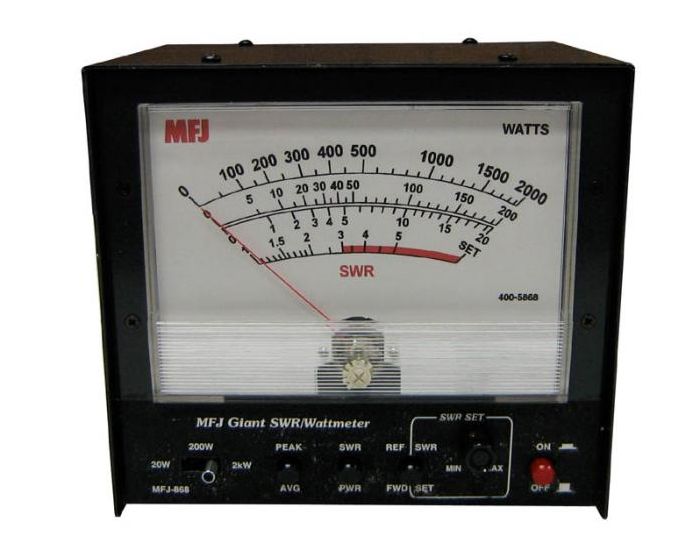
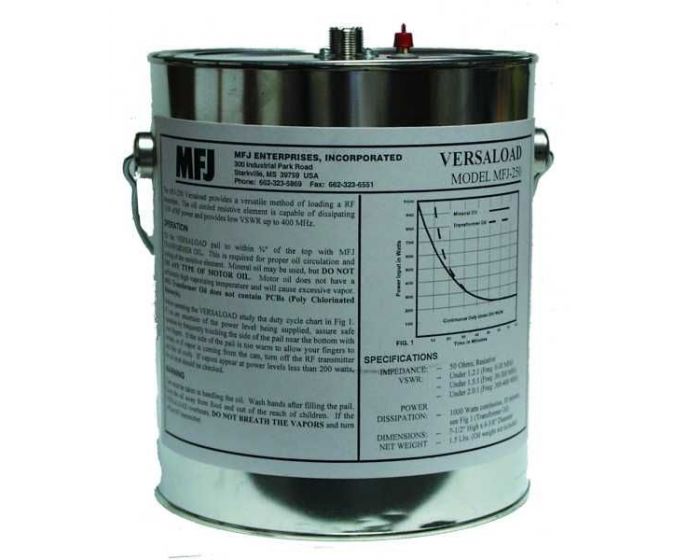
- Feb 12, 2006
- 61,083
- 5
- 221,188
- Disclosures
- Development Engineer-Mesa Boogie, Development Engineer-Genzler (pedals), Product Support-Genz Benz
Good point about the legally required power ratings and metrics used in safety compliance testing at nationally recognized testing laboratories.What is your goal? It's not the same as BHP in a car or counting Kilos on a squat. Manufacturers in our industry aren't in complete agreement how to publish their nameplate specs, like @agedhorse horse was saying.
Maybe crowd source the question with the model of amp you are interested in? Someone might have the approximate answer for you. My assumption as a consumer is that manufacturers share information that they want to share (marketing) and information that have to share (labeling and safety certifications) and the rest can be a grey area, sometimes deliberately grey. Some brands are more accurate and up-front about their specs. We know who they are.
This information is clearly stated in the maximum power tests (low line, nominal line and high line), though the accuracy is typically +/-10% depending on how the lab determines the thresholds. Almost always, these test reports are considered confidential information due to the information contained in the 100-300 page reports.
The amp test that really matters is how it sounds.
The safest way to do this... turn your amp to its mid point.... stand approximately 10 feet in front of it and play.
it should sound like about half of what the manufacturer said the wattage is.
At this point no damage occurred to you, your test equipment, or your amp.
it should sound like about half of what the manufacturer said the wattage is.
At this point no damage occurred to you, your test equipment, or your amp.

Yes. This was especially true in ages gone by, when "peak power" and "musical power," and other misnomers were used to make especially home stereos seem larger than they really were. For example, one of my favorite speakers, a 12-inch Jensen Vibranto, can actually only handle about 25 watts as we measure it now. I used to own four of them, and I would swap them out in various cabinets for various applications. But some of the old literature describes them as handling "100 watts peak power." Yeah, right. A friend of mine took a pair of mine in a cabinet, hooked it up to a Marshall 100 watt amplifier for a recording session, cranked the life out of them, and when he brought the cab back said they started sounding funny towards the end of the session. I breathed a sigh, said I'd deal with it, and went right in and called the area speaker recone specialist and got them reconed. I still have one left with its original cone, and it doesn't leave the house with anyone anymore. I bought a new Celestion Neo Creamback to do that.I don't think your assessment of the topics are accurate imo.
If you think you are going to be more "accurate" measurements than manufacturers (who have far more sophisticated equipment than you will have), you are fooling yourself.
That said, some manufacturer do use "alternative" metrics that produce misleading numbers compared with RMS metrics. This is a different subject entirely.

These are shark infested waters. I've learned to grow a thick skin as too often I've run into some condescending sort who feels it's his mission to try and make me feel stupid/humiliated.An honor that agedhorse chimed in,
my first post ever on TB after years on the sidelines...
However I may abandon Talkbass as every time I check in the main threads are the most mind numbing of subjects and I assume are placed to watch people brand bash each other or people need others approval to buy or like something.
And yet there are others here who have honorable intentions and are truly helpful.
It's a crap shoot..
- Feb 12, 2006
- 61,083
- 5
- 221,188
- Disclosures
- Development Engineer-Mesa Boogie, Development Engineer-Genzler (pedals), Product Support-Genz Benz
The safest way to do this... turn your amp to its mid point.... stand approximately 10 feet in front of it and play.
it should sound like about half of what the manufacturer said the wattage is.
How do you come to this conclusion?


