

Enjoy the benefits of a premium membership!
Upgrade Account
-
TalkBass has been independent since 1998. Add your voice.
Create a free account to reply to discussions, view embedded media, and browse with fewer display ads.
Join free Log in
Want zero display ads or expanded classifieds tools? Compare plans.
You are using an out of date browser. It may not display this or other websites correctly.
You should upgrade or use an alternative browser.
You should upgrade or use an alternative browser.
I Don't Get Bass Distortion/OD
- Thread starter -Stingray
- Start date
More options
Who Replied?

The application of effects live vs. recorded can be challenging. Think of all the threads that get posted about " my bass disappeared live" "help me cut through the mix". And on and on.
With effects pedals you have potentially compounded this.
I have found that as some have said add a clean boost. I have a Union Tube and Transistor Sub Bass that has a dirt knob and clean knob. I get the dirt where I want then blend in the clean as needed. Just like tweeking your EQ for a room.
My primary playing these days is at church. Even there I pump the gain on my Trace V-Type head to get a little fuzz on the peach.
This is just from my personal experience and my personal opinion.
With effects pedals you have potentially compounded this.
I have found that as some have said add a clean boost. I have a Union Tube and Transistor Sub Bass that has a dirt knob and clean knob. I get the dirt where I want then blend in the clean as needed. Just like tweeking your EQ for a room.
My primary playing these days is at church. Even there I pump the gain on my Trace V-Type head to get a little fuzz on the peach.
This is just from my personal experience and my personal opinion.

Overdrive, fuzz and distortion is a big old sandbox.
Every time I've tried adding some distortion or overdrive to my bass it just sounds terrible.
Obviously it's user error..
Please enlighten me with some links to songs that use bass distortion/OD.
Thanks!
A lot of classic tracks have bass overdrive on, sometimes from the amp, you just don't really hear it on the track.
Some of the older bass recordings may be as much tape saturation as intended distortion. Producers likely working for feel before tone. It is about producing a versatile and listenable track over the most basic and hi-end platforms.
John Taylor is so next level. I never knew his tone had that dirt to it. As an aside, Mrs. Rich67 just walked by and said "That's Duran Duran!" Even isolated...
Duran Duran is, I believe, touring. I'm almost tempted to go, just to see Taylor.
Here's a great example of some light OD.
Mix:
Isolated:
Busy, but works perfectly in context. A lot of Duran Duran is quite bass-driven (pun not intended).
Some of the older bass recordings may be as much tape saturation as intended distortion. Producers likely working for feel before tone. It is about producing a versatile and listenable track over the most basic and hi-end platforms.
There might be some validity to that, but given how carefully some elements of the bands with obviously overdriven bass sounds were getting other elements of the sound recorded, I have to wonder. Granted, if you listen to Ramble On by Led Zep, the bass is over-driven and the acoustic sound isn't exactly pristine, you listen to something by Jethro Tull a year or so later, and the acoustics are much cleaner, but the bass can still be quite over-driven. So I think it was intentional at times. And that's outside Cream or Mountain, or deliberate use of fuzz by The Beatles.
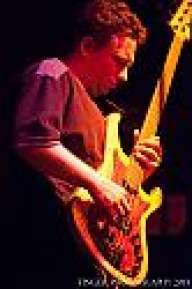
I’m not sure what else I can add to this discussion from a technical end. Distortion on the bass, is all about fitting into the mix. Much like a P-bass with flats, it doesn’t sound very inspiring on its own. But throw a band around it, and it’s magic.
The real magic of bass distortion is to leave the low frequencies alone and just distort the uppers, but keep a lid on the upper range EQ so it doesn’t get buzzy. DUG Pinnick is the true master of this.
Let me add a track that no one realizes has heavily distorted bass on it. Listen to Duck Dunn, his tone is filthy. And you can hear it like a bell
The real magic of bass distortion is to leave the low frequencies alone and just distort the uppers, but keep a lid on the upper range EQ so it doesn’t get buzzy. DUG Pinnick is the true master of this.
Let me add a track that no one realizes has heavily distorted bass on it. Listen to Duck Dunn, his tone is filthy. And you can hear it like a bell
Last edited:
some of tim commerfords (rage against the machine) distorted bass tones almost sound horrendous isolated but throw them in the mix and they sound fantastic.

Driving back from a road gig now where we played Shut Up and Dance with Me. Needed OD to get that done.
It's also perfectly fine to just run your bass completely clean. It's not because there are tons of distortion pedals that you must use one!
I personally went thru a mountain of them and only use a boost to offset long cables.
It's a matter of taste and it's an area in our lives where we are free to do exactly what we want!
I personally went thru a mountain of them and only use a boost to offset long cables.
It's a matter of taste and it's an area in our lives where we are free to do exactly what we want!

Terrible on it's own?
Or in a mix?
Check out some isolated bass tracks on YouTube.
Basslines that sounds fairly clean in the mix, can often be much dirtier when isolated.
Here's a good example,
I'm always amazed how great songs have isolated parts that either sound not great or downright terrible. This is a good example. Love this song, but if my bass sounded like that playing alone I'd think something was wrong. Steve Harris is another example, a powerhouse and one of my fave bassists of all time, but his tone in isolation is...underwhelming.
My favourite distortion is the growl of a two channel 4001, with the bridge pickup being distorted. 70’s prog rock was a good example of this tone, and perhaps my favourite application is in the beginning of Rush’s Cygnus X-1 from A Farewell to Kings (around the 2:10 mark)
if you don’t get it, that’s cool though. I play a lot of jazz, hip-hop, and funk by myself and I never use it for that stuff, but a touch of grit doesn’t hurt in the mix (in fact, it’s often really helpful).
Thanks for this. Haven't listened to this song/album in many years. A mistake on my part.

I kinda agree with the OP. When I play, distortion can not only sound nasty, but also get lost in the mix. I fixed that problem by finding a pedal that works for me. That process, and knowing how to figure out what you like and what works, can be a grind (pun intended).
Totally. When you're mixing for a little car radio speaker or handheld transistor radio you're not gonna hear much (or any) bass unless you get somethin' going on there! Today's equivalent would be mixing so you can hear what the bass is doing just on laptop speakers, or some crappy little portable bluetooth speaker with a 1" driver.Some of the older bass recordings may be as much tape saturation as intended distortion. Producers likely working for feel before tone. It is about producing a versatile and listenable track over the most basic and hi-end platforms.
Last edited:


A good place I would start is, "what do you mean by terrible?"Every time I've tried adding some distortion or overdrive to my bass it just sounds terrible.
Obviously it's user error....
Please enlighten me with some links to songs that use bass distortion/OD.
Thanks!


