Yes, good points here.
Anyway, my main gripe is that with a similar sum (and depending on where you are geographically) and only taking Fender into account, you can basically buy:
- a lovely custom shop
- a nice vintage instrument, not too vintage or a rarity but something cool
- an awful "old dog", supposedly an iron anchor from the 70s with a misaligned neck, bad truss rod, worn frets, all sorts of structural problems and dull sound. Probably (and thankfully) for a bit less, but you get the point. DISCLAIMER: there are wonderful and bad 70s Fenders, this is just an example.
Now, even with the latter, you can basically justify a resale purely based on the fact that it's "old within vintage territory" and its valuation goes accordingly. Good luck finding a buyer, especially if they want to play it too, but it's within the norm.
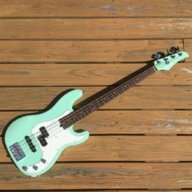
If I bought that bass on *bay (which, AFAIK can be as good as my Classic 50s, so a nice instrument with bad looking wood on the body, as someone pointed out - something that does hurt my eye TBT) and tried to sell it locally or trade it in at a local shop mentioning the original cost (and let's not bring taxes into the equation), I'd probably make someone laugh. That's my guess.
In the end, I think that what @JimmyThunder said is most right - when it comes to free market and second-hand sales, I can always sell a screw asking for a grand and describe it as the most wonderful screw you'll ever come across and if someone agrees, happy days.
If that screw had a Swarovski head I would personally think of it as a stupid feature, but it'd be an objectively valid point for a high price tag. With this Japanese (supposedly good) bass, I definitely fail to see the diamond.
If it were a Sadowsky head, though...