• TalkBass has been independent since 1998. Add your voice.
    Create a free account to reply to discussions, view embedded media, and browse with fewer display ads.
    Join freeLog in
    Want zero display ads or expanded classifieds tools? Compare plans.

I will never buy another "active-only" bass

I will never buy a bass that can't be switched to passive mode again.

  • I agree 100%. No active-ness for me.

    Votes: 85 17.8%
  • I generally agree. Active electronics aren't that great, and the battery thing is a problem.

    Votes: 99 20.7%
  • No opinion/no response/"six of one, half-dozen of the other"

    Votes: 155 32.4%
  • I generally disagree. Active basses are more fun, because you can do more with them.

    Votes: 93 19.5%
  • I disagree 100%. Active all the way for me!

    Votes: 46 9.6%

  • Total voters
    478
The busiest ten years of my bass playing life was done with an active bass. It had a four way switch to turn it off (no output), active with a fixed mid, active with mid adjustable VIA a mini pot on the board, and passive. The battery usually lasted just over six months so I kept a fresh battery and a sharpie in the case and every six months I would replace the battery, and write the replacement date on a piece of the battery packaging with my sharpie. That piece of card stock went in the accessory pocket of my bass case where my strap resided when not in use. Every time I got out my strap to play, I’d see the date of my last battery replacement, and when it got close to six months of use I’d replace my battery. I never had to use the passive mode to bail me out because my battery started going dead mid set.
It took an #0 phillips screwdriver and about 2 minutes to replace the battery and record the date. The required screwdriver was kept in my case along with the 2 allen wrenches needed to adjust my bridge. I still have the bass but rarely play it so there is no battery in it or the case, but the screwdriver, allen wrenches, and sharpie are still in the case, just in case I get a wild hair and decide to take my old workhorse out on the town. :D
 
Last edited:
The busiest ten years of my bass playing life was done with an active bass. It had a four way switch to turn it off (no output), active with a fixed mid, active with mid adjustable VIA a mini pot on the board, and passive. The battery usually lasted just over six months so I kept a fresh battery and a sharpie in the case and every six months I would replace the battery, and write the replacement date on a piece of the battery packaging with my sharpie. That piece of card stock went in the accessory pocket of my bass case where my strap resided when not in use. Every time I got out my strap to play, I’d see the date of my last battery replacement, and when it got close to six months of use I’d replace my battery. I never had to use the passive mode to bail me out because my battery started going dead mid set.
It took an #0 phillips screwdriver and about 2 minutes to replace the battery and record the date. The required screwdriver was kept in my case along with the 2 allen wrenches needed to adjust my bridge. I still have the bass but rarely play it so there is no battery in it or the case, but the screwdriver, allen wrenches, and sharpie are still in the case, just in case I get a wild hair and decide to take my old workhorse out in the town. :D

Great job.
As I said earlier, as long as you have a fixed organization and keep in mind it has to be changed periodically, this is not a problem.
 
  • Like
Reactions: mikeswals
I like having a passive mode switch...just in case.

I'm no luthier or electrical engineer, but I have to wonder how complex something like that is to add to an otherwise active-only circuit path. Puts a nail in the coffin of the "zomg! What if my battery dies mid-gig?!?" argument. You'd be sacrificing your tone shaping (if any), but also signal buffering which is beneficial even with your EQ set flat by switching to passive mode. YMMV, for some folks that's not a big deal either :meh:
 
Thus far when I've had a passive bypass, I've tried using it for sonic effect and always preferred it with the preamp switched in. Every single time.
It is odd because I have passive basses that I love & am never tempted to add a preamp to.
But there you have it. For me, the passive bypass on an active bass is just an idiot switch.
I can say that because I was the idiot once. I had the battery die on me at the start of a set because I didn't replace and/or check adequately. (I did at least have my backup handy!)
Bypass is nice to have - lets me let my techie gut out a little bit. But some designs don't or actually can't incorporate it.
Active pickups would be a case in point, but they can be lovely to work with sometimes. I'm not going to deny myself that experience with an overabundance of caution; I'm just going to change batteries more routinely & check voltage before an important performance.
... and bring a backup when I can. Because if the onboard power source doesn't start wreaking havoc, a dying pot or switch or jack, fatigued wire or bad solder joint very well might.
 
If I can't play it in passive mode, I will not buy it.
(Note - doesn't include basses that are solely collectibles or for "non-playing" purposes.)

Who agrees? Who disagrees?

%100 agree. I will go further than that: I don't want batteries in my bass at all. It still baffles me how many high end basses come with electronics that need to be fed with a battery and lock you into specific systems due to routing.
 
I'm torn between "No opinion/no response" and "I generally disagree"

...and the only reason "I generally disagree" rather than "I disagree 100%" is because I still own one completely passive bass that I love and will never get rid of. But I definitely love the sound of all my other active basses, and only one of them even has the option to bypass the electronics and work in passive mode. Which btw doesn't sound nearly as good as that bass when the active electronics are engaged.

But I'm guessing OP had a disasterous issue with an active bass recently -- like, did your battery die in the middle of your set? -- and hence this thread. :::shrugs::: That's never been a problem for me, because, amongst my many hyper-anal OCD behaviors, I always change the batteries in all my active instruments on January 1st of every year, whether they need replacing or not. Make it a routine, to reduce the likelihood of surprises. Just did it again this past week.


I couldn’t agree more.:thumbsup:

I do the annual battery swap every January 1st too!


I own a bit of everything. I’m primarily a Spector player, so it’s active pickups/active onboard eq, but I’m also a fan of passive instruments, (I gotta have my passive P-Bass!) Maybe the most versatile sounding IMO is passive pickups wired to an active onboard preamp, with an active/passive bypass switch, and I also like active pickups to passive controls. It all works for me.
 
I personally prefer active as they have more control from the bass, and that is where I like to make tone adjustments as opposed to fiddling with an amp. Changing batteries is part of basic maintenance and I don't find the yearly need to change them to be an inconvenience. I have active with rounds and flats and can dial in whatever tone I need, including old-schol thumpy stuff. YMMV, play what you like, etc...
 
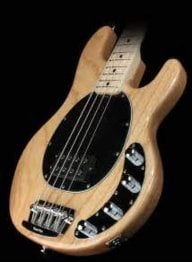
The only complaint I have regarding my active only EBMM is the battery compartment has a screw on cover. When I want passive, I have my trusty pbass. I had a Fender Jazz + 5 that had a switch to go from active to passive but I only liked the active mode. It felt like a "half power / full power" switch and the passive mode seemed anemic. And who doesn't want a reason to own multiple basses?
 
This would not be the deciding factor for me. I generally prefer passive basses, but have a couple with active/passive switch and one (Stingray) that is active only. The flexibility of the switch is nice, and I do use it on the basses that have it (Ultra Jazz and Ibanez shortscale). But if they didn't have the switch...I'd probably still own them.
 
I've only had issues with a loose ground and output jacks. This can happen with active or passive basses.

I used to get years out of a 9v with the basses I was using in bands. Like others, I change batteries every January. This is because newer batteries seem much more prone to leaking. This corrodes contact points.