Yes- while I pushing an oblique pun, I actually have a bass that fits the description and that would be my passive 06 Warwick Fretless Corvette bubinga , particularly when I use a pick.I'm trying to figure out how that works. Does a passive-aggressive bass refuse to provide an active option, or does it just let the battery die and say "Oh well, guess you'll have to play me passive then, won't you?", while it sneers at your pathetic attempts do anything other than cut the treble?
I mean, this is why I'll never buy a passive-aggressive bass; they're kinda jerks.

Enjoy the benefits of a premium membership!
Upgrade Account
-
TalkBass has been independent since 1998. Add your voice.
Create a free account to reply to discussions, view embedded media, and browse with fewer display ads.
Join free Log in
Want zero display ads or expanded classifieds tools? Compare plans.
You are using an out of date browser. It may not display this or other websites correctly.
You should upgrade or use an alternative browser.
You should upgrade or use an alternative browser.
I will never buy another "active-only" bass
- Thread starter Greenman72
- Start date
More options
Who Replied?

You’re not alone! I have a 10’ Mogami with Neutrik plugs. I do own an MXR DI bass pedal, but it hasn’t seen the light of day for years. Several have told me I should get a compressor pedal. Not convinced. Now back to our regularly scheduled program, passive v active….. . . . prompting questions on TB about how hard it is to get their tone dialed in . . . . . right before recounting The Terror they experienced, the sleepless nights, gripped in Mortal Fear of The 9v Battery, a condition only cured by going back to passive . . . and three preamp pedals.
The only thing I want between me and the amp is Canare cable with a Neutrik at each end: This obviously sends me to the back of the bus, and my sack cloth and ashes will be here any day, doomed to wander the world pedal-less and preamp poor.
Unrelated: where is the OP with an explanation of what they don't like about active basses?
It was a strong and unequivocal statement. Tell us why.
First, I'm a rookie. Been playing about six months. So this was more so that I could see the opinions of others who have fought this battle many many times before me.
To answer your question: I don't really know. I think it's because the second bass I ever bought was the aforementioned TRBX305, and it did not have a passive option. When you turned the 5-way switch, the sounds were extremely different, and I always thought that the tonal options on it were wildly out of control.
With my passive Aria Pro II, I didn't have these issues. It was just a nice, smooth sound (with a little buzz from the P pickup). And I could control the sound from my Rumble 40, so I thought it was redundant.
(Never having played a gig--I assume that the people in the sound booth are in charge of your tone. If I'm right, what's the point of being able to change your tone? I'm not being a smartass. This is a real question.)
The battery thing also entered my mind. Granted, I didn't own the bass long enough for it to be a problem, but for some reason, I had it in my mind that I'd have to walk around with a pocket full of 9v's just to make it through the day. I'm sure I made a mountain out of a molehill, but the thought of being "stranded" without power just scared the you-know-what out of me.
Note - I'm not saying active basses are the worst thing in the world. I'm just saying that I need to be able to play it in passive mode. If it doesn't have a passive mode, I won't buy it. (That's one thing I love about my TRBX 500 and 600 series. They have an active-passive switch. And you can play it in passive mode even without a battery in it.)
I should also add that I'm an investment advisor. I like my basses like my mutual funds--passive. The less you try and mess with it, the better off you'll be. (My opinion only. Carry on with the regularly scheduled programming.)

(Never having played a gig--I assume that the people in the sound booth are in charge of your tone. If I'm right, what's the point of being able to change your tone? I'm not being a smartass. This is a real question.)
The FOH guy does get a say, sure enough, but he has neither the time nor inclination to tweak it to perfection. Neither, really, do recording engys. They have to work with what they're given, and generally speaking most engys prefer to do as little true tone-shaping as possible. If they can't get at least a usable raw sound out of your input in about 5 minutes of sound check, they'll "suggest" you make some changes at your end to suit their needs (which tend to mirror those of the mix). Most of their EQ from that point will be to tame overly lively frequency bands, and to make space for everyone in the midrange (often by carving yours completely out).
I've said it elsewhere, here's good as any; you are your own biggest tone critic. You will care about your tone more than anyone else in that venue. Doesn't mean nobody else will care at all, just that pretty much everyone else will be happy long before you are. Take that for what it's worth; if nobody else thinks you sound like crap, that should say something, but at the same time if you're not happy with what you're hearing, that will affect your mindset and your playing.

Oh, many, many times. This topic comes up regularly here, and as you can see by the fact that this particular thread turned into 9 pages, there's no shortage of opinions.So this was more so that I could see the opinions of others who have fought this battle many many times before me.
I've experienced that as well with some active instruments. I like active electronics, but IMO/IME, there's nothing worse than poorly designed or badly implemented active EQ. Perhaps you will encounter one that you do like as you gain more experience. Or perhaps not.To answer your question: I don't really know. I think it's because the second bass I ever bought was the aforementioned TRBX305, and it did not have a passive option. When you turned the 5-way switch, the sounds were extremely different, and I always thought that the tonal options on it were wildly out of control.
Nice bass.With my passive Aria Pro II, I didn't have these issues. It was just a nice, smooth sound (with a little buzz from the P pickup). And I could control the sound from my Rumble 40, so I thought it was redundant.
 I've always liked those. There is something to be said for keeping things simple.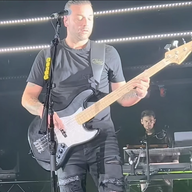

JazznFunk
Supporting Member
Stingray PUs sound the same but quieter and more natural when passive out.
I suspect many of us would gravitate towards passive fpr recording, and keep active for live gigs.
I owned a passive USA-made MusicMan SUB fretless bass with EB's own passive 2-band circuit. I also owned the same exact type of bass with the EB active 2-band circuit. Ironically, the passive version (they both used the exact same pickup - and it was the same as in the USA 2-band StingRays too) was a little LOUDER than its active counterpart. So that doesn't necessarily check out. Both sounded great.... the passive sounded just a hair 'darker' even with treble 'boost', which would check out.
I have never differentiated between 'passive for recording' and 'active for live'.... I differentiate based on the sound of the bass I want, and there's still a preamp of some sort involved in the signal chain even with a passive bass... usually a Sadowsky outboard pre in my instance. The sound is the sole determining factor. Active, buffered basses also don't suffer from any sort of signal loading from long cable runs. The signal is the same at all points along the way.

I don't consciously seek out active basses, but I wouldn't trade this for any passive bass.


First, I'm a rookie. Been playing about six months. So this was more so that I could see the opinions of others who have fought this battle many many times before me.
To answer your question: I don't really know. I think it's because the second bass I ever bought was the aforementioned TRBX305, and it did not have a passive option. When you turned the 5-way switch, the sounds were extremely different, and I always thought that the tonal options on it were wildly out of control.
With my passive Aria Pro II, I didn't have these issues. It was just a nice, smooth sound (with a little buzz from the P pickup). And I could control the sound from my Rumble 40, so I thought it was redundant.
You're playing different basses. Perhaps the Yamaha simply isn't all that regardless of electronics. Fancy pants basses wouldn't be active if the electronics sounded like junk. Some active basses are "meant" to be played lightly and playing with thunder fingers might make them sound like a tin can, where lower output passive pickups can be hit with a sledge hammer and still sound ok.

This does not compute.(Note - doesn't include basses that are solely for "non-playing" purposes.)
Ya, I wouldn't be judging all active basses based on your experience with a budget Yamaha.
I prefer modern active basses in general, but I have quite a few passive basses as well. Generally, I prefer an active bass with a passive option but it really depends on the bass.
In fact my #1 preference is active with a passive mode and passive tone control.
I'm certainly not kicking my Sadowsky, Fbass, G&L Custom shop M2500, MTD535 or several other basses to the curb though.
In fact my #1 preference is active with a passive mode and passive tone control.
I'm certainly not kicking my Sadowsky, Fbass, G&L Custom shop M2500, MTD535 or several other basses to the curb though.

I don't agree with any of the choices actually. I currently play my Stingray because the neck is the most stable of all my basses and it has the sound I'm into right now. I don't feel that active basses are more fun, or even that I prefer them. It just so happens that an active bass is the most capable instrument for me right now, but I still very much enjoy passive basses and if anything that's what I really prefer in a perfect world. My Stingray since it's a 2-band has more in common with a passive bass in terms of how it feels than it does with a typical modern active bass. It's the active for passive lovers. I'm pretty attached to it but I'm certainly not "active for life" or some such. After a couple decades of playing those mandates fade away and all that's really left is does it feel good and is it ready to work every time I take it out. Tone is a distant third. Switching options and versatility by means of feature set are of little to no importance to me. One good sound is all I want.
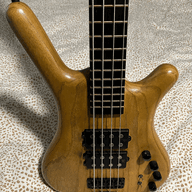
Regarding the battery issue, I think that's a problem that's overblown to the point of being irrational. Others will disagree strongly, and I'm OK with that. You do you.
Yup I agree, it really is irrational. If people are that worried about their battery failing, I hope they worry just as much when they turn their car off at night. Also unplugging your guitar after playing is a no-brainer IMHO.
I'm truly baffled by the number of bassists who are concerned about battery life. A battery will last 1,000 hours or more and it's easy, virtually trivial, to change the battery once a year, whether it needs it or not.
And when it starts getting low you will hear the difference, start turning up volume on pedals / amps / etc. higher then you normally would when the battery is fine. There are signs that should make you aware your battery needs changing well before it fails on you.
If you have a 9V active bass, the Keith McMillen Batt-O-Meter is great, if you can find one. Then just replace the battery when it hits ~80% and you're good.
The Batt-O-meter's are great and well worth while if you can get one.


I've played and owned both active and passive, never had any issue with active, but I do tend to lean more toward passive nowadays, in fact, my wish list for 2024 has 3 passives and 1 active/passive. I loved the active tone on my L2K and Corvette $$, and yet I get a greater kick out of the simple dry tone of my current Precision...
Very loosely tied to message #177, just to stay in the active/passive discussion:
I have now had some two weeks of experience with my first guitar with active pick-ups, a Harley Benton SC-Custom II Active White (according to Thomann no longer available).
My impression of its range of sound was, that that range was so limited. It has come to me that I should have considered the range "shifted". Not "dark .. bright", but "bright .. extra bright". Perhaps needing an equalizer for a Blues tone that would be easy on a Stratocaster type.
Question: would my impression describe the corresponding range shift when talking bass guitars?
(If "yes", then I would stop wanting a bass with active pick-ups.)
I have now had some two weeks of experience with my first guitar with active pick-ups, a Harley Benton SC-Custom II Active White (according to Thomann no longer available).
My impression of its range of sound was, that that range was so limited. It has come to me that I should have considered the range "shifted". Not "dark .. bright", but "bright .. extra bright". Perhaps needing an equalizer for a Blues tone that would be easy on a Stratocaster type.
Question: would my impression describe the corresponding range shift when talking bass guitars?
(If "yes", then I would stop wanting a bass with active pick-ups.)

I don’t agree. On most active basses with an active/passive switch the passive sound is the same as the active sound with all EQ in the middle. So in that case there is no use to switching to passive. Only if you run out of battery.
If your message is in reply to my message #178, then we have a little misunderstanding.I don’t agree. On most active basses with an active/passive switch the passive sound is the same as the active sound with all EQ in the middle. So in that case there is no use to switching to passive. Only if you run out of battery.
My case is about active pick-ups. They don't have the possibility of switching to passive. (Three of my solid-body basses feature an active equalizer. On two of these, the equalizer only works in active mode. On the third, the equalizer also works in passive mode. I have two acoustic bass guitars with piëzo bridge pick-ups. Their equalizers are always in active mode, as I understand it.)


