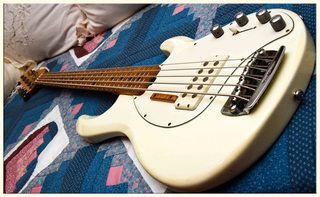
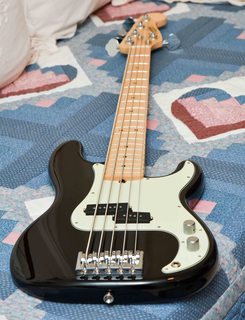
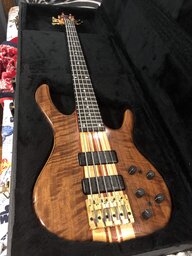
Basses all require circuitry somewhere to make music - wherever it is, it's part of the instrument. Most bases have pickups that are wound to be "hot" - which means they have more output and impedance than....you probably want. I designed microphones for a living, and in the world, everything is low impedance - you can hook up any decent professional mic to 500 feet of cable, and it'll sound just fine. Electric guitars and basses? Not so much.
All that said, there are ways to make basses lower impedance, so you get some of this benefit - you wire hum cancelling pickups in parallel, and the impedance drops by a factor of 4. OK, so what? Well, basses with active circuitry in them do two things for you:
1) They buffer the bass from the cable load, so it sounds the same, even if you put a different cable on it, and....
2) The let you have active eq on board the instrument - at your fingertips, as it were.
In exchange for this, you have a battery, and the circuitry is typically designed for long battery life, which gives performance compromises (often in the form of noise). Anyway, if you don't need #2 (If you're OK with your eq being elsewhere), you can deal with problem #1 and still keep the bass passive (no batteries or the issues that come with them) by lowering the impedance. Most of my basses are done this way - they can have enough extended high frequency content to sound "active", yet they don't need a battery. I use a Source Audio EQ 2 for my eq (it has far more flexibility than any on board eq), and I have a few other carefully chose pedals that get me where I need to go sound wise. It's an "active bass" conceptually and sonically (the circuitry is part of the sound), but it isn't all physically located on the part of the instrument that I wear.