• TalkBass has been independent since 1998. Add your voice.
    Create a free account to reply to discussions, view embedded media, and browse with fewer display ads.
    Join freeLog in
    Want zero display ads or expanded classifieds tools? Compare plans.

Ian Anderson as a bass player

Ian Anderson is pretty much capable of playing guitar, harmonica, tambourine, and flute. He has also played dulcimer, mandolin, bouzouki and mandola.

But it was while researching Jethro Tull discography that I noticed Ian played bass on their 1979 album, Stormwatch. This was mostly because John Glascock (who was the bassist for Jethro at the time) had been asked to leave for health issues, and allegedly had been undergoing drug and alcohol abuse at the time. Sadly, John Glascock died of open heart surgery in 1979 at the beginning of the tour to promote Stormwatch. He was only 29.

My guess is that Ian Anderson played the good Music Man Stingray Bass that John Glascock used to play on Songs From The Wood and Heavy Horses. John Glascock also played a Yamaha acoustic bass guitar during this time. John Glascock’s brother, Brian Glascock, was the drummer for the Motels.
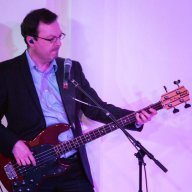
View attachment 4451177
I own Too Old To Rock & Roll: Too Young To Die and a promotional record called The Big Ball that features Nothing Is Easy from Stand Up.

But please respond if you find this interesting.

Interesting post.
 
  • Like
Reactions: IMMusicRulz
John Glascock (who was the bassist for Jethro at the time) had been asked to leave for health issues, and allegedly had been undergoing drug and alcohol abuse at the time. Sadly, John Glascock died of open heart surgery in 1979

I saw Tull on the tour for Bursting Out in New Haven, CT in 1978. Glascock was absent, I forget who the sub was but Ian mentioned Glascock's health issues as the reason. He had a congenital heart valve defect that killed him.

He played in an oddball flamenco-rock fusion band called Carmen who had toured with Tull.

 
The Big Ball! I thought I was the only person on earth who had that (1970)!

I had not only that one but all the Warner Brothers "Loss Leader" sampler LPs ($2 each starting in 1968, by the late 70s they went to $3, stopping around 1980) I let a bunch of the later ones go, but still have the first 11, up to "Appetizers".

Sold by mail order, at first through ads in magazines like Rolling Stone then later with coupons on the inner sleeves of Warner and Reprise albums. Most were two LP sets, a few were single LP, including "Zapped" which showcased releases on Frank Zappa's Bizarre and Straight labels, and one a 3LP set in a box. The idea was to let people hear tracks from recently released albums that might not be getting any airplay. Some of the tracks would be rarities like single B-sides. The earliest albums came with booklets with a lot of info (text and photos) about the artists. I discovered a lot of music that way. Probably my all time favorite is this one which was the only 3-LP box set and the first one I heard when my brother brought it home from college. The cover is an homage to the old Warners Brothers cartoons.

R-1948227-1574010514-3248.jpeg.jpg
 
Ian Anderson is very clever musically and also financailly. He fired all the band mebers early on and hired ever yone on contract for very little ridiculously little money. He also made the rouns of US Cities 29 years ago requesting songwriters to submit material


I've heard him described with different adjectives as pertains to his financial management. :D
 
Anderson possessed a large overcoat, his father having given it to him with the words "You'd better take this. It's going to be a cold winter".[33] This overcoat, and slightly later on the flute, became part of his early stage image. It was around this time that Anderson purchased a flute after becoming frustrated with his inability to play guitar as well as Abrahams or Cream guitarist Eric Clapton, and because their managers thought he should remain a rhythm guitarist, with Abrahams becoming the front man.[34]

I didn't want to be just another third-rate guitar player who sounded like a plethora of other third-rate guitar players. I wanted to do something that was a bit more idiosyncratic, hence the switch to another instrument. When Jethro Tull began, I think I'd been playing the flute for about two weeks. It was a quick learning curve ... literally every night I walked onstage was a flute lesson.[35]
 
Ian Anderson is pretty much capable of playing guitar, harmonica, tambourine, and flute. He has also played dulcimer, mandolin, bouzouki and mandola.

But it was while researching Jethro Tull discography that I noticed Ian played bass on their 1979 album, Stormwatch. This was mostly because John Glascock (who was the bassist for Jethro at the time) had been asked to leave for health issues, and allegedly had been undergoing drug and alcohol abuse at the time. Sadly, John Glascock died of open heart surgery in 1979 at the beginning of the tour to promote Stormwatch. He was only 29.

My guess is that Ian Anderson played the good Music Man Stingray Bass that John Glascock used to play on Songs From The Wood and Heavy Horses. John Glascock also played a Yamaha acoustic bass guitar during this time. John Glascock’s brother, Brian Glascock, was the drummer for the Motels.
View attachment 4451177
I own Too Old To Rock & Roll: Too Young To Die and a promotional record called The Big Ball that features Nothing Is Easy from Stand Up.

But please respond if you find this interesting.
Wiki says:
Their third folk influenced album, Stormwatch, was released in 1979. During the making of the album, Glascock suffered major health issues related to open heart surgery from the previous year, so Anderson played bass on much of the album. After the release of Stormwatch, due to Glascock's continued health issues, Fairport Convention bassist Dave Pegg was hired for the ensuing tour, during which Glascock died from heart complications at his home in England.[84
 
  • Like
Reactions: IMMusicRulz
I never knew this. Was this how it was before the first album?
No. The contract worker approach started much later. Glascock was on contract as was everyine after him.

WIKI SAYS Ian Anderson gave him (Glascock)several warnings before finally laying him off with pay during the production of Stormwatch (1979), completing most of the bass guitar parts himself. During the subsequent promotional tour with replacement bass player Dave Pegg, Anderson learned of Glascock's death and had to break the news to the rest of the band. Glascock's close friend, drummer Barriemore Barlow, was devastated and left the band at the end of the tour.[4]

The resulting dislocation, Ian Anderson's own artistic vision, and a decision from the label, prompted a complete overhaul of the lineup, leaving only Anderson and Martin Barre as full members, though Glascock's touring replacement on bass (Dave Pegg) was retained for the band's follow-up album in 1980 and would remain with the group till 1995.
 
  • Like
Reactions: Herrick
Ian used a Gibson Thunderbird on "Stormwatch" and other tracks he played bass on ("Stitch In Time" for example). He refers to it as "Firebird" on "Stormwatch" deluxe edition box and it was apparently a one pickup version (Thunderbird II). No picture 'though so one can guess if it was a reverse or a non-reverse model.
John Glascock is miming with a reverse Thunderbird II on the "Too Old To Rock 'n' Roll" film (can't remember the exact song but he sits on a comfy chair with it) so maybe that was Ian's bass. Curiously Glenn Cornick had and played reverse Thunderbird circa 1970 but it was stolen on tour with Tull.

John Glascock played a Stingray during his last tours with Tull and it can be heard on "Live Bursting Out".
 
Last edited:
I’ve seen ‘Tull twice: once for the Dot Com tour and more recently for the Jethro Tull concept album tour.
Actually Ian played the bass on the song Jack In The Green on ‘77 Songs From The Wood album as well as the rest of the instruments.
Also on the Stormwatch remaster that was just released John Glascock plays on a few unreleased tracks. He also for that record at least played a red Wal bass in the studio.


From what I’ve read he got a tooth abscess that attacked a congenital heart valve defect. They ended up putting a pig heart valve in, but with his lifestyle he ended up passing away. He is one of my favorite bass players, but at least he was replaced by another bassist I like a lot.
John also played with a flamenco rock band called Carmen prior; I really enjoy their three records as well. Here you can hear him playing bass and performing lead vocals:
 
John Glascock also had used an early JG series Wal bass from 1977 until he died. A special order, there are photos of it in the studio in the Heavy Horses sessions and on Stormwatch, before John was told he needed to get his drinking and health sorted out. It’s a good chance it may have featured on some of the Heavy Horses tracks and Orion and Flying Dutchman from Stormwatch (and the unused tracks he did play on which were later reissued as bonus songs on CD reissues).

The bass is now owned by the bassist in an Italian Tull tribute band.

A HISTORY OF WAL BASSES: JG Special Pt 6: A coincidental coda...

upload_2021-10-27_7-58-6.jpeg
 
Last edited:

Latest posts