• TalkBass has been independent since 1998. Add your voice.
    Create a free account to reply to discussions, view embedded media, and browse with fewer display ads.
    Join freeLog in
    Want zero display ads or expanded classifieds tools? Compare plans.

Ibanez Glideline cables

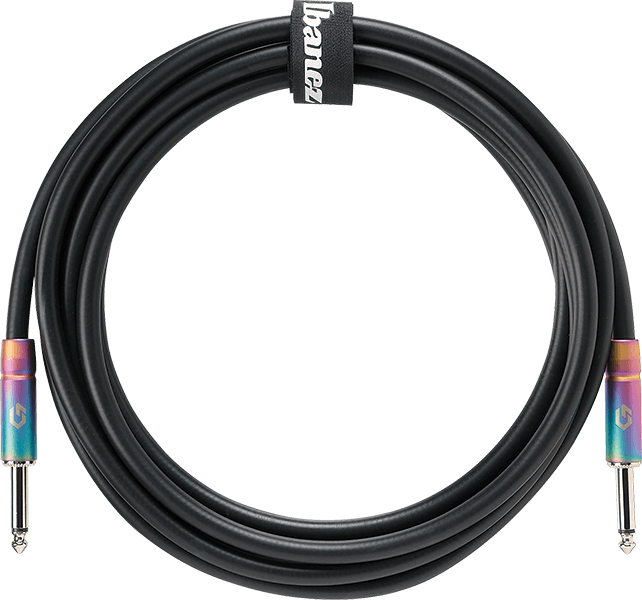
I had great experience with Ibanez's double shielded cables years ago, but I haven't seen one in a store in a long time. I looked on their site to see if they still made them, and while it turns out they don't, they do have a model called the Glideline.
1000001694.png


The marketing bulletpoints are rather... vague.


  • Description
  • •Collaboration with JTC Guitar
    •Core : AWG19 OFC
    •Special insulation layers
    •Shield 1 : Semi conductive shield
    •Shield 2 : 0.12 x 10 x 16 OFC braiding
    •Outer Jacket : PVC, Φ8mm (0.32")
    •Plug : One-piece tip rod, Ion-plated plug cap (* Individual differences can be seen in the color of the plug caps.)

The only article I can find is from Guitar World, and it's an announcement with Ibanez's ad copy regurgitated. I can't find any reviews. The only thing I can tell for sure about these is that they're expensive. Like, really expensive: $50 for 10', $80 for 20'.

Anyone tried them? Does the magic fairy dust they must be sprinkling on these to justify the price make your tone awesome?
 
Does the magic fairy dust they must be sprinkling on these to justify the price make your tone awesome?
As much as I love Ibanez, I'm gonna say....no

I guess the idea would be better protection against RF or w/e noise picked up by the cable? I'll say this though, that's a much better marketing point than trying to tell everyone it will demonstrably enhance your tone and knows what genre of music you're playing (Lookin' at you, Monster Cable :rollno: ). I doubt it would make much difference tonally (especially with active basses), and in a band mix I'll wager it's completely irrelevant.

The plugs look really cool though! :thumbsup:
 
I had great experience with Ibanez's double shielded cables years ago, but I haven't seen one in a store in a long time. I looked on their site to see if they still made them, and while it turns out they don't, they do have a model called the Glideline.

View attachment 7504044

The marketing bulletpoints are rather... vague.


  • Description
  • •Collaboration with JTC Guitar
    •Core : AWG19 OFC
    •Special insulation layers
    •Shield 1 : Semi conductive shield
    •Shield 2 : 0.12 x 10 x 16 OFC braiding
    •Outer Jacket : PVC, Φ8mm (0.32")
    •Plug : One-piece tip rod, Ion-plated plug cap (* Individual differences can be seen in the color of the plug caps.)

The only article I can find is from Guitar World, and it's an announcement with Ibanez's ad copy regurgitated. I can't find any reviews. The only thing I can tell for sure about these is that they're expensive. Like, really expensive: $50 for 10', $80 for 20'.

Anyone tried them? Does the magic fairy dust they must be sprinkling on these to justify the price make your tone awesome?
Do yourself a favor. Click on this FB link to GLS Audio. Very solid cables and priced affordably. I've had mine for years and they sound great with no issues.

 
  • Like
Reactions: Benji bassman
Does the magic fairy dust they must be sprinkling on these to justify the price make your tone awesome?
A cable can never "add tone" (Adding tone would technically mean distortion), nor can it "improve tone." (doesn't actually mean anything without context anyway.)

All a good cable can do is:
1 - Not lose overall signal
2 - Not reduce high end through high capacitance. (Similar to a tone knob rolloff)
3 - Withstand the physical rigors of being uses on stage or in a studio every day without breaking.

Your tone has to be awesome going into the cable (whatever awesome means to you.) And all a quality cable will do is NOT do anything to your tone.

Whether or not you want to pay the list price for any quality cable at whatever price is always gonna be a personal financial decision. But always beware of expensive cables claiming the actively improve anything.
 
A cable can never "add tone" (Adding tone would technically mean distortion), nor can it "improve tone." (doesn't actually mean anything without context anyway.)

All a good cable can do is:
1 - Not lose overall signal
2 - Not reduce high end through high capacitance. (Similar to a tone knob rolloff)
3 - Withstand the physical rigors of being uses on stage or in a studio every day without breaking.

Your tone has to be awesome going into the cable (whatever awesome means to you.) And all a quality cable will do is NOT do anything to your tone.

Whether or not you want to pay the list price for any quality cable at whatever price is always gonna be a personal financial decision. But always beware of expensive cables claiming the actively improve anything.
You seem to have overlooked the magic fairy dust part.
 
•Shield 1 : Semi conductive shield
•Shield 2 : 0.12 x 10 x 16 OFC braiding
2 shields means double shielding?

Price is roughly in-line with the Boss and D'Addario cables I have available to me locally (which is about as high as it gets in my locale)
Quality seems similar too. I would be prepared to spend on any of the three, with expectation they will last many years, decades even.

If I look at Sweetwater's selection, 50$ for 10' would be around the 30% mark on 'Price: Low - High'
I.e. there are more pricier options than cheaper options.
Edit: on review, looks like more like past the halfway mark, not sure what I was seeing. Similar brand comparison though, Roland/Warm Audio being reputable brands in the range.

Summary. Price seems in line with expectation on paper.
If the magic fairy dust is any good, that will tip the balance 🤔
 
Last edited:
And all a quality cable will do is NOT do anything to your tone.

To nitpick: I did notice a difference in tone running my Sadowsky through a wireless system versus a Mogami cable. Even though the Sadowsky is active/buffered, more high treble passed through when running wireless. So, a cable always has a slight effect on tone.

But when comparing cables to cables, which is no doubt the context of this thread -- totally agree with you. The boutique stuff is snake oil WRT tone.
 
  • Like
Reactions: Gaolee
I had great experience with Ibanez's double shielded cables years ago, but I haven't seen one in a store in a long time. I looked on their site to see if they still made them, and while it turns out they don't, they do have a model called the Glideline.

View attachment 7504044

The marketing bulletpoints are rather... vague.


  • Description
  • •Collaboration with JTC Guitar
    •Core : AWG19 OFC
    •Special insulation layers
    •Shield 1 : Semi conductive shield
    •Shield 2 : 0.12 x 10 x 16 OFC braiding
    •Outer Jacket : PVC, Φ8mm (0.32")
    •Plug : One-piece tip rod, Ion-plated plug cap (* Individual differences can be seen in the color of the plug caps.)

The only article I can find is from Guitar World, and it's an announcement with Ibanez's ad copy regurgitated. I can't find any reviews. The only thing I can tell for sure about these is that they're expensive. Like, really expensive: $50 for 10', $80 for 20'.

Anyone tried them? Does the magic fairy dust they must be sprinkling on these to justify the price make your tone awesome?
Think those are pricey?

Try Zaolla:

 
I go with WBC from GC with Amphenol plugs, or even Mogami cables for certain basses, due to the recessed jack cavity. I prefer the WBC becuase they are more flexible, don't weigh as much, and are less expensive (though still not cheap). Anything else I've found has been a hit or miss proposition.

I like Ibanez basses but I don't need their cables. Same comment on Fender, and Ernie Ball.
 
I go with WBC from GC with Amphenol plugs, or even Mogami cables for certain basses, due to the recessed jack cavity. I prefer the WBC becuase they are more flexible, don't weigh as much, and are less expensive (though still not cheap). Anything else I've found has been a hit or miss proposition.
To nitpick: I did notice a difference in tone running my Sadowsky through a wireless system versus a Mogami cable. Even though the Sadowsky is active/buffered, more high treble passed through when running wireless. So, a cable always has a slight effect on tone.

But when comparing cables to cables, which is no doubt the context of this thread -- totally agree with you. The boutique stuff is snake oil WRT tone.
I’ve found WBC to be worth the cost. It’s not triple digits or anything, and you can hear the difference.

Would not go beyond that. No need.
 
  • Like
Reactions: BassicJazzy
To nitpick: I did notice a difference in tone running my Sadowsky through a wireless system versus a Mogami cable. Even though the Sadowsky is active/buffered, more high treble passed through when running wireless. So, a cable always has a slight effect on tone.

But when comparing cables to cables, which is no doubt the context of this thread -- totally agree with you. The boutique stuff is snake oil WRT tone.
Yes. The cable has an effect on tone, but it can't ADD anything. All it can do is reduce things. Your situation is what i meant with my example #2: "Not reduce high end through high capacitance. (Similar to a tone knob rolloff)."

Length of cable, and capacitance of cable to some extent will alway have some sort of affect on high-end loss. Good cables do that the less. Bad cables do that more. It's not that cables don't affect tone. It's that they don't ever add or introduce anything to the signal. All a cable can do is reduce signal or high-end. The better the cable, the less it does that until it's virtually negligible.

So yes, in all likelihood, you're going to notice a difference between your cable and wireless tone, most likely exactly how you did: less high-end information through the cable. (There's also the slim possibility that the wireless system is introducing high-end information to the signal, but that would be a rabbit hole i'm not gonna dive into right now so we can just assume it's not doing that.) :laugh:
 
  • Like
Reactions: DanAdams
Yes. The cable has an effect on tone, but it can't ADD anything. All it can do is reduce things. Your situation is what i meant with my example #2: "Not reduce high end through high capacitance. (Similar to a tone knob rolloff)."

Length of cable, and capacitance of cable to some extent will alway have some sort of affect on high-end loss. Good cables do that the less. Bad cables do that more. It's not that cables don't affect tone. It's that they don't ever add or introduce anything to the signal. All a cable can do is reduce signal or high-end. The better the cable, the less it does that until it's virtually negligible.

So yes, in all likelihood, you're going to notice a difference between your cable and wireless tone, most likely exactly how you did: less high-end information through the cable. (There's also the slim possibility that the wireless system is introducing high-end information to the signal, but that would be a rabbit hole i'm not gonna dive into right now so we can just assume it's not doing that.) :laugh:
Is there any benefit to a balanced cable? I've read about them and have a basic understanding of how they operate, but does it actually help anything?