• TalkBass has been independent since 1998. Add your voice.
    Create a free account to reply to discussions, view embedded media, and browse with fewer display ads.
    Join freeLog in
    Want zero display ads or expanded classifieds tools? Compare plans.

Ibanez Glideline cables

Is there any benefit to a balanced cable? I've read about them and have a basic understanding of how they operate, but does it actually help anything?
Yes, but not for bass guitar because the bass's output isn't outputting a balanced signal. ;) :laugh:

We only have Hot (white aka the bass signal) and Ground (black) wires connecting to the output jack. The Hot connects to big long flange, and the Ground connects to the metal contact around the hole.
1780005484318.png


Hot (Positive) + Ground is unbalanced signal.
Positive + Negative + Ground is balanced signal.

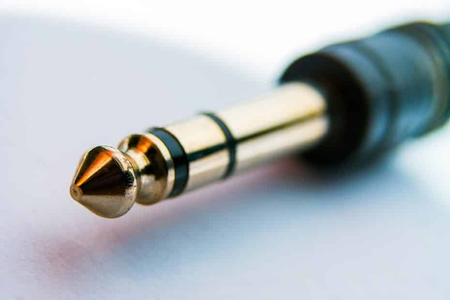
A standard unbalanced guitar cable (TS - Tip Sleeve) - The Tip is Hot and the Sleeve is Ground. It plugs into the bass's jack, the HOT Flange springs against the indent on the Tip. The Ground Sleeve of the jack is pressed against the contacts around the jack's hole.

A balanced cable (TRS - Tip Ring Sleeve) - The Tip is Positive and the Sleeve is Ground. But the Ring is Negative. Without any Negative coming from your bass, the signal isn't balanced. The Ring touches nothing on your jack. It's just a balanced cable sending unbalanced signal from an unbalanced bass jack to an unbalanced amp input. The path from Ring to Ring is unused. It'll work but there is no benefit for bass. It only benefits sources and destinations that use balanced signal.
1780005560417.png


Some other things to note:
- Many active basses use jacks that are essentially "TRS" style jacks, with two flanges. But they're not meant to be used with Balanced Cables. The essentially act as a power switch for the active circuit. When the TS cable is plugged in, both flanges touch the plug. It completes the circuit across both flanges, turns on the preamp, and the batter gets drained. When you unplug the TS, the circuit is broken and no power is drawn from the battery. Using a balanced TRS cable will probably result in no audio if one flange is touching the Ring and the other the Sleeve because you're not completing your active-pre's circuit.
1780006379610.png


- Similarly, if you use a balanced/TRS cable from your bass to an input that EXPECTS balanced input, you'll probably get a lot of noise, because the signal is unbalanced. Also, smart jacks that can tell the difference between a TS and TRS cable plugged into it (like a really good audio interface that can tell the difference what you plug into a Combo Jack) could also give you problems because it knows a balanced cable is plugged in, but the signal is unbalanced.

- Balanced cables are for balanced signal. Essentialy a 1/4" version of an XLR cable. When you use a balanced cable for a balanced signal from a balanced source into a balanced destination you get much less noise.
 

Attachments

  • 1780005387564.png
    1780005387564.png
    251.7 KB · Views: 8
Yes, but not for bass guitar because the bass's output isn't outputting a balanced signal. ;) :laugh:

We only have Hot (white aka the bass signal) and Ground (black) wires connecting to the output jack. The Hot connects to big long flange, and the Ground connects to the metal contact around the hole.
View attachment 7504477

Hot (Positive) + Ground is unbalanced signal.
Positive + Negative + Ground is balanced signal.

A standard unbalanced guitar cable (TS - Tip Sleeve) - The Tip is Hot and the Sleeve is Ground. It plugs into the bass's jack, the HOT Flange springs against the indent on the Tip. The Ground Sleeve of the jack is pressed against the contacts around the jack's hole.

A balanced cable (TRS - Tip Ring Sleeve) - The Tip is Positive and the Sleeve is Ground. But the Ring is Negative. Without any Negative coming from your bass, the signal isn't balanced. The Ring touches nothing on your jack. It's just a balanced cable sending unbalanced signal from an unbalanced bass jack to an unbalanced amp input. The path from Ring to Ring is unused. It'll work but there is no benefit for bass. It only benefits sources and destinations that use balanced signal.
View attachment 7504478

Some other things to note:
- Many active basses use jacks that are essentially "TRS" style jacks, with two flanges. But they're not meant to be used with Balanced Cables. The essentially act as a power switch for the active circuit. When the TS cable is plugged in, both flanges touch the plug. It completes the circuit across both flanges, turns on the preamp, and the batter gets drained. When you unplug the TS, the circuit is broken and no power is drawn from the battery. Using a balanced TRS cable will probably result in no audio if one flange is touching the Ring and the other the Sleeve because you're not completing your active-pre's circuit.
View attachment 7504483

- Similarly, if you use a balanced/TRS cable from your bass to an input that EXPECTS balanced input, you'll probably get a lot of noise, because the signal is unbalanced. Also, smart jacks that can tell the difference between a TS and TRS cable plugged into it (like a really good audio interface that can tell the difference what you plug into a Combo Jack) could also give you problems because it knows a balanced cable is plugged in, but the signal is unbalanced.

- Balanced cables are for balanced signal. Essentialy a 1/4" version of an XLR cable. When you use a balanced cable for a balanced signal from a balanced source into a balanced destination you get much less noise.
Thank you very much for explaining this. I knew there was a difference but did not realize the exact mechanism by which my preamp drains my battery, even if the bypass switch is on.
 
  • Like
Reactions: FullumMusic
Is there any benefit to a balanced cable? I've read about them and have a basic understanding of how they operate, but does it actually help anything?
You would need a bass with a balanced output and plug into something that can deal with a balanced signal (ie. Switch phases and sum them).
It would help if for some reason you had to run an unusually long cable from your instrument to your amp in a noisy environment. Other than that, a good quality TS cable is good enough.
 
Alembic experimented with balanced outputs on basses many decades ago. probably some other boutique builders too. I imagine that the amplifier builders' embrace of the 1/4" ts plug made that innovation unwelcome.
I have considered modding bass to allow a direct box's circuitry into the cavity of a bass guitar, so I can run XLR out,
It would make some sense for me as I like using microphone channel strip for my live preamp needs anyway, and I like to avoid redundant equipment that can only do one deed.

If anyone is making a sound comparison between a wireless rig, and a quality cable of typical length. It is much more likely that the wireless rig is compromising the sound. perhaps you prefer the sound from the wireless rig, but it's not going to be more pure with all that extra circuitry and conversion going on, unless perhaps there is a ground loop involved.
 
Last edited: