• TalkBass has been independent since 1998. Add your voice.
    Create a free account to reply to discussions, view embedded media, and browse with fewer display ads.
    Join freeLog in
    Want zero display ads or expanded classifieds tools? Compare plans.

Ibanez P Bass 1970's

What bass is this?

  • 1970 P bass

    Votes: 1 25.0%
  • Who cares?

    Votes: 3 75.0%

  • Total voters
    4

Dik

Aug 7, 2014
4
0
39
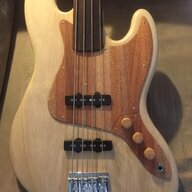
I dont know much about ibanez p basses other than that they were made in japan. Theres little information, maybe someone could point me in the right direction or offer some advice? How can determine what model p bass this is and what year this its from as theres no serial number on the back of the headstock? This one has 1 pickup as you can see without the covers on... So the obvious question follows. What you think its worth now that we know what it is? :)

Link RemovedLink RemovedLink RemovedLink Removed
 

Attachments

  • ibanez bass 4.jpg
    ibanez bass 4.jpg
    71.8 KB · Views: 498
  • ibanez bass 3.jpg
    ibanez bass 3.jpg
    98.6 KB · Views: 349
  • ibanez bass 2.jpg
    ibanez bass 2.jpg
    262.7 KB · Views: 433
  • ibanez bass 1.jpg
    ibanez bass 1.jpg
    371.7 KB · Views: 1,225
These were decently made basses that were, at the time, considered beneath most guys playing. They were what you bought if you could not afford a real fender.
But they were pretty good copies.

Their guitars, on the other hand, were pretty darned cool toward the end of the '70s. Lots of cool inlays & whatnot.

As far as value? My first reaction would be "not much" - but the TB cult of the old and crappy may had deemed this bass "Vintage" and so it's worth some scrilla. Who knows?
 
Last edited:
It's an early seventies 2366B - chrome truss rod cover, enclosed tuners and inlays finishing at the 17th fret point to 71/72, but it's impossible to date it exactly as serial numbers didn't kick in until mid '75. The body is quite likely a 'butcher's block' type construction.
 
It changed over the years, becoming much closer to the Fenders it was copying, but the early ones look just like yours. Just like the real thing you could pick them up with both maple and fretless fingerboards, but rosewood is the most common.
 
It looks like they used a minibucker similar to some of their later Gibson copies in that one.

How is the fretwork ? I had a 77 LP copy that I liked quite a bit as a young player, and it had very nice jumbo frets.

MUSKY : were these made in the same factory as the later ones ?
 
Some guys have soft spots for older Ibanez stuff, so don't assume the value is super low. Some of those old Teisco basses have trouble fetching $100, while this is a step or two above. It's not going to be as high as the more exact copies that came later at the turn of decade into 80 or so - some of those are better than the US originals they copied - but if you're looking to sell then eBay is where you'd probably cast your net the widest and be more likely to find someone who collects these.
 
I dont know much about ibanez p basses other than that they were made in japan. Theres little information, maybe someone could point me in the right direction or offer some advice? How can determine what model p bass this is and what year this its from as theres no serial number on the back of the headstock? This one has 1 pickup as you can see without the covers on... So the obvious question follows. What you think its worth now that we know what it is? :)

Link RemovedLink RemovedLink RemovedLink Removed
1611320_10201235910250241_2020862969_o_10201235910250241.jpg
 
I just picked up an all maple Ibanez neck with no serial numbers and the truss rod adjustment happens up the body end. I assume because there is no serial number it is pre 76 but was there a time where they switched truss rod access from one end to the other or is this irrelevant with regard to age/year?
 
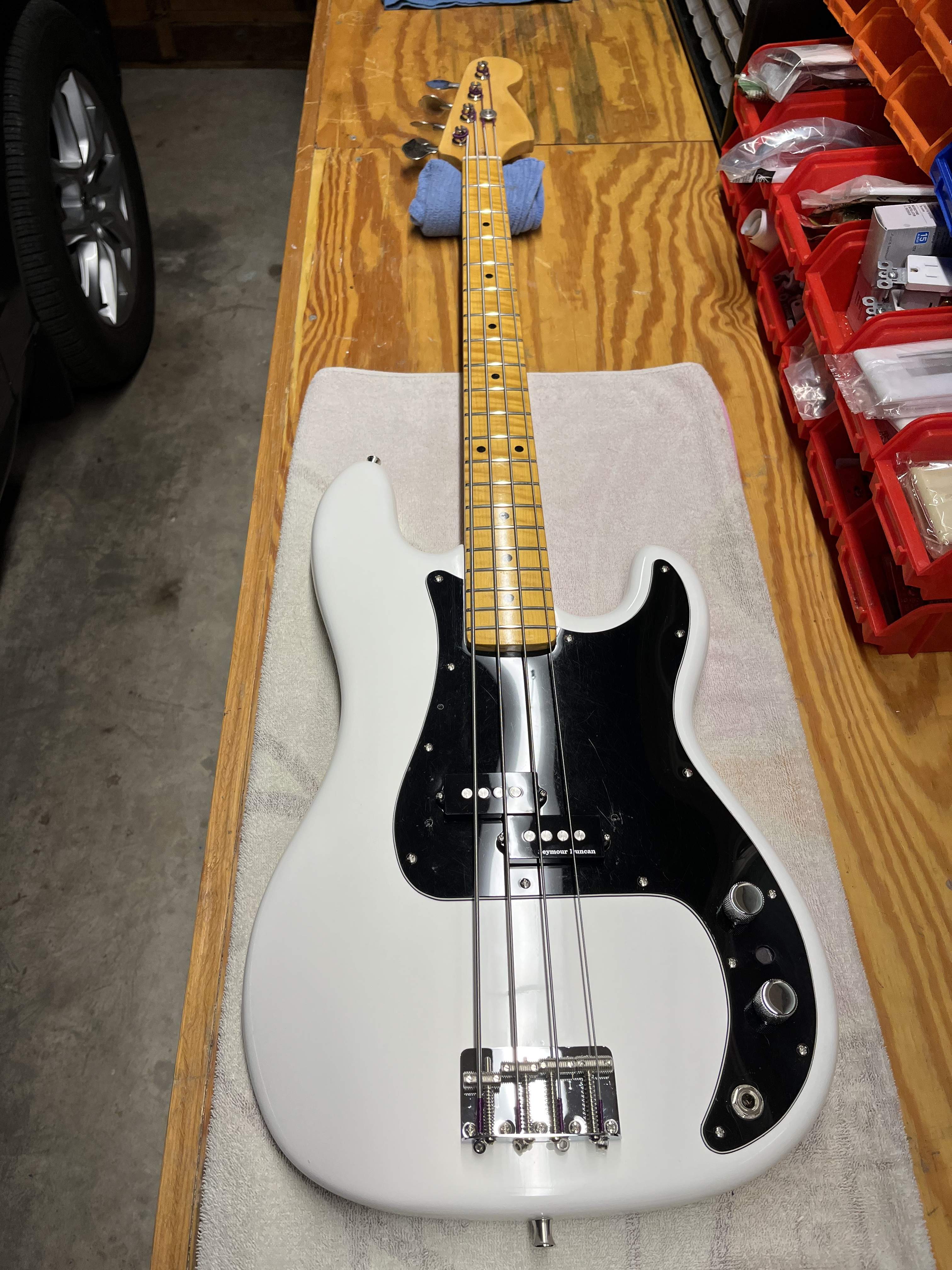
I recently re-acquired my very first bass purchased in the summer of 1977. A 1976 Ibanez #2366 p-bass. White w/black pick-guard and maple fretboard. By 1979 I was getting to where I was a decent bassist, then I discovered sythesizers. From '79 to '84 I was in a synth band and had little respect for anything that wasn't a Moog...especially something as fossilized as a p-bass. I treated the bass poorly...painted it black, removed the frets and headstock decal, installed a J pickup and a second volume pot between the volume and tone.

Then around 1985 gave it to my brother-in-law who wanted to learn the bass and it has been kept in a closet ever since. He needed to downsize and asked it I wanted it back. Of course I jumped at the chance.

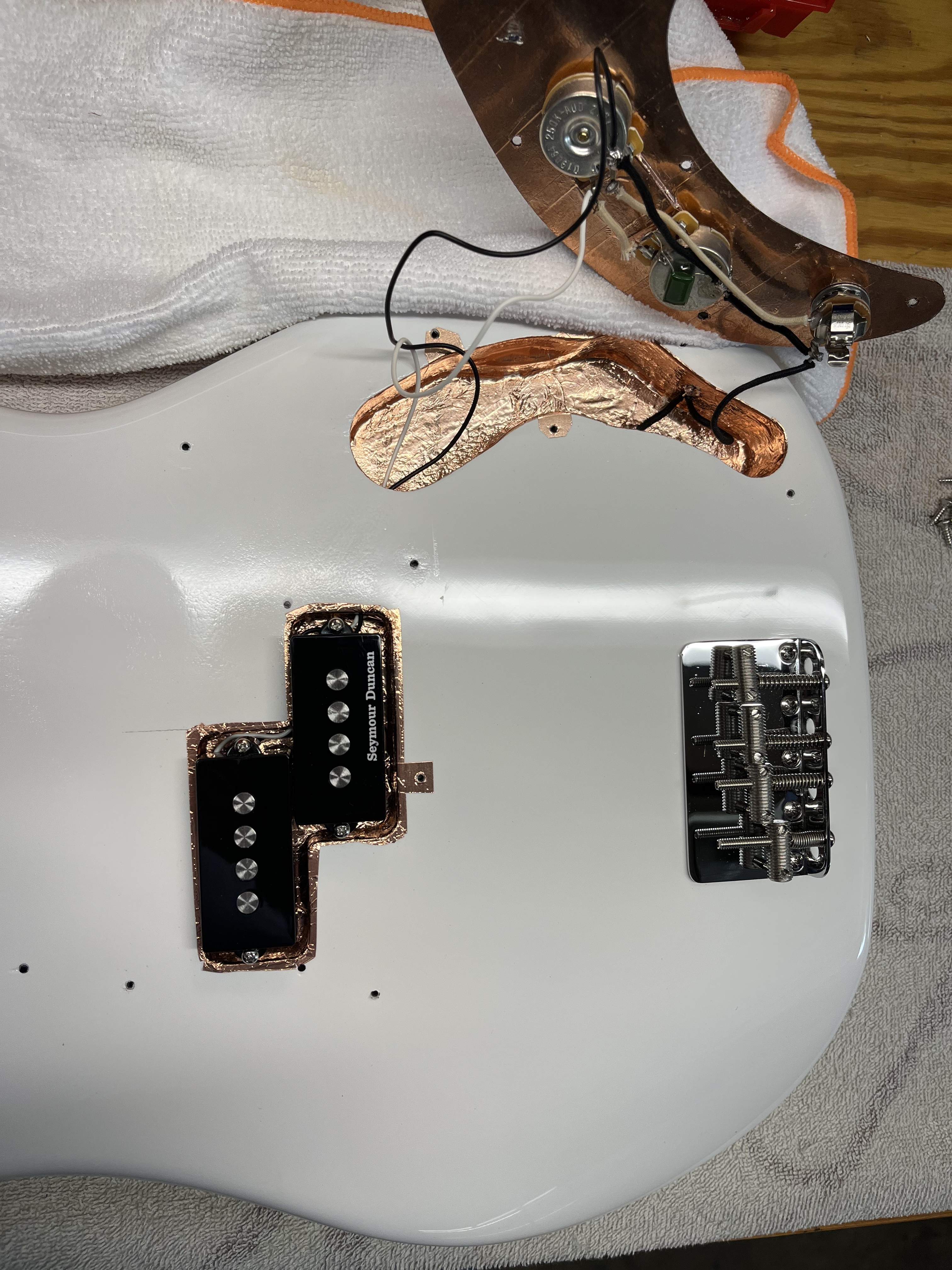
For the past 2 months I have been restoring it to "original condition" as much as possible. Gone forever are the original pickups, pots, wiring, bridge (it was a nasty rusted mess in '85), pickup and bridge covers and truss rod cover. Luckily my guitar tech was able to re-fret the neck and I was able to salvage the pick-guard. I don't think you can replace the neck as I discovered the scale of this bass is 33.5". The only way to replace the pick-guard is to have a copy made which is undoubtedly $$$.

As the original finish was totally unsalvageable, I stripped it to bare wood, filled the J pickup hole and gave it some new gloss white paint. Covered the extra J pickup volume pot hole in the pick-guard and installed new pickups, Fender vintage bridge, pots and knobs and a Pure Tone jack. Did a quick setup and was shocked at how well it plays and sounds. Just need to get my guy to do a professional setup. Definitely going to go on gigs with this to supplement my 2000 EBMM Sterling.

First pic is onstage circa 1980, the following are from the restoration.

 
Last edited:
I recently re-acquired my very first bass purchased in the summer of 1977, a 1976 Ibanez #2366 p-bass. White w/black pick-guard and maple fretboard. I treated it badly, removing the frets and headstock decal and installing a J pickup. Then around 1985 gave it to my brother-in-law who wanted to learn the bass and it has been kept in a closet ever since. He needed to downsize and asked it I wanted it back. Of course I jumped at the chance.

For the past 2 months I have been restoring it to "original condition" as much as possible. ....

Dang, nice work and a nice write-up! That's a beaut.
 
  • Like
Reactions: BeyondFiredUp

Latest posts