• TalkBass has been independent since 1998. Add your voice.
    Create a free account to reply to discussions, view embedded media, and browse with fewer display ads.
    Join freeLog in
    Want zero display ads or expanded classifieds tools? Compare plans.

Improving your sight reading.

So does Ed Friedland...

"Regardless, you should practice out of time until you get more familiar with the changes and where they lay out on the neck. Trying to play in time before you know where to go will just be frustrating. There is no time line, you move on when you're ready."

http://www.talkbass.com/forum/f22/building-walking-basslines-lesson-1-a-673787/index18.html

There ya go.

Carol Kaye says aim for the down beats.

Yeah, she recommends marking them off on the sheet.
 
You can check the book I wrote, it's called "sight-reading for the contemporary musician" and its more than anything a guide to show you what you need to do to become a kick ass sight reader !

It's available on www.amazon.com

The link didn't work for me, but I found the book. It didn't show any of the exercises though. Is it bass clef?
 
As an Amazon Associate, TalkBass may receive commissions from qualifying purchases made via links on this site.
I too, would discourage the use of a metronome to start with. A metronome is okay to use as a performance tool, but you're not performing when you're practicing so you need to take it slow and muddle through things at first. If you want a rhythmic reference (a metronome) once you're more comfortable with the piece that you're reading, then go ahead. The goal is to learn, and you don't learn by starting off perfectly.
 
bassinplace said:
The link didn't work for me, but I found the book. It didn't show any of the exercises though. Is it bass clef?

The book does not contain exercises, it's for all instruments. What it is is a compilation of devices , tools, examples and things you can do to improve your sight reading quick. Questions like metronome or not metronome, aim for the downbeats, notes first? Are all answered!
 
Looking for some recommendations on how to improve my reading skills. My main problem is rhythm and playing charts with tons of sharps or flats. Can anyone recommend a good book, video, lesson, or charts with a lot of rhythm studies or someone that explains how to approach the charts with several sharps and flats?

I'm in the beginning stages of reading. Still mainly playjng everything in the first position the first couple times thru. But a lot of the material my band has been covering lately has gotten harder. A lot of funk so the rhythm stuff is getting harder to read. And a lot of charts transposed to fit our singers voice so the keys are raised or lowered accordingly. Making the connection with what position to play the charts in with all those flats and sharps is baffling me.

I'm one of those slow leathers that has to rep stuff over and over again. So anything that has a ton of practice material and examples works well for me. Thanks

I think this [Invalid or Expired Link Removed] will help you the most.

I do believe from my own experience that sight-reading has to be practice in time when you know your basic rhythms and notation. The best place to learn is in a big band setting. There is no way that 15 musicians will stop playing because you can't follow them :D

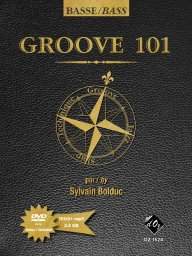
So this book is designed to help you play all kind of styles in every possible keys, tempos and the most useful rhythmic subdivisions with a focus on precision, feel, sound, time and keeping time.

Have a look at it, it is the best tool for any bassist out there, guaranteed!
 
I learned to sight read a long time ago, first in boys' choir, and later in high school band. I never kept it up after high school, so the skill was lost.

Now, I've been thinking of re-learing it the same way I did before on the euphonium, with a book of etudes. Bassoon or contra-bassoon are non-transposing, so the music written for them is not transposed, and the range matches bass guitar. So I thought I'd get a book of etudes for bassoon.
 
Try separating the notes from the rhythm. Clap the rhythms slowly until you have them down, then add a metronome until you get up to speed.

Learn the notes and fingering without worrying about time.

The put them together.