• TalkBass has been independent since 1998. Add your voice.
    Create a free account to reply to discussions, view embedded media, and browse with fewer display ads.
    Join freeLog in
    Want zero display ads or expanded classifieds tools? Compare plans.

In need of boost

Jan 6, 2022
1,152
1,406
25
Germany
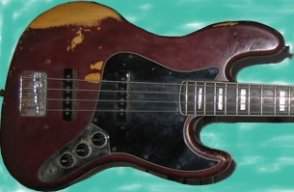
So I've recently been using my Sire jazz a bit more, and for the first time with my current pedalboard. The very first effect in the chain is my Q-Tron, which of course is very gain sensitive. I noticed that my Sire is considerably weaker on the output, compared to pretty much any other bass that I've used on this board. Meaning that I can't just switch basses and use the board, unless I boost the gain at some point. Now I've been wondering what would be the best way to do this.

I have a Boss GEB-7, which I will be mostly retiring once I build my new board, and I thought that maybe I could use this as a gain boost in the front of the board. I also considered buying something cheap like the EHX LPB-1, or something a bit more fancy, like the Boss BP-1. I read that a bunch of these booster pedals also add quite a bit of tonal character to the signal, since some of them are modeled to sound like old preamps.

Another question that came up during my research, is what the difference is between gain and level. It's a weird question, but I haven't been able to find a good answer so far. I'm mainly wondering about this because of the Boss BP-1, which has both a gain and a level knob. Is it just that the gain drives the input, so as to exaggerate the character of that particular circuit, and the level is just a volume essentially?
And is my assumption correct that the EHX LPB-1 is just level boost that adds essentially no tonal change?

If I'm missing an obvious solution here that doesn't involve pedals, please enlighten me! I know famous musicians have different ways to go about this. Les Claypool famously uses API channelstrips, which I believe he also uses to match the gain of each different instrument he uses, so that his pedals always react the same.
 
  • Like
Reactions: HolmeBass and Engle
So I've recently been using my Sire jazz a bit more, and for the first time with my current pedalboard. The very first effect in the chain is my Q-Tron, which of course is very gain sensitive. I noticed that my Sire is considerably weaker on the output, compared to pretty much any other bass that I've used on this board. Meaning that I can't just switch basses and use the board, unless I boost the gain at some point. Now I've been wondering what would be the best way to do this.

I have a Boss GEB-7, which I will be mostly retiring once I build my new board, and I thought that maybe I could use this as a gain boost in the front of the board. I also considered buying something cheap like the EHX LPB-1, or something a bit more fancy, like the Boss BP-1. I read that a bunch of these booster pedals also add quite a bit of tonal character to the signal, since some of them are modeled to sound like old preamps.

Another question that came up during my research, is what the difference is between gain and level. It's a weird question, but I haven't been able to find a good answer so far. I'm mainly wondering about this because of the Boss BP-1, which has both a gain and a level knob. Is it just that the gain drives the input, so as to exaggerate the character of that particular circuit, and the level is just a volume essentially?
And is my assumption correct that the EHX LPB-1 is just level boost that adds essentially no tonal change?

If I'm missing an obvious solution here that doesn't involve pedals, please enlighten me! I know famous musicians have different ways to go about this. Les Claypool famously uses API channelstrips, which I believe he also uses to match the gain of each different instrument he uses, so that his pedals always react the same.
I'm considering installing adjustable gain buffers in some of my lower output basses, partly to get their output closer to my basses with higher outputs. (I also like the idea of being able to mix the pickups without interaction)
 
Last edited:
  • Like
Reactions: Fynn
I'm considering installing adjustable gain buffers in some of my lower output basses, partly to get their output closer to my basses with higher outputs. (I also like the idea of being able to mix the pickups without interaction)
That's pretty cool. I never actually opened that Sire up, but I can't imagine it being too hard. Here in germany these things cost around 66€, which is a pretty hefty price.
That EHX LPB-1 only costs 40€, but of course requires manual operation.
 
  • Like
Reactions: Engle
Gain actually is level, but on a pedal like that you are correct- gain is being added, or modeled as being added, before another stage that saturates/distorts with the higher input.

I like the MXR MicroAmp for this application. The TC Electronic Spark seems to be popular too, but I think it might add more coloration than the MicroAmp does.
 
  • Like
Reactions: Fynn
I solved this problem with a Unit67 at the front of the chain, on every board.

You can use the eq and compression or turn them off and just use the big level knob.

I can switch basses and my gain staging is the same and so is my filter responses.
 
  • Like
Reactions: Engle and Fynn
Another question that came up during my research, is what the difference is between gain and level.

Normally you adjust for unity gain from in to out. In other words, the input level is the same as the output level with the effect active. In your case, you will adjust for a suitable amount of boost so the level of the Sire matches your other bass.

The Gain control is on the input. It allows you to match the level of your bass to the pedal's circuits. If Gain is too high, you may get undesired distortion. EQ circuits change level and generate a lot of noise. So the signal going into the EQ section needs to be a lot hotter than the noise level. If the Gain is too low, self-noise generated by the pedal can be a problem. The Gain control should be adjusted so the signal is well above the pedal's noise floor, but not so hot that clipping occurs.

The Level control adjusting whatever level exists after the EQ circuit. Adjusting the Gain control or EQ will impact the level, so you use the Level control to adjust for the desired output level after setting Gain and EQ. If bumping up an EQ slider results in distortion, you may need to lower the Gain control.
 
  • Like
Reactions: XLunacy and Fynn
Check out the Xotic Bass RC, the new V2. I use mine as an always-on pre with all my passive basses and with my Jazz that, like yours, is a bit weaker output, it really helps. Plus it has a second Gain stage. I typically don't switch basses at gigs but if I did this would work great. It's very transparent tonally, even with the Gain dimed it only adds a little bit of noticeable grunt. Great for weaker output basses or basses that are a little too tame/polite but you don't want anything resembling OD. It's very similar to hitting a nice mic pre hard.
 
  • Like
Reactions: arepa_funk and Fynn
The Spark Mini is all you need if a clean and inexpensive boost is what you’re looking for. One of the best utility pedals you can buy. I own a few of them because there are so many places where they come in handy. Highly recommended. :thumbsup:
 
  • Like
Reactions: XLunacy
Gain actually is level

Gain is more like the amplification factor (how much the pedal boosts or cuts the signal). Level is the resulting value of the signal.

Say the first bass is putting out -20dBu and the pedal is adjusted for +6dB of gain. The output from the pedal will be at (-20 + 6 = -14dBu).

Now if you change to a bass that only puts out -23dBu, the +6dB of gain only bumps the signal up to (-23 + 6 = -17dBu). The gain hasn't changed, but the level has.

To get the second bass's level to match the first bass, you need 3dB more gain. (-23 + 9 = -14dBu)
 
Hagerman 12au7 warm boost

1734891935999.jpeg
 
The ZIO from Source Audio. Not the ZIO Bass DI although that can work too, but the ZIO. I would use the JFET or STUDIO mode for what you are looking for. The other modes are low-cut and Echoplex which may cut the bass a bit but is more for guitar applications, although I have used the low cut at times
 
I noticed that my Sire is considerably weaker on the output, compared to pretty much any other bass that I've used on this board.
What Sire model do you use? If it is an active one, you should be able to set its output via an internal trimpot. AFAIK, usually the output is set to fit that of passive mode when the preamp is set flat... It definitely is with my Sire V7s...
 
What Sire model do you use? If it is an active one, you should be able to set its output via an internal trimpot. AFAIK, usually the output is set to fit that of passive mode when the preamp is set flat... It definitely is with my Sire V7s...
It is one of those with the 18V preamp. Sire V7 gen2 I think. Couple years old, but I think it's the second gen of those. I didn't know anything about that. That would be very cool. I will check when I find the time