While pickup placement does voice the bass, that's only part of it. And to me explains why some prefer one pickup placement over another. It also has to do with your point of attack and it's position relative to the pickup(s) This is especially true if you use the pickup as a thumb rest

Enjoy the benefits of a premium membership!
Upgrade Account
-
TalkBass has been independent since 1998. Add your voice.
Create a free account to reply to discussions, view embedded media, and browse with fewer display ads.
Join free Log in
Want zero display ads or expanded classifieds tools? Compare plans.
You are using an out of date browser. It may not display this or other websites correctly.
You should upgrade or use an alternative browser.
You should upgrade or use an alternative browser.
Interesting...Thoughts?
- Thread starter Snakeman1066
- Start date
More options
Who Replied?

So Anyway, wouldn't a PU Blend knob do pretty much the same thing?
Nope. The position or placement of the pickups determines which harmonic overtones on the vibrating string get more emphasis. Pickup placement decisions are more a matter of art than science. There’s general rules of thumb to guide you. But exactly where along the length of the string they’re positioned has a huge effect on the final signature sound of the bass. A pickup blend doesn’t change what each pickup “hears.” It just changes the volume balance between the two pickups.
Brief technical discussion on pickup placement here.
Last edited:
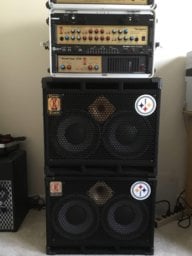
The old Gibson Grabber had a single pickup you could slide back and forth. I don't think it really revolutionized anything.
Invalid Link Removed
I remember these. I also remember I found I couldn’t get a decent tone out of it...let’s face it, other than a T-Bird, back in the 70’s Gibby Basses were really out of vogue.

outweighs
my sciens teecher sed you cant way mass.mass
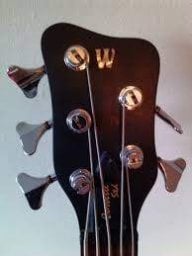
I worked at a music shop in the early 2000s and I'm pretty sure these guys pitched their product to the store cause they were looking for dealers. I remember them describing the system as totally modular with the ability to swap pickups, change placement, swap bridges, swap body sides, swap necks, literally assemble anything you want in a few minutes. It's a cool concept but at the time I think the prices were high and the shop owner never pursued it.
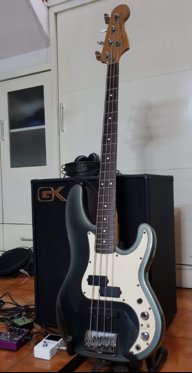
I would not buy one... cause I would tinker with pickup position all the time instead of playing the bass 
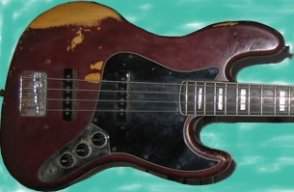
I don’t think mass, per se, adds to sustain or tone. Stiffness is the most important thing to maximize sustain. How much the body of a solid body guitar contributes to tone is a matter of open and somewhat acrimonious debate on TB.Invalid Link Removed
Do you think the advantage of moving the pickups around outweighs the practicality of having mass to create sustain and tone.
I would love to try it...would also be very cool if you could swap out pick up styles...
I would not at all assume that there is the trade off your question implies.
I remember these. I also remember I found I couldn’t get a decent tone out of it...let’s face it, other than a T-Bird, back in the 70’s Gibby Basses were really out of vogue.
Have to disagree a bit. I think Gibson basses were at the zenith of their popularity from around 1973 to 1987. The Ripper, Grabber, and G3 did pretty well for awhile. As did the LP Triumph bass. And later on, the Victory abd RD series. Not exactly what you’d call being in vogue maybe. But you’d see plenty of them around. Bass players were more interested in new basses that wandered outside the PB/JB box during that era. At least from what I was seeing.
But it might also be where you were at the time. In the NE-Boston-NYC area where I was playing back then there were a lot of Gibson guitars and basses in sight. Guilds (B-302s and Starfires) and Rics were also popular as was the then brand new Music Man Stingray.

The Grabber had a fairly aggressive sound for a Gibson. It was an unapologetic hard rocker’s bass. Not exactly my cuppa. But it had some very good tones in it if you could get used to the touch required to get the best out of a Gibson. They’re funny basses in that they don’t respond that well to a heavy hand or an overly aggressive playing style. Slam a PB or JB and it growls. Slam on a Gibson and it barks. It’s just the nature of the pickups that Gibson uses.
Last edited:

Nope, still plays a JB/PB all the time.As per the post from @soundsupport1 Guy Pratt asked the question and Warwick answered.
Have to disagree a bit. I think Gibson basses were at the zenith of their popularity from around 1973 to 1987. The Ripper, Grabber, and G3 did pretty well for awhile. As did the LP Triumph bass. And later on, the Victory abd RD series. Not exactly what you’d call being in vogue maybe. But you’d see plenty of them around. Bass players were more interested in new basses that wandered outside the PB/JB box during that era. At least from what I was seeing.
But it might also be where you were at the time. In the NE-Boston-NYC area where I was playing back then there were a lot of Gibson guitars and basses in sight. Guilds (B-302s and Starfires) and Rics were also popular as was the then brand new Music Man Stingray.
The Grabber had a fairly aggressive sound for a Gibson. It was an unapologetic hard rocker’s bass. Not exactly my cuppa. But it had some very good tones in it if you could get used to the touch required to get the best out of a Gibson. They’re funny basses in that they don’t respond that well to a heavy hand or an overly aggressive playing style. Slam a PB or JB and it growls. Slam on a Gibson and it barks. It’s just the nature of the pickups that Gibson uses.
Well it may be the Zenith of their brand, and maybe you fund a way of using one, but there is no doubting that they not even close to being as popular as other basses in that era.

Let’s take a beautiful wood body and plough a black plastic and metal furrow through the middle of it.Invalid Link Removed
Do you think the advantage of moving the pickups around outweighs the practicality of having mass to create sustain and tone.
I would love to try it...would also be very cool if you could swap out pick up styles...

I think I remember a Bob Daisley bass being prototyped with moving pickups also but I don't think anything ever was finalized and the project got scrapped. I was sort of interested at the time but it kind of just disappeared after a while.
Last edited:
Well it may be the Zenith of their brand, and maybe you fund a way of using one, but there is no doubting that they not even close to being as popular as other basses in that era.
Agree with that. Gibson lost its place on the pedestal in the 60s and never regained it. Changes in musical taste, counter-culture values (i.e. favor anti-establishment institutions), and Jimi Hendrix’s Strat, took the torch away from Gibson and passed it on to Fender to carry forward. Gibson was “trad” while Fender was “rad.” And a lot of
Last edited:



- Jun 6, 2012
- 4,837
- 6,859
- Disclosures
- I don't wait 30 minutes after eating, to go swimming.
Agree with that. Gibson lost its place on the pedestal in the 60s and never regained it. Changes in musical taste, counter-culture values (i.e. favor anti-establishment institutions), and Jimi Hendrix’s Strat, took the torch away from Gibson and passed it on to Fender to carry forward. Gibson was “trad” while Fender was “rad.” And a lot of
Good post. You summed it up nicely.


