I’ve been asking more advanced players and combo leaders for years about how to work intros and outros and I’ve never gotten a meaningful response. One year, in the summer workshop, I asked and the leader said “Oh, it’s just the same…” and then he was interrupted, distracted onto a new topic and we never returned to the question. After doing my research, I see what he meant. Hopefully, this document will explain how all of the members of a intermediate jazz combo can use intros and outros with the tunes they perform. I know I can rely on you folks to correct me if I misstate anything. Don will correct me even if I'm right!  Along the lines of the old joke: If I husband is home alone and makes a decision, is he still wrong?
There are five types of intros:
1. The last N bars of the tune
2. A turnaround
3. A vamp
4. A chord progression pattern
5. A composed fragment
From one view, they can all be boiled down to a turnaround because the last N bars of the tune ends in a turnaround, a vamp is just an endless turnaround until the melodist starts the tune, the chord progression pattern is some sort of disguised turnaround, and a composed fragment is again going to end in cadence to the first chord of the tune, so, a turnaround.
This makes our respective jobs straight forward. Drums mark time, bass can join in if we recognize the intro, but if not, we can safely pedal the fifth of the first chord of the tune and that will always work. Most of the work falls on the harmony player, the guitar, piano, or vibes, etc, because they have to actually pick the chord progression and realize it with pleasant voice leading. The melody players can either improvise a melody or not, so they can’t really screw up because they can always choose to lay out until they get the signal to start the melody of the tune.
More detail about each of these five. The last N bars depend on the tempo and type of the tune. For ballads, just the last two bars could be enough. For a brisk twelve-bar blues, you could play two entire choruses up front before starting the head. Moderate tempo standards could use four, eight, or sixteen bars depending on personal choice. In that case, it’s wise to call it, and say “last sixteen” and ensure all of the players hear and understand.
The turnaround intro is just that, any turnaround you like. Two beats each of one-six-two-five or three-six-two-five or something similar. An informal analysis concluded that around seventy percent of all tunes start on the tonic. About twenty percent start on the two-chord, and the last ten percent start on some other chord. A smart rule of thumb is to just check the first chord and target your turnaround to it. You can expand the time and play a measure of each chord instead of two beats, and then you can start substituting any of the chords with tritone subs, etc. So, three--flat-three--two--flat-two, for example.
Vamps are just never-ending turnarounds, or at least they don’t end until the melodist starts the head.
For the most part, a chord progression pattern is just a specialized turnaround. For example, in the key of D Minor, playing a bar each of Dm then Em, one-two. The two chord is replacing the four chord and a one-four chord progression is a plagal cadence, sometimes called the “Amen” cadence. A similar patten would be one-flat-two. In the key of D Minor, Dm then Ebm. The Ebm is a tritone sub for A7, so a “disguised” I V. One last example, in the key of C Major, might be C^ B- Bb^ A- Ab^ G7; a descending chromatic pattern.
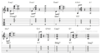
Composed patterns have to have been composed beforehand but likely follow a similar turnaround function. I've posted examples below.
Outros are very similar to intros with the notable exception that in the case of outros, the melody instrument or vocalist can take the lead and decide the choice of the ending instead of the harmonist. In the case in which the melodist specifies the ending and didn’t do so before beginning the tune, some sort of signal or spoken name is wise but not strictly necessary because in the worst case, the harmony players lay out, the drums keep marking time and the bass peddles the fifth of the tonic until the final chord.
To produce this analysis, I scanned the web for a few hours and then bought two books. Intros, Endings & Turnarounds for Keyboard by John Valerio and All Intros & Endings for Jazz Guitar: bebop, swing, latin, ballads by Jim Ferguson. Both books are similar and have similar content. The guitar book lays out the fingering for guitarists and any guitarist who wants it is welcome to my copy for free because I have no further need of it. The keyboard book is more theoretical and more complete and the better book for non-guitarists and I expect to work through it myself and if you’re a pianist and want to dig deeper, than I recommend the book.
Below is a long but far from exhaustive list of examples:
The last 2, 4, 8, or 16 bars of the tune
The turnaround at the end of the form.
The “whole step” intro: C- | D- | C- | D- etc Good for latin ballads.
3 6 2 5 | 1 E- A7 D- G7 C^ The Turnaround Intro
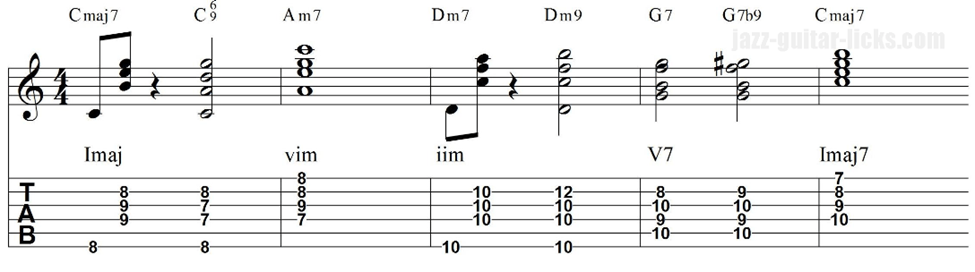
With walking bass for a guitarist:
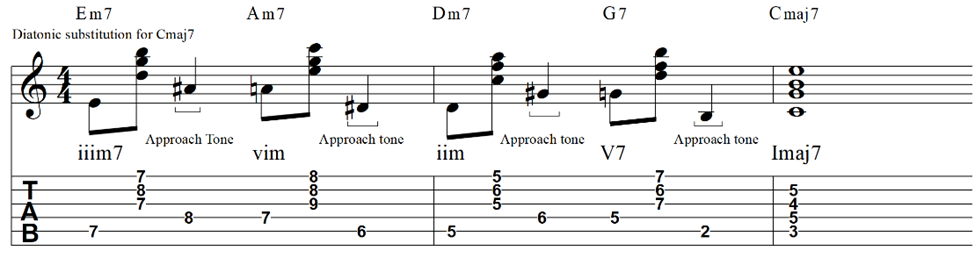
or

Another one in F Major:

Back to the key of C, but in C Minor, not Major:

1 b2#11 1 b2#11 C^ Db^#11 from
Jazz Guitar Intros and Endings with Tabs and Audio Files
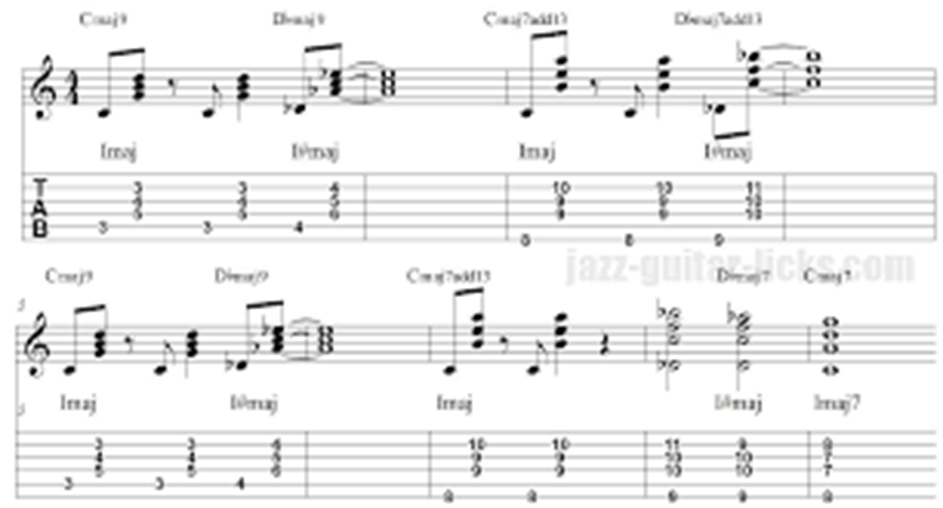
Or

Or

Or

Five of One:
4^ 4- 3- 5 2- 5 1^ 5 | F | F- | E- | A7b13 A7 | D- | G13 G7b13 | C^ G13 |

5^ 4^/5 5 #5^/5 1^ G^ F^/G G7 G#^/G C^ the 5 pedal
Another pedal:

A different 5 pedal: Note that I didn’t script this and the author didn’t write the lead-in correctly. I have no idea why. This one and the next two are on Jonny May’s website.

A stock ballad intro:

A stock latin tune intro. Garota de Ipanema, etc

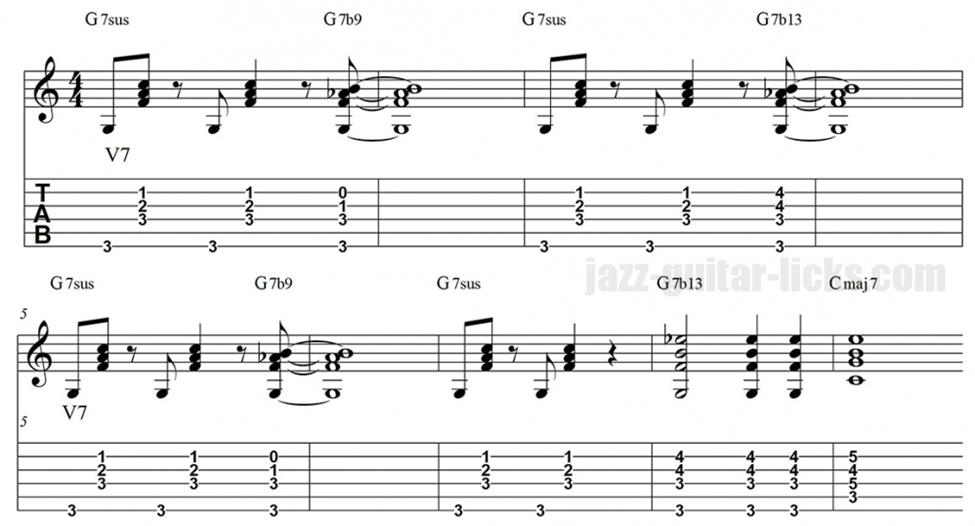
5sus4 5b9 5sus4 5b13 5sus4 5b9 5sus4 5b13 1 the 5 sus
G7sus G7b9 G7sus G7b13 G7sus G7b9 G7sus G7b13 C^
1^ 1#o7 | 2- 5 | 1^ 3o7 | 2- b57 b57b5 | 1^ Dim passing chords

C^ Dbo7 | D- G7b13 | C^ Eo7 | D- Db7 Db7b5 | C^
Ellington or A-train ending? Some refer to it as the Basie ending, but I think that's a mistake. | 1 3 4 #4 | 5 6 7 1, 1 |

Basie ending:

Chromatic ending:
4-7b5 4-6 3- b3o 2- b2^ 1^ F#m7b5 F-6 E- Ebo D- Db^ C^
3 b3 2 b2 chromatic vamp: These are from 6 Essential Jazz Guitar Intros

Stray Cat Strut:

“Tune starts on iii” vamp

“tunes that start IV^
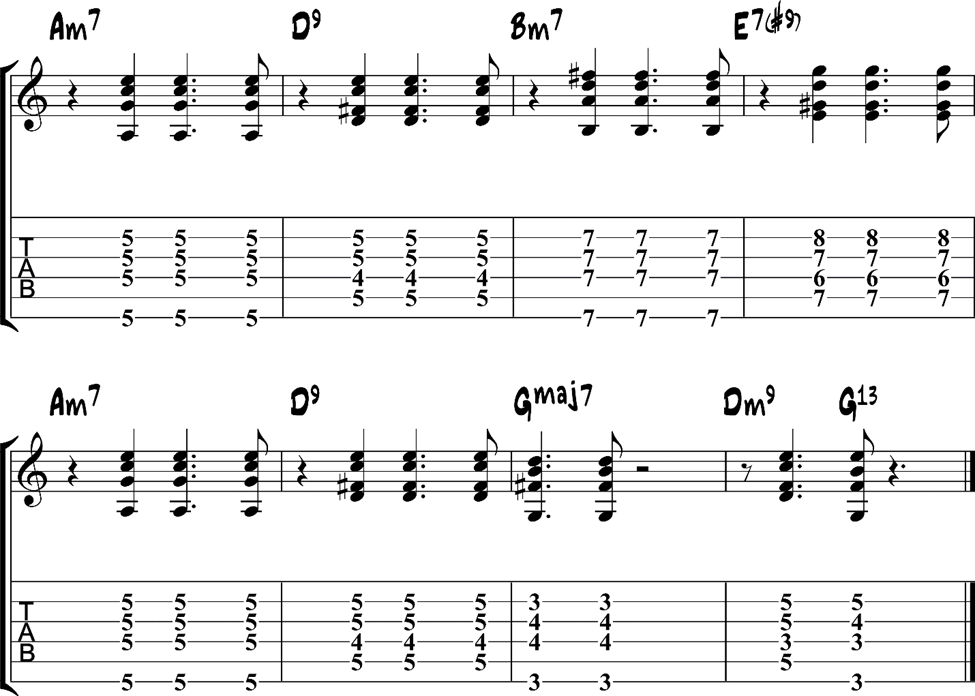
Ending for On the Sunny Side of the Street from Intros and Endings – The Jazz Language
Joshua Redman and Christian McBride

Oscar Peterson intro on The Nearness of You in Ab


Billie Holiday’s ending on All of Me:

Along the lines of the old joke: If I husband is home alone and makes a decision, is he still wrong?There are five types of intros:
1. The last N bars of the tune
2. A turnaround
3. A vamp
4. A chord progression pattern
5. A composed fragment
From one view, they can all be boiled down to a turnaround because the last N bars of the tune ends in a turnaround, a vamp is just an endless turnaround until the melodist starts the tune, the chord progression pattern is some sort of disguised turnaround, and a composed fragment is again going to end in cadence to the first chord of the tune, so, a turnaround.
This makes our respective jobs straight forward. Drums mark time, bass can join in if we recognize the intro, but if not, we can safely pedal the fifth of the first chord of the tune and that will always work. Most of the work falls on the harmony player, the guitar, piano, or vibes, etc, because they have to actually pick the chord progression and realize it with pleasant voice leading. The melody players can either improvise a melody or not, so they can’t really screw up because they can always choose to lay out until they get the signal to start the melody of the tune.
More detail about each of these five. The last N bars depend on the tempo and type of the tune. For ballads, just the last two bars could be enough. For a brisk twelve-bar blues, you could play two entire choruses up front before starting the head. Moderate tempo standards could use four, eight, or sixteen bars depending on personal choice. In that case, it’s wise to call it, and say “last sixteen” and ensure all of the players hear and understand.
The turnaround intro is just that, any turnaround you like. Two beats each of one-six-two-five or three-six-two-five or something similar. An informal analysis concluded that around seventy percent of all tunes start on the tonic. About twenty percent start on the two-chord, and the last ten percent start on some other chord. A smart rule of thumb is to just check the first chord and target your turnaround to it. You can expand the time and play a measure of each chord instead of two beats, and then you can start substituting any of the chords with tritone subs, etc. So, three--flat-three--two--flat-two, for example.
Vamps are just never-ending turnarounds, or at least they don’t end until the melodist starts the head.
For the most part, a chord progression pattern is just a specialized turnaround. For example, in the key of D Minor, playing a bar each of Dm then Em, one-two. The two chord is replacing the four chord and a one-four chord progression is a plagal cadence, sometimes called the “Amen” cadence. A similar patten would be one-flat-two. In the key of D Minor, Dm then Ebm. The Ebm is a tritone sub for A7, so a “disguised” I V. One last example, in the key of C Major, might be C^ B- Bb^ A- Ab^ G7; a descending chromatic pattern.
Composed patterns have to have been composed beforehand but likely follow a similar turnaround function. I've posted examples below.
Outros are very similar to intros with the notable exception that in the case of outros, the melody instrument or vocalist can take the lead and decide the choice of the ending instead of the harmonist. In the case in which the melodist specifies the ending and didn’t do so before beginning the tune, some sort of signal or spoken name is wise but not strictly necessary because in the worst case, the harmony players lay out, the drums keep marking time and the bass peddles the fifth of the tonic until the final chord.
To produce this analysis, I scanned the web for a few hours and then bought two books. Intros, Endings & Turnarounds for Keyboard by John Valerio and All Intros & Endings for Jazz Guitar: bebop, swing, latin, ballads by Jim Ferguson. Both books are similar and have similar content. The guitar book lays out the fingering for guitarists and any guitarist who wants it is welcome to my copy for free because I have no further need of it. The keyboard book is more theoretical and more complete and the better book for non-guitarists and I expect to work through it myself and if you’re a pianist and want to dig deeper, than I recommend the book.
Below is a long but far from exhaustive list of examples:
The last 2, 4, 8, or 16 bars of the tune
The turnaround at the end of the form.
The “whole step” intro: C- | D- | C- | D- etc Good for latin ballads.
3 6 2 5 | 1 E- A7 D- G7 C^ The Turnaround Intro
With walking bass for a guitarist:
or
Another one in F Major:
Back to the key of C, but in C Minor, not Major:
1 b2#11 1 b2#11 C^ Db^#11 from
Jazz Guitar Intros and Endings with Tabs and Audio Files
Or
Or
Or
Five of One:
4^ 4- 3- 5 2- 5 1^ 5 | F | F- | E- | A7b13 A7 | D- | G13 G7b13 | C^ G13 |
5^ 4^/5 5 #5^/5 1^ G^ F^/G G7 G#^/G C^ the 5 pedal
Another pedal:
A different 5 pedal: Note that I didn’t script this and the author didn’t write the lead-in correctly. I have no idea why. This one and the next two are on Jonny May’s website.
A stock ballad intro:
A stock latin tune intro. Garota de Ipanema, etc
5sus4 5b9 5sus4 5b13 5sus4 5b9 5sus4 5b13 1 the 5 sus
G7sus G7b9 G7sus G7b13 G7sus G7b9 G7sus G7b13 C^
1^ 1#o7 | 2- 5 | 1^ 3o7 | 2- b57 b57b5 | 1^ Dim passing chords
C^ Dbo7 | D- G7b13 | C^ Eo7 | D- Db7 Db7b5 | C^
Ellington or A-train ending? Some refer to it as the Basie ending, but I think that's a mistake. | 1 3 4 #4 | 5 6 7 1, 1 |
Basie ending:
Chromatic ending:
4-7b5 4-6 3- b3o 2- b2^ 1^ F#m7b5 F-6 E- Ebo D- Db^ C^
3 b3 2 b2 chromatic vamp: These are from 6 Essential Jazz Guitar Intros
Stray Cat Strut:
“Tune starts on iii” vamp
“tunes that start IV^
Ending for On the Sunny Side of the Street from Intros and Endings – The Jazz Language
Joshua Redman and Christian McBride
Oscar Peterson intro on The Nearness of You in Ab
Billie Holiday’s ending on All of Me:
Attachments
-
 upload_2023-9-23_11-29-53.png46.3 KB · Views: 29
 -
 upload_2023-9-23_11-30-14.png54.4 KB · Views: 23
 -
 upload_2023-9-23_11-30-44.png172.6 KB · Views: 28
 -
 upload_2023-9-23_11-31-8.png298 KB · Views: 26
 -
 upload_2023-9-23_11-31-23.png206.5 KB · Views: 25
 -
 upload_2023-9-23_11-31-48.png113.1 KB · Views: 29
 -
 upload_2023-9-23_11-32-24.png53.2 KB · Views: 28
Last edited: