
Enjoy the benefits of a premium membership!
Upgrade Account
-
TalkBass has been independent since 1998. Add your voice.
Create a free account to reply to discussions, view embedded media, and browse with fewer display ads.
Join free Log in
Want zero display ads or expanded classifieds tools? Compare plans.
You are using an out of date browser. It may not display this or other websites correctly.
You should upgrade or use an alternative browser.
You should upgrade or use an alternative browser.
Is an EQ pedal absolutely necessary?
- Thread starter stratovani
- Start date
More options
Who Replied?

I used to have a SAPBDDI and a SABDDI in my chain. I took out the EQ because it just seemed to add hiss where I didn't need it. The SAPBDDI was at the end of the pedal chain and used for 'sound 1' 'sound 2' and 'sound 1 + drive.' The SABDDI was used solely as an effect to get that saggy tube thing that the SAPBDDI couldn't get to (having served me for years as my sole pedal).
I think a well thought out pre-amp is better than dedicated EQ. The SA RPM was so much closer to where I wanted to be.
I think a well thought out pre-amp is better than dedicated EQ. The SA RPM was so much closer to where I wanted to be.

Cave Puppy
"Humph Bo, he's wond!" - John Lennon
My guitar player has been bugging me to try one. He says it has worked wonders for him but, in over 40 years of playing bass I've never needed or wanted an EQ for playing live. I think they're more useful for guitar players. If I'm mixing I will certainly use an EQ on bass. I have a Sansamp VT bass DI that I will try, though. That has a few tone shaping possibilities.

drumvsbass
Commercial User
- Aug 20, 2011
- 1,981
- 4,324
- Disclosures
- I work for Long and McQuade Musical Instruments Canada in Sales.
I feel that most EQ pedals are for a change in tone (slappa da bass) or clean boost (solo time) scenarios. An always on EQ pedal denotes something else being wrong in your rig if you dig.
I don't think it's necessary - I'm not a seasoned pro in these matters but the only reasons I can see an EQ pedal being useful are
1. You want to adjust your EQ at a particular point in your signal chain by putting it between two other pedals
and/or
2. There's a very specific frequency you are trying to adjust that is not covered by those other devices.
I would add 3. You want a dramatic EQ change for a solo section or other type of section with a sonic shift that you need to be able to turn on and with your foot while playing.
I'm surprised that the same forum that advocates in consensus for spare instruments, amps, strings, batteries, flashlights, gaff tape, and Big Macs in the name of "being prepared like a pro" is the same forum that sees little need to be prepared to precisely sculpt one's sound on any type of stage.
To know how to use a fully-parametric EQ is to be that guy who always sounds good.
To know how to use a fully-parametric EQ is to be that guy who always sounds good.
Last edited:
You really don't need anything if you have the sound you want.
I am old school, use nothing, no amp settings apart from volume, no pedals, no effects, and have every one of my guitars sounding the way I like by firstly letting them be themselves and secondly, determining the best strings for each, and by that I mean as a category type such as nylons, nickel rounds etc.
My amps have been Hartke and Marshall for some years though I always use Fender when I am playing guitars in a store so the sound and tone is standardized and allows the guitar to do the rest.
I am old school, use nothing, no amp settings apart from volume, no pedals, no effects, and have every one of my guitars sounding the way I like by firstly letting them be themselves and secondly, determining the best strings for each, and by that I mean as a category type such as nylons, nickel rounds etc.
My amps have been Hartke and Marshall for some years though I always use Fender when I am playing guitars in a store so the sound and tone is standardized and allows the guitar to do the rest.

i like having some EQ around on gigs (i don't use a pedal for it, though). on some gigs, the unit idles at mostly "flat," but other gigs require more 'EQ finesse', IME. TBH: i would rarely use an EQ setting for effect on a gig. i think some players/bands require more efx on their gigs than i do on the gigs i play.
EQ? = depends. EQ pedals? = no.
EQ? = depends. EQ pedals? = no.
is your parametric a pedal? and if so: which one? thanks.To know how to use a fully-parametric EQ is to be that guy who always sounds good.

I use a 10 band mxr EQ at the start of my fx chain (after my d.i. box sent to FOH), i set it so i can have same output levels when switching basses (most are passive, but some have lower output pickups than others). Let me say, i've already heard countless times; why not use a compressor? Two reasons: 1- not needed for my style of playing, nor have i ever gelled woth any compressor. No matter how simple/tweakable it was. 2- i've a pretty steady picking hand where my low notes dont overpower the high strings if played in conjunction.
Having said that, is EQ necessary in general? It can be a good tool depending on the room, whichever bass you use, or if you just want to shape a little more in specific regions.
Having said that, is EQ necessary in general? It can be a good tool depending on the room, whichever bass you use, or if you just want to shape a little more in specific regions.

A lot of folks like active basses because they have eq on board their instrument. I prefer to have mine on the floor. I do have an eq pedal on both of my pedalboards - I use a bit of eq as an always on thing. Could I live without it? probably. Would I be as satisfied with my tone? Nope. I don't use much eq, but what little I do, I find to be important to my ears. When I'm in my happy place sonically, I absolutely play better - that's the real goal.
If you're less obsessive than me about your tone, consider yourself lucky.
If you're less obsessive than me about your tone, consider yourself lucky.

Not absolute, but they're so cheap that the utility easily overcomes the out of pocket expense.There are four places where my bass tone can be adjusted - my bass tone knob, my Boss BB-1X Bass Driver pedal with a high and low knobs, my amp with a hi, mid, low, and phat knobs, and finally at the mixing board before the audience can hear me. Is an EQ pedal overkill at this point?
With the right eq (controls at 40, 50, 70-90 Hz), my hollow body Gretsch will sound MUCH better, and be about 10dB louder before feedback on stage.
That kind of improvement is probably impossible to get with any modern bass amp. The only one potentially covering these frequencies are the 12band Trace Elliot.
I have used one of my 30band Rane rackmounts for my bass rig, to do that. Works great, and I select bypass when changing bass.
That kind of improvement is probably impossible to get with any modern bass amp. The only one potentially covering these frequencies are the 12band Trace Elliot.
I have used one of my 30band Rane rackmounts for my bass rig, to do that. Works great, and I select bypass when changing bass.

Passinwind
I know nothing.
- Dec 3, 2003
- 23,066
- 45,998
- Disclosures
- Designer/Toaster Tech @ Passinwind Electronics
I'm surprised that the same forum that advocates in consensus for spare instruments, amps, strings, batteries, flashlights, gaff tape, and Big Macs in the name of "being prepared like a pro" is the same forum that sees little need to be prepared to precisely sculpt one's sound on any type of stage.
To know how to use a fully-parametric EQ is to be that guy who always sounds good.
Nah, I'll aways be a hack regardless of whatever gear I own.

I have one band full PEQs in all three of my solid state DIY amps already, same for variable HPFs. I have an open source non-commercial pedal implementation of those two circuits for DIYers nearly done, but personally I just don't enjoy bending over to adjust things that often require careful fine tuning in my world. All my basses are active and have decently powerful EQ capabilities onboard, so for me the EQ in the amps is more or less akin to a set and forget pedal. And in any case, none of this is absolutely necessary IMO, unamplified upright can be a beautiful thing. Different jobs require different tools, go figure!

Last edited:

NO !!!! I don't understand why someone pays $4000 for a boutique bass that has special tone wood, perfect grain for resonance & tone,, hand made electronics, then play it thru a $75 pedal to completely change the sound,,,,
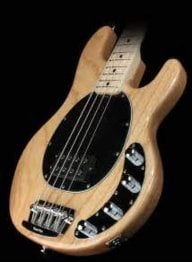
A full time pro bass player friend of mine plays a warrior, fodera even a Sterling ray34 bass and never uses a pedal.
A full time pro bass player friend of mine plays a warrior, fodera even a Sterling ray34 bass and never uses a pedal.
Same here - except I want to use one when I switch from finger playing to a pick to keep my tone moderately consistent.I've been thinking about getting one and setting it as a "scooped slap tone override" kinda thing, so I can just jump right into that from my normal mids-heavy fingerstyle tone.
is your parametric a pedal? and if so: which one? thanks.
I do have an Empress ParaEQ (3 band) pedal that works OK, but for some reason it's easier to dial out the bloom and the boom with a rackmount Rane PE15 (5 band) -- plus there's more overlap with the PE15, just in case there are two boom frequencies close to each other, or I want to boost a frequency adjacent to a notched frequency.

Last edited:
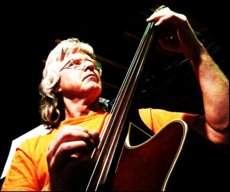
As I use my bass amp for acoustic and upright as well as electric basses, multi band EQ of some sort is a necessity. You have to be able to get a) loud enough to be heard in context, b) a good sound, and c) rid of feedback and other problem frequency issues. Even with just electric bass, I find the multi band EQ very valuable. Mine happens to be on the amp, but if I didn’t have it there I’d get it in a pedal. I can see where, if you had multiple basses on a gig, it would be great to have an EQ that has multiple store-able settings.


